


âThere are thousands to tell you it cannot be done,
      âThere are thousands to prophesy failure,
âThere are thousands to point out to you one by one,
      âThe dangers that wait to assail youâŚâ
                                 Edward Albert Guest
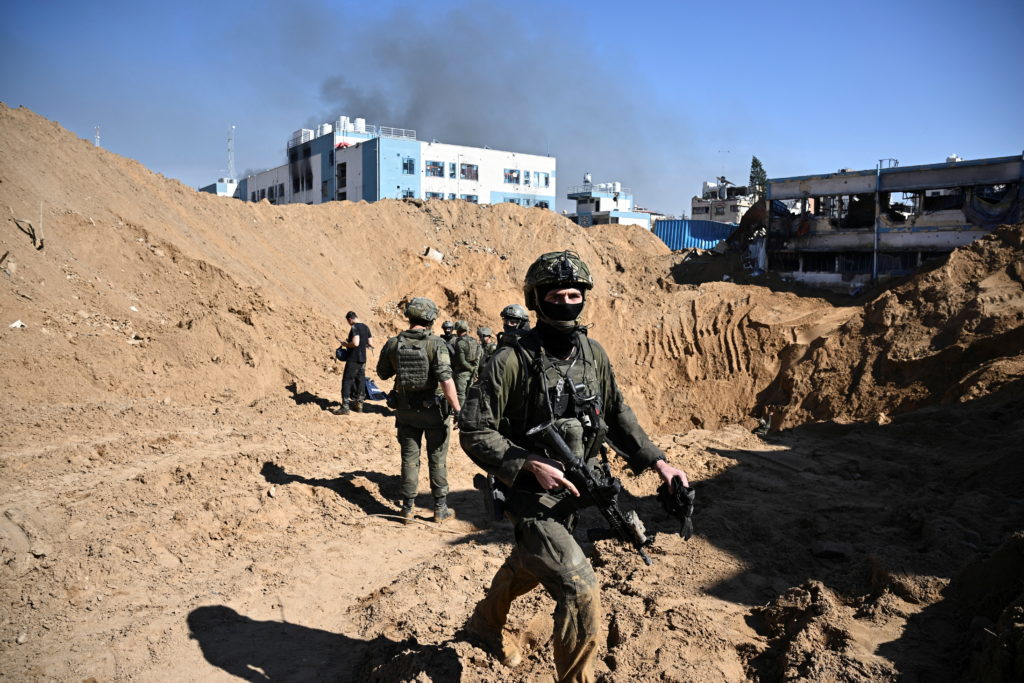
The United States was certain Israel could not evacuate Palestinian civilians from Rafah in a timely way and capture the Philadelphi Corridor, where Egypt had closed the gate on civilian aid. They told Israel in no uncertain terms they would fail, and Palestinians would be slaughtered.
The IDF has evacuated nearly 900,000 Palestinians since May 6. And Rafah reopened this week under Israeli supervision.
The Jerusalem Post reported, â30-40% of Rafah is now under IDF control, not merely a small portion of the eastern sector, and about 60-70% of Rafah has been completely evacuated. The remaining Rafah civilians, estimated at around 300,000-400,000, are almost all near the Gaza coast Tel al-Sultan area.â
The IDF is very, very goodâso is the United States militaryâso why did the Biden administration think Israel couldnât do it?
The U.S. position is likely the result of an evolution in attitude that arose during the Obama administration. There was a point at which the US was unconcerned about civilian casualtiesâcollateral damageâfrom U.S. drone strikes. The Bureau of Investigative Journalism reported that between 2010 and 2020, drone strikes in Yemen, Afghanistan, Sudan, and Pakistan likely caused 11,000-21,000 killed and wounded. In addition to drone strikes, the U.S. was bombing cities in Iraq and Syria in pursuit of ISIS.
The Office of the Director of National Intelligence reported low numbers of casualties, but noted that âthe governmentâs reported numbers of civilian casualties are far lower than estimates from non-governmental organizations.â Indeed, writing in War on the Rocks, analyst Nicholas Grossman noted that âObamaâs official numbers systematically underestimated civilian casualties and did not disclose the location of strikes.â
In 2015, things changed internally.
President Obama demanded a âzero casualty war,â refusing clearance for up to 75% of bombing missions to avoid casualties on the ground. Pentagon spokesmen told reporters, âDespite U.S. strikes being the most precise in the history of warfare, conducting strike operations in the heavily populated areas where ISIL hides certainly presents challenges. We are fighting an enemy who goes out of their way to put civilians at risk. However, our pilots understand the need for tactical patience in this environment. This fight against ISIL is not the kind of fight from previous decades.â
It does, however, sound a lot like Hamasâs war in Gaza, Hezbollahâs presence in Lebanon, and the infiltration by Hamas of West Bank cities.
A comparison is reasonable.
ISIS, our enemy, morphed and spread.
Ian McCary, deputy special envoy for the Global Coalition to Defeat ISIS spoke earlier this year about persistence of ISIS in Africa, Afghanistan, and Central Asia, âadapting to keep pace with the evolving and increasingly diffuse nature of the threat. The security situation throughout the Sahel and in other parts of Africa has deteriorated significantly over the past several yearsâ and there is an increasing âthreat posed by so-called ISIS-Khorasan, or ISIS-K, emanating from Afghanistan.â He added, âis committed to ensuring ISIS cannot thrive elsewhere in the world. We will continue to address key lines of effort like capacity building in sub-Saharan Africa and Central Asia.â
A reminderâthe Russians just entered a $100 million U.S. airbase in Niger from which the government was in the process of ejecting us. France, a partner in Africa, has been ordered out of Mali and Burkina Faso as well as Niger. Franceâs future in CĂ´te dâIvoire, Senegal, Gabon, Djibouti, Chad is unclearâthe presence of ISIS is not.
The result?
The migration of ISIS forces from Syria and Iraq to Africa and Central Asia has had little direct impact on Americansâalthough we should have some concern for our southern border as an entry point for people determined to hurt us. The persistence of ISIS and its ideology is one reason administration spokespeople insist that Hamas cannot be defeated by Israelâbecause, you know, ideology.
But the last military war the U.S. actually won (Grenada doesnât count) was actually an ideological war with military application. Naziism and Imperialism were at work in Germany and Japan long before 1939. Had we simply pushed Germany back over its most recent border (as Winston Churchill was inclined to do) or Japan back to the island, WWIII would have been likely. Civilian casualties be damnedâthe Allies had to win the war, and they did. And then they dealt with ideology.
Israel will have to deal with Hamas/Hezbollah/Iranian ideology in a small space next to its civilian population. But first it has to deal with Hamas/Hezbollah/Iranian military capabilities. It does not have the luxury the U.S. has had in the 21st century to chart a course, change the course, and then go home.
Israel IS home.
Shoshana Bryen is Senior Director of the Jewish Policy Center and Editor of inFocus Quarterly magazine.
The views and opinions expressed in this commentary are those of the author and do not reflect the official position of the Daily Caller News Foundation.
All content created by the Daily Caller News Foundation, an independent and nonpartisan newswire service, is available without charge to any legitimate news publisher that can provide a large audience. All republished articles must include our logo, our reporterâs byline and their DCNF affiliation. For any questions about our guidelines or partnering with us, please contact [email protected].