



Star Dem Candidate Leading By Only Single Digits In Key Senate Race, Poll Says
Former two-term Democratic North Carolina Gov. Roy Cooper is leading his much lesser-known likely Republican opponent by just six points in the state’s 2026 Senate race, according to an early Emerson College poll…
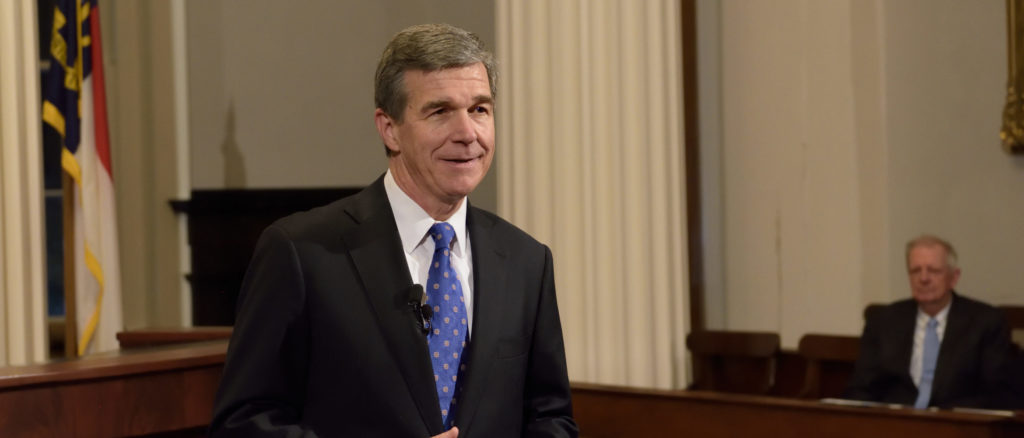
Former two-term Democratic North Carolina Gov. Roy Cooper is leading his much lesser-known likely Republican opponent by just six points in the state’s 2026 Senate race, according to an early Emerson College poll released Friday morning.
The Emerson College survey found that Cooper received 47% support in the swing state’s blockbuster Senate race, while Republican National Committee (RNC) chair Michael Whatley notched 41%. Twelve percent of voters said they were undecided, according to the poll.
Of those surveyed, 51% said they had a favorable view of Cooper — who led the state from 2017 to 2025 — 33% had a negative view of him, 13% were unsure and only 3% were not familiar with him. Meanwhile, Whatley secured a 17% favorability rating and 16% unfavorable rating, while 30% of respondents said they were unsure of the RNC chair and 36% were not familiar with him, according to the poll.
Additionally, on the generic 2026 congressional ballot test, the race is a statistical tie, with 41.5% of respondents supporting the Democrat and 41.3% supporting the GOP candidate, according to the survey.
Emerson College’s poll also showed that President Donald Trump had a 46% job approval rating in North Carolina, two percentage points higher than his 44% disapproval rating there.
In the 2024 presidential election, Trump notably won North Carolina by three points — with 50.9% of the vote, while former Vice President Kamala Harris notched 47.7%.
“With over a year to go until the North Carolina U.S. Senate race, Whatley’s low name recognition presents both a challenge and an opportunity, while only 17% view him favorably, nearly two-thirds of voters either don’t know him or are unsure,” Spencer Kimball, executive director of Emerson College Polling, said in a statement. “That leaves room for his campaign to define him before his opponent does. In contrast, Cooper enters the race with significantly higher name recognition and a more favorable public image.”