



State Farm Cancelled Homeowners’ Policies In California Months Before Wildfires: Report
As wildfires rip through the Pacific Palisades in Los Angeles County, California, hundreds have been left without homeowner’s insurance after State Farm cancelled their policies months ago, per a report. According to a…
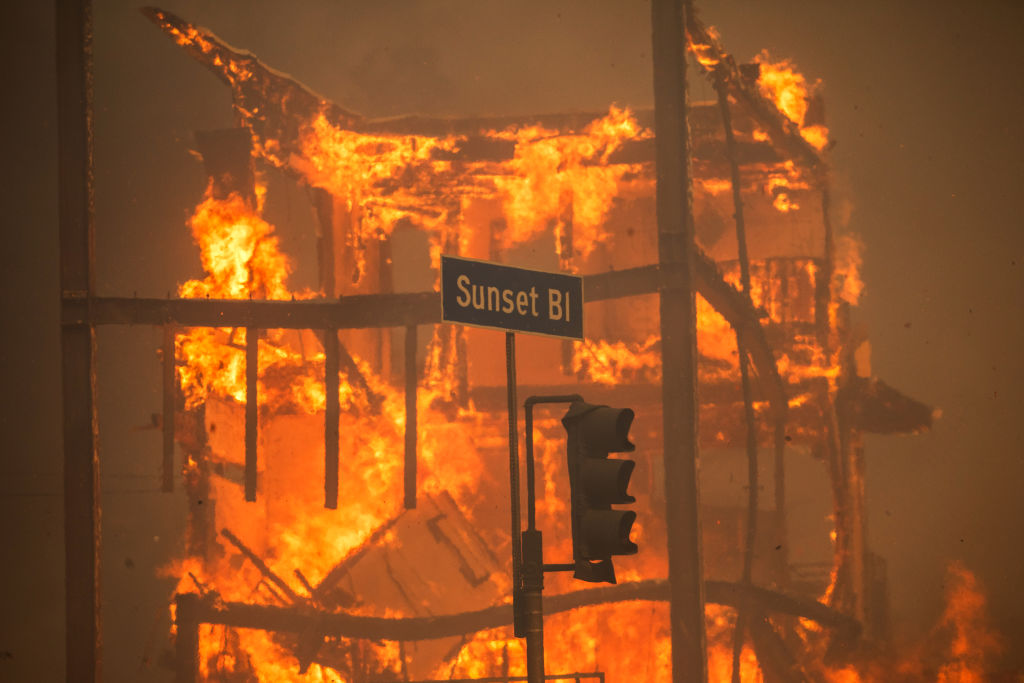
As wildfires rip through the Pacific Palisades in Los Angeles County, California, hundreds have been left without homeowner’s insurance after State Farm cancelled their policies months ago, per a report.
According to a report from Newsweek, State Farm reportedly justified their actions by citing the growing cost of wildfires in the area, and the company’s attempt to reduce its own financial risk.
In a statement sent to the news outlet, a State Farm representative said the top priority for the company is the safety of their employees and customers who are currently in the path of the wildfires.
“Our number one priority right now is the safety of our customers, agents and employees impacted by the fires and assisting our customers in the midst of this tragedy,” the statement said.
However, in a report sent to California’s Commissioner of Insurance Ricardo Lara in March 2024, State Farm General Insurance Company — which is an almost exclusive California-only insurer — said the cancellation of policies was necessary because State Farm’s financial position has “severely deteriorated,” and the company is concerned about its financial well-being. State Farm’s policyholder surplus was around $2.2 billion and $1.3 billion at the end of 2022 and 2023, respectively, in stark contrast to the $4.1 billion in surplus at the end of 2016.
The report, which includes details on policy cancellations across California zip codes — including 90210 in Beverly Hills, and 90272 in the Pacific Palisades — shows there were 1,626 policies cancelled in the Palisades, while Beverly Hills had 698 policies cancelled.
“SFG’s risk exposure grew tremendously in the last few years, with construction cost inflation being a major driver. Taken together, these trends have resulted in surplus of less than 50 cents for every dollar of risk (as measured by net written premium) we face today, which makes SFG’s financial strength less than a quarter of what it was at year-end 2016,” State Farm executives wrote in the report.