



STEVE MILLOY: Big Beautiful Bill Already Paying Big Beautiful Benefits
President Trump signed the One Big Beautiful Bill on July 4. It’s already paying dividends to taxpayers a mere three weeks later by burying green boondoggles in government paperwork. Reuters reported this week that…
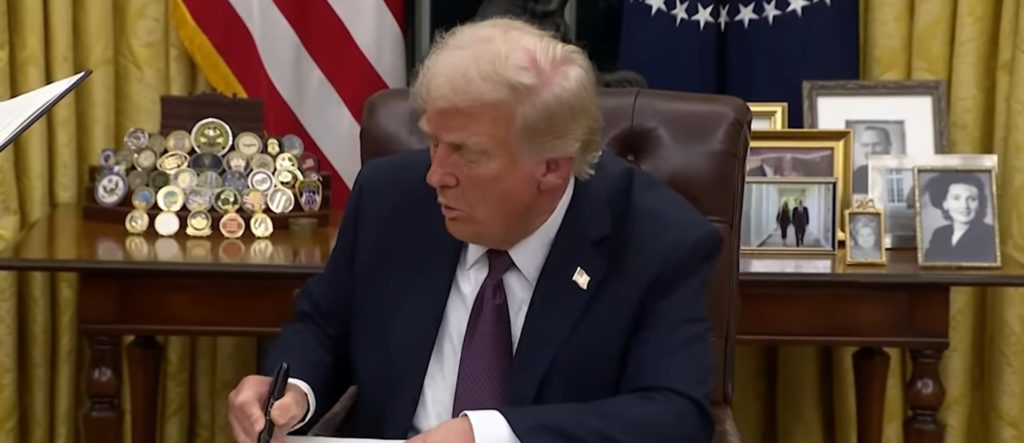
President Trump signed the One Big Beautiful Bill on July 4. It’s already paying dividends to taxpayers a mere three weeks later by burying green boondoggles in government paperwork.
Reuters reported this week that: “Singapore-based solar panel manufacturer Bila Solar is suspending plans to double capacity at its new factory in Indianapolis. Canadian rival Heliene’s plans for a solar cell facility in Minnesota are under review. Norwegian solar wafer maker NorSun is evaluating whether to move forward with a planned factory in Tulsa, Oklahoma. And two fully-permitted offshore wind farms in the U.S. Northeast may never get built.”
Also reported this week from the New York Times: “The Energy Department on Wednesday said it had terminated a commitment to provide a $4.9 billion loan guarantee to a company building a contentious transmission line across the Midwest. The cancellation may imperil the $11 billion project, known as Grain Belt Express, which would cross 800 miles of farmland and is designed to carry electricity generated by wind farms in Kansas to population centers in Illinois and Indiana.”
What’s going on? Why are these developers reconsidering and canceling their projects when there’s still hundreds of billions of dollars’ worth of Inflation Reduction Act subsidies to be had?
President Trump pulled a surprising fast one on subsidy-seeking swamp creatures.
Much to the surprise of many, the penultimate Senate version of the OBBBA drastically slashed subsidies for wind and solar projects even more than the House did. But Republican Sens. Lisa Murkowski, Joni Ernst and Chuck Grassley were able to recoup much of subsidy cuts and had them included in the final version that passed the Senate. This outraged the House Freedom Caucus, whose votes were needed to pass the final bill.