



Sunflowers’ Dance Moves Inspire Collective Growth Strategy, Reveals Study
A crowded silent disco of sunflowers. DESIGNECOLOGIST VIA PEXELS “> Turns out humans didn’t invent the silent disco: a new study from Tel Aviv University (TAU) and the University of Colorado Boulder (CU Boulder)…
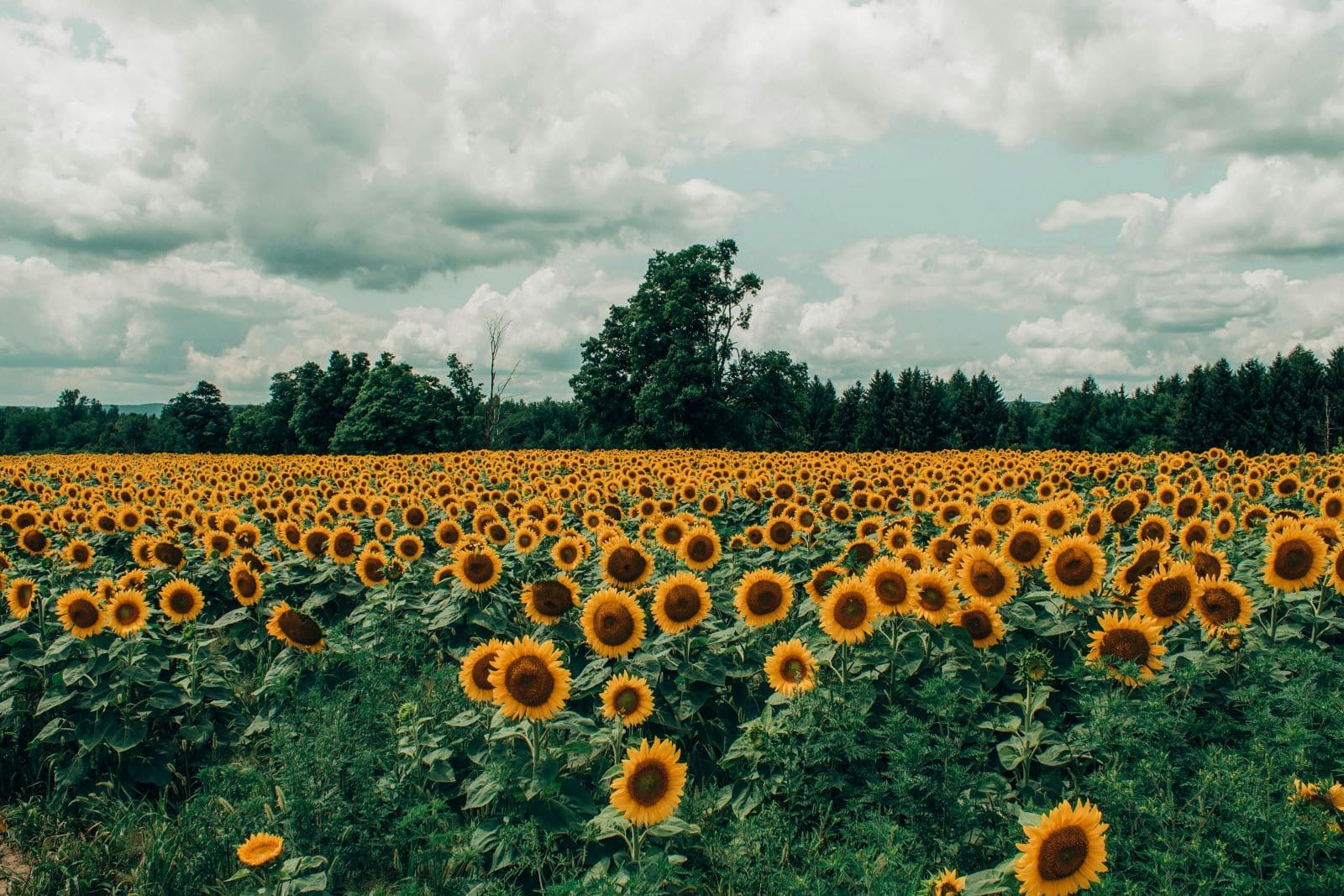

A crowded silent disco of sunflowers. DESIGNECOLOGIST VIA PEXELS
“>
Turns out humans didn’t invent the silent disco: a new study from Tel Aviv University (TAU) and the University of Colorado Boulder (CU Boulder) has revealed that the original group behind the idea of quietly dancing together is tall, strong and full of chlorophyll.
According to the universities’ research published in Physical Review X, sunflowers optimize their growth in cramped conditions by “dancing”: using a combination of random movements and responses to neighboring plants’ shadows to maximize their collective exposure to sunlight.
TAU’s Prof. Yasmine Meroz, who led the study with CU Boulder’s Prof. Orit Peleg, explained that sunflowers grown in dense environments exhibit a zigzag growth pattern, because it allows them to grow side by side without overshadowing each other, ultimately maximizing photosynthesis for the entire group.
“In fact,” she added, “plants know how to distinguish between the shadow of a building and the green shadow of a leaf. If they sense the shadow of a building, they usually don’t change their growth direction, because they ‘know’ that will have no effect. But if they sense the shadow of a plant, they will grow in a direction away from the shadow.”

The researchers used time-lapse photography to observe sunflowers grown in high-density conditions. They discovered that individual plants engaged in what they described as a “dance,” making random movements ranging from tiny shifts to displacements of up to two centimeters every few minutes (this is very similar to my own style of dancing, which I have coined as “the static anxious groove”).
These movements, known as circumnutations, were first observed by the famous bald master of evolution, Charles Darwin. However, their functional role has remained a mystery until now.
