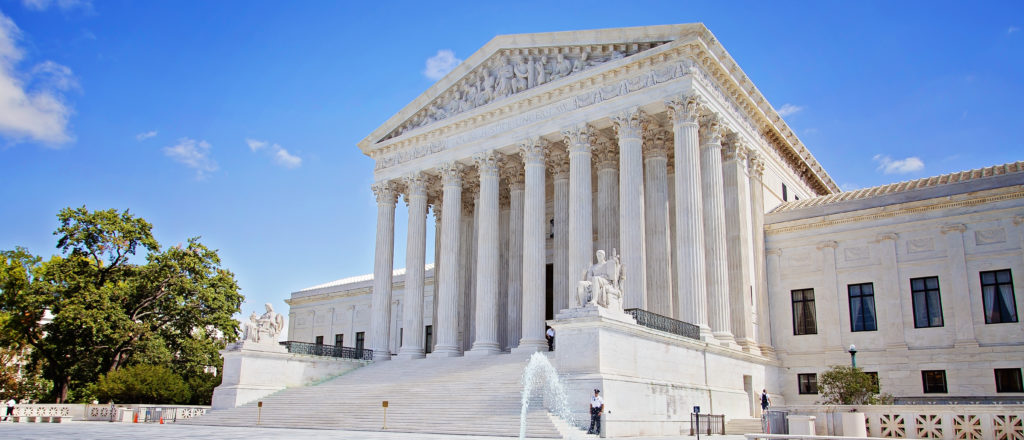



WASHINGTON â The Supreme Court signaled on Wednesday that the days of creating congressional districts based on race may be numbered.
Justice Brett Kavanaugh â whose vote, along with Chief Justice John Roberts, could prove decisive in Louisiana v. Callais â questioned during oral arguments whether the time for using race-based remedies has expired.
âThe issue, as you know, is that this courtâs cases in a variety of contexts have said that race-based remedies are permissible for a period of time, sometimes for a long period of time, decades in some cases, but that they should not be indefinite and should have an endpoint,â Kavanaugh said. âWhat exactly do you think the end point should be for the intentional use of race to create districts?â
NAACP Legal Defense Fund President Janai Nelson, who defended Louisianaâs creation of a second majority black congressional district, argued there should be no time limit.
Louisianaâs congressional map has been caught in litigation for years, highlighting the âconflicting demandsâ of Section 2 of the Voting Rights Act, which prohibits election practices that result in âdenial or abridgementâ of citizens to vote based on race, and the 14th Amendmentâs Equal Protection Clause.
A group of black voters objected to the inclusion of only one majority-black district in Louisianaâs 2022 map, prompting a court to order the state to go back to the drawing board. When the legislature passed a new map in January 2024 that made District 6 a second majority-black district, it faced a new lawsuit from ânon-African Americanâ voters who claimed the map was an unconstitutional racial gerrymander.
While the Supreme Court considered the case last term, it decided to rehear it to specifically weigh whether the âintentional creation of a second majority-minority congressional district violates the Fourteenth or Fifteenth Amendments to the U. S. Constitution.â
Limiting Section 2 could have âpretty catastrophicâ results, Nelson told the justices, noting every black Congressional member in Louisiana was elected from a VRA âopportunity district.â
âWe only have the diversity that we see across the south, for example, because of litigation that forced the creation of opportunity districts under the Voting Rights Act,â she said.
The Supreme Courtâs liberal wing agreed that race-based remedies are still appropriate, highlighting that Section 2 of the VRA speaks to current discrimination.
âWhat these Section 2 suits do is they ask about current conditions, and they ask about whether those current conditions show vote dilution, which is violative of section 2,â Justice Elena Kagan said.
Justice Sonia Sotomayor noted there may be âlingering effects of the pastâ that can be remedied by using race.
âRace is always a part of these decisions,â Sotomayor said. âMy colleagues are trying to tease it out in this intellectual way that doesnât deal with the fact that race is used to help people.â
Some questions involved the application of the Supreme Courtâs 2023 decision in Allen v. Milligan, where the courtâs majority, including Kavanaugh and Roberts, upheld a lower court decision directing Alabama to create a second majority-black district.
Another big question for several justices was whether the current framework accounts for states drafting maps to achieve political goals, without the intent to racially discriminate.
âIf it happens to be that people of one race or another race overwhelmingly prefer one of the political parties, does that transform the situation into racial voting?â Justice Samuel Alito asked. âOr is it still just partisan voting?â
Principal Deputy Solicitor General Hashim Mooppan, supporting Louisiana on behalf of the DOJ, noted that West Virginia has zero Democratic districts, though there are many white Democrats.
âThereâs just no reason to assume that because there is a large democratic population in Louisiana that doesnât have a district, that is a racial reason, rather than a partisan reason,â Mooppan said.
All content created by the Daily Caller News Foundation, an independent and nonpartisan newswire service, is available without charge to any legitimate news publisher that can provide a large audience. All republished articles must include our logo, our reporterâs byline and their DCNF affiliation. For any questions about our guidelines or partnering with US, please contact [email protected].