When President George W. Bush stood in front of the U.S. Capitol on Jan. 20, 2005, and gave his second inaugural address , as this column has noted before, he argued that maintaining freedom in the United States would…
When President George W. Bush stood in front of the U.S. Capitol on Jan. 20, 2005, and gave his second inaugural address, as this column has noted before, he argued that maintaining freedom in the United States would require spreading freedom all around the world.
“We are led, by events and common sense, to one conclusion,” Bush declared. “The survival of liberty in our land increasingly depends on the success of liberty in other lands. The best hope for peace in our world is the expansion of freedom in all the world.”
“So, it is the policy of the United States to seek and support the growth of democratic movements and institutions in every nation and culture, with the ultimate goal of ending tyranny in our world,” he said.
As Bush said these words, the United States had already been at war in Afghanistan for more than three years. Osama bin Laden, the al Qaeda leader behind the 9/11 attacks, had already fled to Pakistan; and the Taliban regime that had given al Qaeda sanctuary had been removed from power.
Sixteen years after Bush’s second inaugural address, President Joe Biden was inaugurated
Sponsored
Sponsored
TERENCE P. JEFFREY: ISIS-K And Biden’s Border — IJR
on Jan. 20, 2021. That August, Biden withdrew the last U.S. military forces from Afghanistan — but not before an
killed 13 U.S. service members outside the Kabul airport.
The Taliban, who retook control of Afghanistan that year, has been unable to defeat the ISIS-K terrorists who remain there.
Since the withdrawal of U.S. forces from Afghanistan, the Defense Department has engaged in what it calls Operation Enduring Sentinel. Last week, the lead inspector general for this operation released his latest quarterly report, which covered the period from July 1 through Sept. 30 of this year. “The mission of Operation Enduring Sentinel,” said this report, “is to contain terrorist threats emanating from Afghanistan and to protect the homeland by maintaining pressure on those threats.”
So, how are things going in Afghanistan?
President Bush’s vision for spreading democracy and ending tyranny has not been achieved. It has especially failed Afghan women.
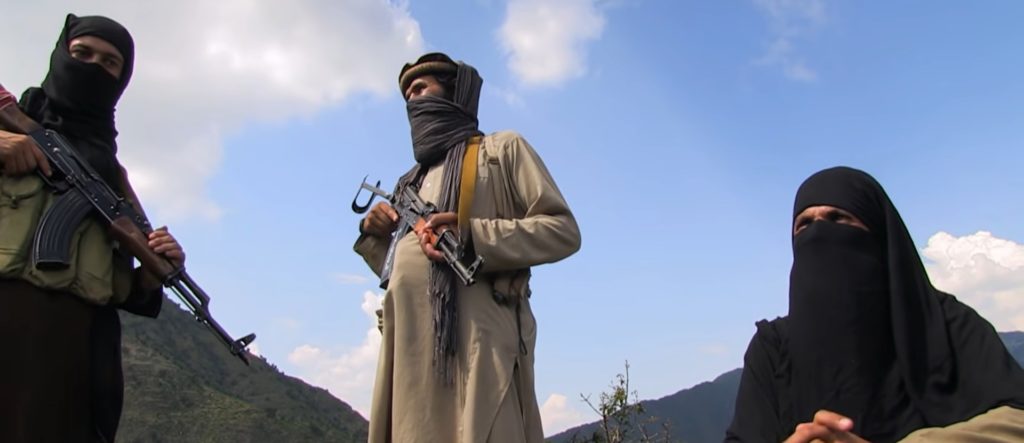
“On August 21, the Taliban issued a new morality edict to govern personal conduct,” said the inspector general’s report. “The edict includes a requirement that women wear clothing that covers their entire body, bans their voices being heard in public, and further restricts their movement without a male relative.”
Men are also targeted by this Taliban directive.
“The edict also requires men to grow beards, bans drivers from playing music, and restricts the media from publishing images of people,” said the inspector general’s report.
So, what happens if a woman walks down the street with her head uncovered while talking to a friend? Or a clean-shaven man drives by in a car while listening to music?
“The Taliban Ministry for the Propagation of Virtue and Prevention of Vice enforces this edict through verbal warnings, confiscation of property, and confinement,” said the inspector general’s support.
“While enforcement of this new morality edict is not yet widespread,” said the report, “civil society and human rights activists say the new edict has increased fear and uncertainty among Afghans throughout the country.”
As in 2001, the primary U.S. strategic interest in dealing with Afghanistan today is not in promoting democracy there but in protecting Americans. “The U.S. Government’s most critical enduring interest in Afghanistan is ensuring that Afghanistan can never again be a launching pad for terrorist attacks against the United States, and to look after the well-being of U.S. citizens detained in Afghanistan,” said the report.
ISIS-K is now the primary terrorist group using Afghanistan as its base of operations.
“According to the Defense Intelligence Agency (DIA), ISIS-K maintains the intent and capability to conduct attacks outside its traditional area of operations in South Asia,” said the inspector general’s report.
“A July 19 UN Security Council report stated that the threat posed by ISIS-K has grown, as have threat levels in Europe and other areas,” said the report. ISIS-K, it said, “remains the most serious threat in the region projecting terror beyond Afghanistan.”
The State Department, the report also said, “issued more than 33,000 Afghan Special Immigrant Visas in FY 2024, including more than 9,000 during the quarter.”
During President Joe Biden’s time in office, there has also been a significant increase in the number of “inadmissible” Afghans showing up at the U.S.-Mexico border. “The Department of Homeland Security,” said the inspector general’s report, “reported that Customs and Border Protection encountered 68 Afghan ‘inadmissible non-citizens’ at the U.S. Southwest Border Ports of Entry in FY 2022, 342 in FY 2023, and 1,893 non-admissible Afghans in FY 2024.”
Did any ISIS terrorists cross the border illegally between the ports of entry in FY 2024?
The possibility that some did is one reason the Trump administration needs to follow through on its commitments to enforce the immigration laws and secure our border.
Terence P. Jeffrey is the investigative editor of the 🏢Daily Caller News Foundation. To find out more about Terence P. Jeffrey and read features by other Creators Syndicate writers and cartoonists, visit the Creators Syndicate website at www.creators.com.
The views and opinions expressed in this commentary are those of the author and do not reflect the official position of the 🏢Daily Caller News Foundation.
(Featured Image Media Credit: Screen Capture/Frontline PBS)
All content created by the 🏢Daily Caller News Foundation, an independent and nonpartisan newswire service, is available without charge to any legitimate news publisher that can provide a large audience. All republished articles must include our logo, our reporter’s byline and their DCNF affiliation. For any questions about our guidelines or partnering with us, please contact [email protected].