THADDEUS McCOTTER: Big Tech’s And Automakers’ Dangerous Ploy To Kill AM Radio
The march of time and technology has taken its toll on Americans’ unity. Big Tech and automakers want to stop putting AM radios in their vehicles. Instead, they want to install audio systems provided by – you guessed it…
The march of time and technology has taken its toll on Americans’ unity.
Big Tech and automakers want to stop putting AM radios in their vehicles. Instead, they want to install audio systems provided by – you guessed it – Big Tech companies, such as Google, Amazon, and Apple, etc.
What Trump wants to do is stop these proposed Big Tech systems from vacuuming up individuals’ personal data and using it for their own purposes and/or selling it to third parties. He also wants to stop automakers from using the collected data.
Sure, there’s nothing wrong with knowingly and voluntarily using these systems. One can factor in the privacy risks, then choose when it is appropriate to use – or not to use – them. The present problem, however, is that corporate greed is limiting consumer choice and control.
This is why Trump supports keeping AM radios in autos.
AM radio cannot collect nor sell the personal information of users. AM radio is freely available over the public airwaves – unlike these proposed Big Tech systems. If the president succeeds, he will score a huge win for Americans’ data privacy. All he needs is the bill sent to him.
And there’s the current problem.
The AM Radio for Every Vehicle Act of 2025 was introduced in both the House and Senate
Sponsored
Sponsored
THADDEUS McCOTTER: Big Tech’s And Automakers’ Dangerous Ploy To Kill AM Radio — IJR
and has garnered overwhelming co-sponsorships in both chambers. Indeed, the bill has enough co-sponsors in their respective bodies to easily pass either. It has certainly brooked little to no opposition when being passed out of the congressional committees of jurisdiction.
And yet, this singularly bipartisan idea languishes in Congress on the threshold of passage to Trump’s desk for his signature.
Despite these divisive times (or, perhaps, because of them), the public would expect such immense bipartisan congressional support on this “very popular” issue would place the AM Radio for Every Vehicle high on the congressional agenda for passage. If nothing else, one may also think how, heading into the coming midterm elections, incumbents of both parties would like to have a popular bipartisan vote in their arsenal of campaign talking points, if not for the larger concern of proving our representative institutions, though bitterly divided, can still function sufficiently to produce a practical and beneficial statute.
Beyond the data privacy issue, tens of millions of Americans utilize AM radio for information and entertainment. Truly, Americans do not yet live by streaming and social media alone – much to the consternation of Big Tech.
So, too, as the overwhelming support for the legislation proves, the public safety of these listeners and all Americans is protected by AM radio, which is the foundation of our Emergency Alert System.
America’s enemies are trying to hack our internet and related communications and operations. Fortunately AM radio is far less susceptible to these enemy attacks; consequently, eliminating AM radios from cars would be a disastrous self-inflicted wound of the utmost folly.
Clearly, in both critical instances, the operative word for Americans and AM radio is unity.
AM radio is American radio. (I will resist the temptation to note one cannot spell “American” without AM.) Entire and immense cross sections of Americans converge and constitute the listenership of this endangered technology, AM radio: rural and urban residents (the American Farm Bureau Federation and the National Urban League support the bill); liberals, conservatives, and independents; well-off listeners and under-represented voices (who would lose this vital platform).
Perhaps, the march of time and technology eroding American unity may not be stopped. But it does not need to be abetted by mammoth corporations’ and special interests’ venal, detrimental destruction of AM radio.
The political divisions will only increase as the midterm elections approach. The crush of events and ideology must not be permitted to destroy this chance to strike a practical blow for Americans’ public safety and unity. Congress needs to act to finally pass, so Trump can sign into law, the AM Radio for Every Vehicle Act of 2025 – ASAP – even if, albeit belatedly, in 2026.
Stay tuned….
The Hon. Thaddeus G. McCotter (M.C., Ret.) represented Michigan’s 11th Congressional district and served as Chair of the Republican House Policy Committee. A guitarist not a lobbyist, he is a frequent public speaker and moderator for public policy seminars; an author and songwriter; and a weekly co-host of the “John Batchelor Radio Show,” among sundry media appearances.
The views and opinions expressed in this commentary are those of the author and do not reflect the official position of the 🏢Daily Caller News Foundation.
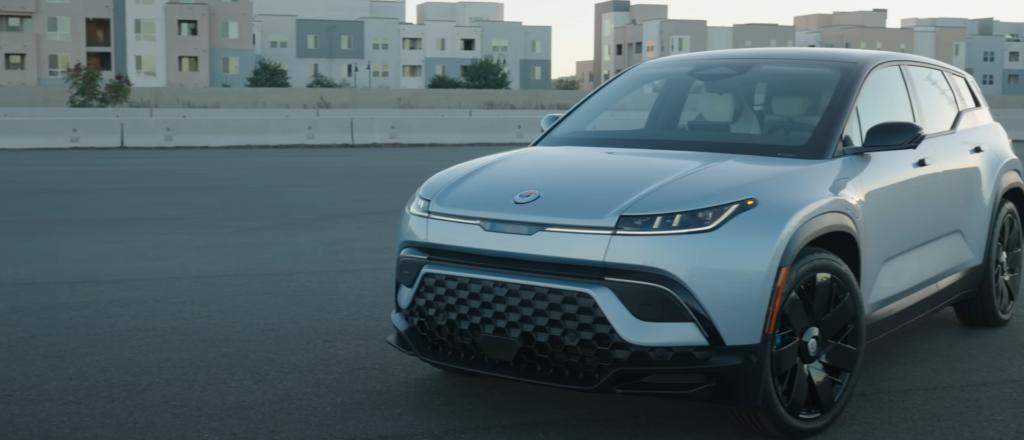
(Featured Image Media Credit: Screenshot/YouTube/Edmunds Cars)
All content created by the 🏢Daily Caller News Foundation, an independent and nonpartisan newswire service, is available without charge to any legitimate news publisher that can provide a large audience. All republished articles must include our logo, our reporter’s byline and their DCNF affiliation. For any questions about our guidelines or partnering with us, please contact [email protected].