



Daily Caller News Foundation

For decades, Americans have been told that “the cloud” is something invisible — a magical place where photographs, emails, financial records and now artificial intelligence simply exist.
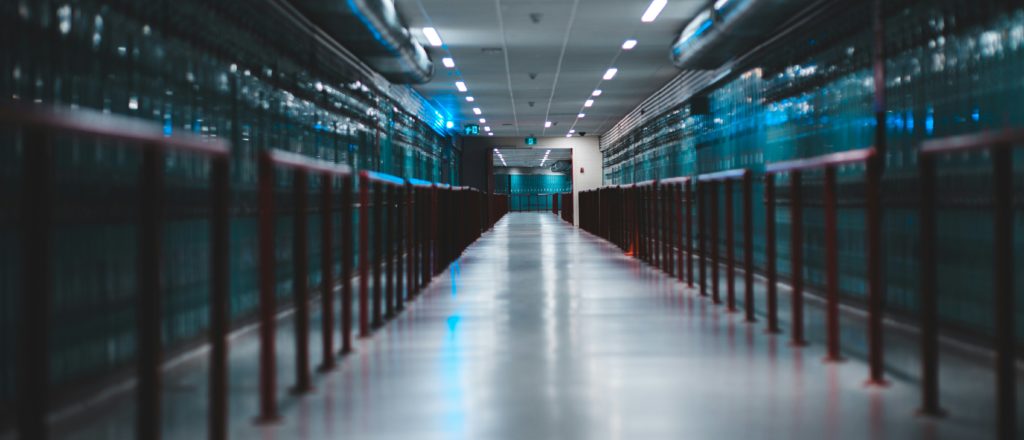

Unfortunately, the truth is considerably less romantic. The cloud has an address and that address is a neighborhood.

Across Virginia and around the nation, enormous data centers are being constructed just yards from homes, schools, parks and churches. These warehouse-sized facilities power everything from online banking and Netflix to ChatGPT and national security operations. They have become essential infrastructure in the digital economy.

Yet as their numbers grow, so too does a difficult question: can communities support America’s digital future without sacrificing the health and quality of life of the people who live beside it?

The answer depends largely upon whom you ask. To make a case for data centers, supporters argue that data centers are as essential. They create construction jobs, generate substantial local tax revenue and attract technology investment. Local governments often point to millions of dollars that help fund schools, roads, emergency services and public programs.

Unlike factories, data centers generally produce little traffic, once operational and employ relatively few workers on-site. Many also invest heavily in cybersecurity, renewable energy agreements and energy-efficient cooling technologies. For communities seeking economic development without heavy manufacturing, they can appear to be an attractive compromise.

If the emphasis is on economic development without heavy traffic and heavy manufacturing, then, why are residents concerned? Residents frequently describe learning about projects only after major planning decisions have already been made. Community meetings sometimes become emotional as citizens question whether their concerns were considered early enough.

Advertisement

Among the most common complaints are: constant noise from industrial cooling systems; large diesel backup generators that are tested periodically; massive electrical substations; bright security lighting operating around the clock; reduced property values; and, loss of green space and tree cover.

Perhaps the greatest concern is that once one data center arrives, additional facilities often follow. All of this takes place without proper consideration of health questions. While researchers continue studying long-term impacts, residents commonly express concerns about several potential health issues.

Noise pollution has been associated with sleep disruption, elevated stress hormones, anxiety, and increased cardiovascular risk. Continuous mechanical humming from cooling equipment can become a significant quality-of-life issue for nearby neighborhoods.

Backup diesel generators, although intended primarily for emergencies and periodic testing, emit particulate matter and nitrogen oxides. Air quality advocates argue that these emissions deserve closer monitoring, particularly where multiple facilities operate in close proximity.

Data centers also require significant amounts of electricity. In regions where additional fossil-fuel generation is needed to satisfy demand, public health experts have raised concerns about indirect impacts from increased power plant emissions.

Water consumption presents another challenge. Many facilities rely on extensive cooling systems that can consume millions of gallons annually, raising concerns during periods of drought or in rapidly growing communities.

Scientists continue to study these issues and not every facility presents the same risks. Modern designs vary significantly in cooling technology, energy efficiency and environmental controls.

Advertisement

Opponents often argue that local governments become dependent upon tax revenue while neighboring residents bear most of the inconvenience.

Supporters counter that everyone benefits from stronger schools, improved infrastructure, and expanded public services financed through those revenues.

Both perspectives contain elements of truth.

The key is finding common ground. Communities are demanding greater transparency before approving new projects. Residents are asking for independent environmental studies, continuous noise monitoring, stricter generator testing requirements, enhanced landscaping, setbacks from residential neighborhoods, limits on water consumption and regular public reporting regarding environmental compliance.

Many developers have responded by incorporating quieter cooling technologies, renewable energy commitments and greater community engagement. The debate is gradually shifting from whether data centers should exist to where they should be built and under what conditions.

Artificial intelligence, cloud computing and digital communication are transforming nearly every aspect of modern life. None of it happens without data centers. The challenge facing communities is not whether technology should advance.

It is whether progress and neighborhood well-being can advance together.

It is definitely a conversation worth having.

The cloud may be invisible to most of us. But for families living next door to the buildings that make it possible, its footprint is impossible to ignore.

Deborah A. Wilson is a Georgetown University Law graduate and practicing lawyer in Northern Virginia. She is the author of The Seam, Secrets Beneath the North Pole.

The views and opinions expressed in this commentary are those of the author and do not reflect the official position of the Daily Caller News Foundation.

All content created by the Daily Caller News Foundation, an independent and nonpartisan newswire service, is available without charge to any legitimate news publisher that can provide a large audience. All republished articles must include our logo, our reporter’s byline and their DCNF affiliation. For any questions about our guidelines or partnering with us, please contact [email protected].