


The number of cyber warfare incidents appearing to inadvertently target commercial airliners has spiked dramatically in recent months amid global wars and geopolitical tensions, The Wall Street Journal reported Monday.
To deter drone or missile attacks, militaries involved in wars often engage in GPS spoofing to jam or disrupt aerial weapons â a tactic that has been utilized in the ongoing conflicts in the Middle East and Europe. But these disruptive attacks have spilled past those regions and started to hamstring U.S. and other airliners, causing panic and confusion while planes are airborne, aviation and regulatory officials told the WSJ.
The attacks, which began roughly a year ago, affected over 1,100 flights in August, compared to only a few dozen in February, according to research from SkAI Data Services and the Zurich University of Applied Sciences, as cited by the WSJ.
âThe risk is growing in terms of the number of occurrences,â Florian Guillermet, executive director of the European Union Aviation Safety Agency, told the WSJ.
Most of the cyber jams are emanating from the Middle East and Europe, both of which are currently embroiled in conflict amid the Israel-Hamas and Russia-Ukraine wars, according to the WSJ.
The Russia-Ukraine war began in 2022 and has shown no signs of stopping, instead pulling the U.S. and the West further into the conflict in their support of Kyivâs defenses. Similarly, the Israel-Hamas war, which began roughly a year ago, has only escalated and drawn in other actors such as Iran and the Lebanese-based terror group Hezbollah.
The jams can often materialize in the form of glitches in an airlinerâs GPS system, according to the WSJ. In one instance in March, a pilot flying an American Airlines flight suddenly got a âpull up!â warning while passing over Pakistan, even though the plane was flying at an altitude of 32,000 feet.
âIt was concerning, but it wasnât startling, because we were at cruise altitude,â Capt. Dan Carey, who was piloting the plane, told the WSJ, noting that had the glitch been combined with another in-flight emergency, it could create an âextremely dangerousâ situation.
In some instances, a flagrant âpull up!â command has indeed caused pilots to lift the plane necessarily, according to the WSJ.
âIf we lose an airplane because of workload issues because of these problems weâre encountering, compounded with an emergency, that is going to be a horrendous event,â Ken Alexander, the Federal Aviation Administrationâs chief scientist for satellite navigation, said during a pilot union event in September, according to the WSJ.
The manner in which modern airliners operate means that the glitches could last for minutes at a time, creating fraudulent warnings and diverting flight paths, according to the WSJ. Major airlines are consulting with plane manufacturers to search for solutions, although fixes to the problem arenât expected until next year at the earliest, according to people with knowledge of the matter who spoke to the WSJ.
In the meantime, pilots are being trained to recognize and ignore GPS glitches and false âpull up!â commands, according to the WSJ.
âThese pilots are doing double duty in the cockpit,â Todd Humphreys, professor of aerospace engineering at the University of Texas, told the WSJ. He said the industry and regulators should fast-track work to harden planes against spoofing before one has an accident. âThis is embarrassing for the airline industry, for the carriers and for the ,â he said.
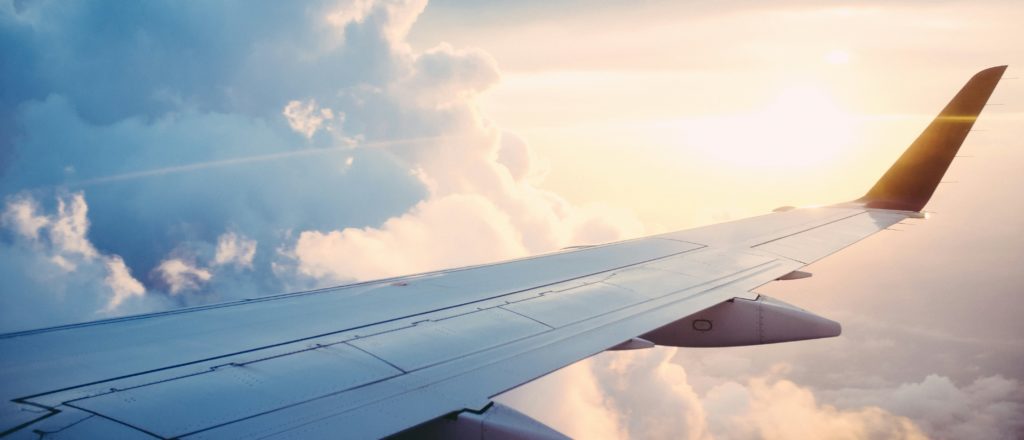
(Featured Image Media Credit:Â Ross Parmly/Unsplash)
All content created by the Daily Caller News Foundation, an independent and nonpartisan newswire service, is available without charge to any legitimate news publisher that can provide a large audience. All republished articles must include our logo, our reporterâs byline and their DCNF affiliation. For any questions about our guidelines or partnering with us, please contact [email protected].