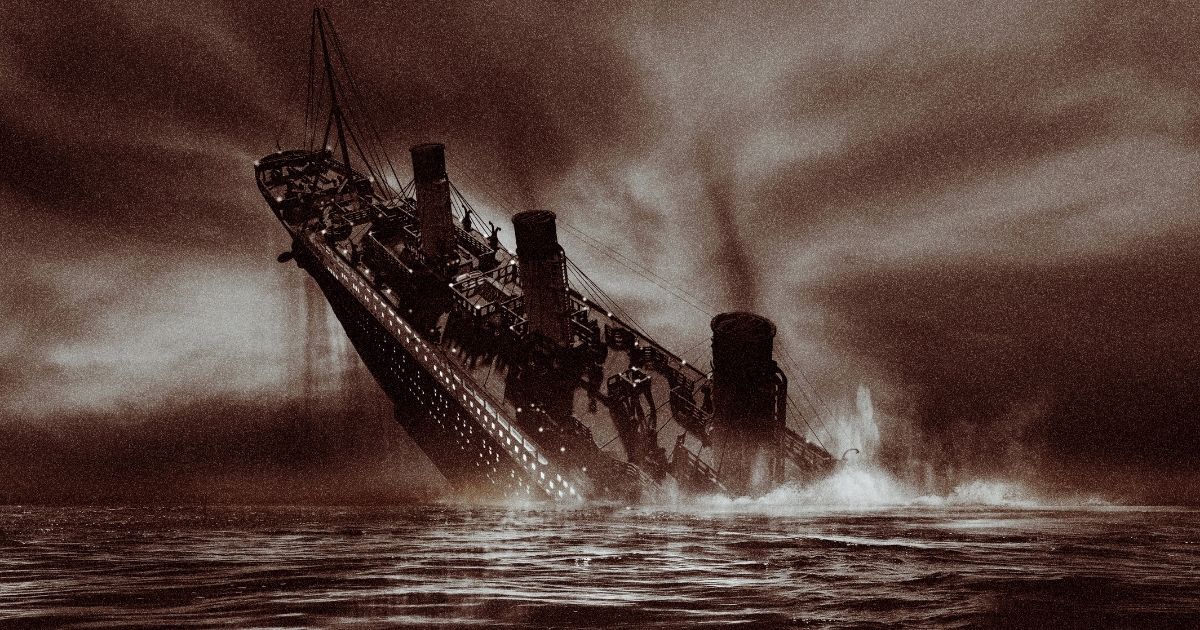



The fabled RMS Titanic, which sank in 1912 in one of the most chronicled maritime disasters in History, is slowly vanishing as it sits on the floor of the Atlantic Ocean.

As noted by the Australian news outlet News.com, speculation exists that by 2030, much of the wreck could have thoroughly eroded.

A bacteria called ā€œHalomonas titanicaeā€ is eating away at the iron that makes up much of what was left after the ill-fated liner plunged to the bottom after hitting an iceberg on its maiden voyage.

ā€œYes, like all things, eventually, Titanic will vanish entirely. It will take a long time before the ship completely disappears, but the decomposition of the wreck is to be expected and is a natural process,ā€ said Patrick Lahey, president and co-founder of Triton Submarines, according to Business Insider.

ā€œThe ship has certainly deteriorated just as one would expect a steel vessel to degrade over time,ā€ Lahey said.

Paul-Henri Nargeolet, an oceanographer who explored the wreck as part of OceanGate’s inaugural Titanic Survey Expedition, returned last summer and noticed the change, according to Discover.

ā€œStep by step, everything is collapsing,ā€ he said. ā€œAnd we will, I’m sure, next year, see some difference.ā€

Advertisement

He said the bow of the ship was deteriorating, and the ship’s mast had collapsed upon the remnants of the deck.

Should the wreck of the Titanic be left alone? YesNo
Completing this poll entitles you to our news updates free of charge. You may opt out at anytime. You also agree to our Privacy Policy and Terms of Use. Yes: 100% (7 Votes) No: 0% (0 Votes)

šŸ“ŗ Embedded media — coming soon

ā€œThere is one place on the ship where I saw, maybe 20 years ago, some little pieces of coral starting to grow,ā€ Nargeolet says. ā€œAnd today they are huge. It looks like a megaphone or something like that, and they’re absolutely beautiful.ā€

Stockton Rush, CEO, and founder of OceanGate, said that the Titanic’s resting place will also have some presence of the ship.

ā€œTheĀ TitanicĀ is going to be around for centuries. It just won’t be recognizable, at some point. You know, once the bow rail goes, it becomes just a pile,ā€ he said. ā€œBut it’s going to be an artificial reef way past my death.ā€

In the meantime, experts are trying to preserve what they can and record everything they can.

Advertisement

ā€œWe have to recover artifacts, even pieces of the ship, and preserve them for the next generation — if we don’t do that, everything will be lost,ā€ Nargeolet said, according to the Belfast Telegraph.

As noted on the website TheTravel, myriad schemes have been advanced to raise the wreck from its resting place two miles below the surface, but the deteriorated condition of the wreck and the logistics of salvage make such a step all but impossible.

ā€œThe ocean is taking this thing, and we need to document it before it all disappears or becomes unrecognizable,ā€ Rush said, according to WMC-TV.

But bacteria are winning, Canadian microbiologist Lori Johnston said.

ā€œThere’s more life on Titanic now than there was when she was on the surface. It’s just not human life, it’s biological and organic life,ā€ she said, the Belfast Times reported.

ā€œAnd the wreck itself of the Titanic, because it is made of steel, is a very good food source at the bottom of the ocean.ā€

This article appeared originally on The Western Journal.