This Country Is Cracking Down On Social Media Speech — And It’s Not China Or Russia
Social media censorship and arrests over posts online have become prevalent in the United Kingdom (U.K.), especially in 2024. The U.K. has been at the forefront of implementing digital speech laws that regulate what…
Social media censorship and arrests over posts online have become prevalent in the United Kingdom (U.K.), especially in 2024.
The U.K. has been at the forefront of implementing digital speech laws that regulate what civilians can and cannot say online, with prohibitions on what it defines as “hate speech” or disinformation. As the country’s definition of what constitutes acceptable speech expands, individuals with seemingly no harmful intent have found themselves under arrest or criminally charged, especially this year, according to a review of multiple reports.
In one of many examples, a British Army veteran was arrested over a social media post he made denouncing LGBTQ and transgender activists; authorities said the post caused someone “anxiety,” according to Fox News. The veteran’s story is not unlike many in the U.K., finding themselves the target of the law over their opinions on social media, even if well-intentioned.
“Suppression of speech is a long-running trend throughout world history. Authoritarian governments have always used vague regulations and vague statutes that prohibit violence, and offensive or disruptive speech to go after political dissidents, people who disagree with the regime,” Ryan Bangert, senior vice president at Alliance Defending Freedom, told the 🏢Daily Caller News Foundation.
U.K. authorities have also warned that they won’t limit enforcement to British citizens — they’ll expand the scope to countries abroad as well, according
Sponsored
Sponsored
This Country Is Cracking Down On Social Media Speech — And It’s Not China Or Russia — IJR
The U.K. operates under the Online Safety Act, which was passed in 2023 and sets regulations against what it defines as hate speech, harmful content and misinformation. It also includes safety guidelines so that users can be protected against certain types of content.
The U.K.’s digital speech laws became the topic of international conversation this summer, following a crime that set off riots throughout the country. A man wielding a knife stabbed and killed three young girls outside a Taylor Swift concert in Southport in July, causing immediate and widespread outrage across the U.K.
Rumors started circulating online that the individual who committed the horrific crime — who was quickly arrested — was an illegal immigrant. It was later discovered that the criminal was a U.K. resident whose parents immigrated from Rwanda. It was further revealed the criminal was in possession of an al-Qaeda manual.
Anger had understandably consumed swaths of people, and riots broke across the country, often turning violent. Authorities quickly mobilized and began arresting individuals involved.
Keir Starmer, the U.K.’s Prime Minister, specifically targeted what he defined as “far-right” groups that were targeting Muslim communities, even as there were reports of violence from both parties.
Authorities also turned their attention to social media and began targeting users from spreading what the country defined as incitement of violence and racial hatred, according to reports. Reposting someone else’s opinion of the riots also theoretically made an individual subject to arrest.
“That clamp down quickly moved from opposing and prosecuting physical acts of violence, to what was viewed by the authorities as wrongful misinformation with thought crimes or speech crimes online,” Bangert told the DCNF. “And crossing that bridge, crossing that Rubicon, is exceptionally dangerous and exceptionally determined.”
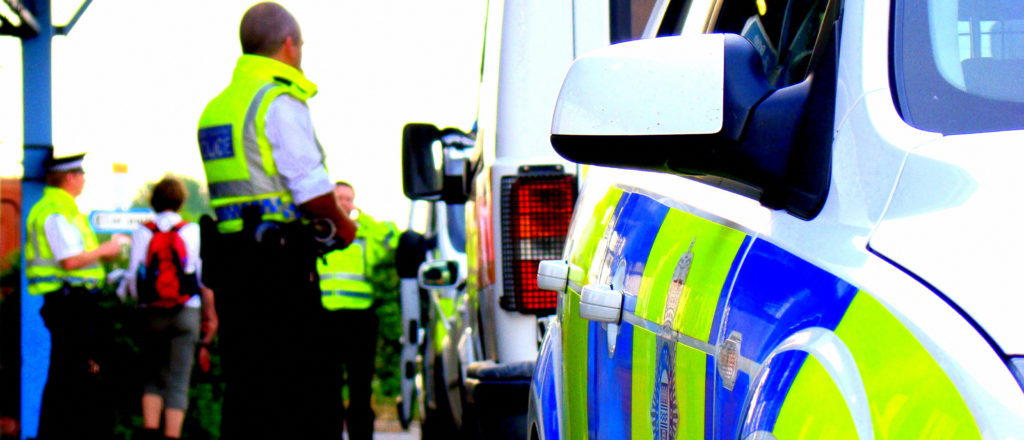
Hundreds of arrests were made while the riots were active, even for individuals who seemingly were sharing misguided opinions or troll posts. London’s police chief warned that the U.K. could also target individuals abroad.
“We will throw the full force of the law at people. And whether you’re in this country committing crimes on the streets or committing crimes from further afield online, we will come after you,” Rowley told Sky News in August, according to The New York Post. When asked about the people “behind the keyboard who may be in a different country,” Rowley replied that “being a keyboard warrior does not make you safe from the law.”
The U.K. has also relied on social media platforms to work jointly with authorities in tracking down and flagging users deemed harmful. According to a 2018 statement from the mayor of London’s office,authorities “developed effective working relationships with some social media providers, which enabled Hub officers to receive specialist training in investigating online hate.”
“There is still more to do, and and the continue to engage with social media providers to ensure they better understand the impact those who choose to use their platforms for harmful purposes,” the statement reads.
Between 2008 and 2017, there have been thousands of arrests in London alone “for offensive tweets, postings on Facebook and other social media,” according to the mayor of London’s office. Individuals have been arrested for using public communication networks to send “false messages,” “cause annoyance,” “inconvenience” or “anxiety” the mayor’s office claims.
The list of offenses also includes “sending by public communication network an offensive / indecent / obscene / menacing message or matter;” according to the mayor’s office. The data provided doesn’t differentiate between the nature or severity of the crimes committed by the individuals.
More clear and accurate data is found in figures obtained by British news outlet The Times, which indicated that in 2017 more than 3,300 people had been detained and questioned in 2017 for “ annoyance, inconvenience or needless anxiety to another.” Still, it’s difficult to determine the specifics of these violations.
Following this summer’s riots, the U.K. is looking to update digital speech rules and potentially impose new regulations on social media companies, according to Reuters.
The U.K. has also turned its ire against X (formerly Twitter), for its role in allowing content the country disagrees with to be platformed. British members of parliament plan to summon Elon Musk, owner of X, to testify on the matter, Politico EU reported Thursday. X was already under investigation by the EU for possibly violating the DSA and is now facing potential legal repercussions — despite the company being based in the U.S.
Musk was highly critical of the U.K. and Prime Minister Keir Starmer’s handling of the summer riots, especially in regard to censorship measures.
“Britain is turning into a police state,” Musk said in a post on X on Sunday.
All content created by the 🏢Daily Caller News Foundation, an independent and nonpartisan newswire service, is available without charge to any legitimate news publisher that can provide a large audience. All republished articles must include our logo, our reporter’s byline and their DCNF affiliation. For any questions about our guidelines or partnering with us, please contact [email protected].