



Three Days of Tribute at US Supreme Court and Capitol for Ruth Bader Ginsburg
The United States begins three days of tributes to Supreme Court Justice Ruth Bader Ginsburg on Wednesday, when members of the public will get the chance to pay their respects to her under the monumental Corinthian…
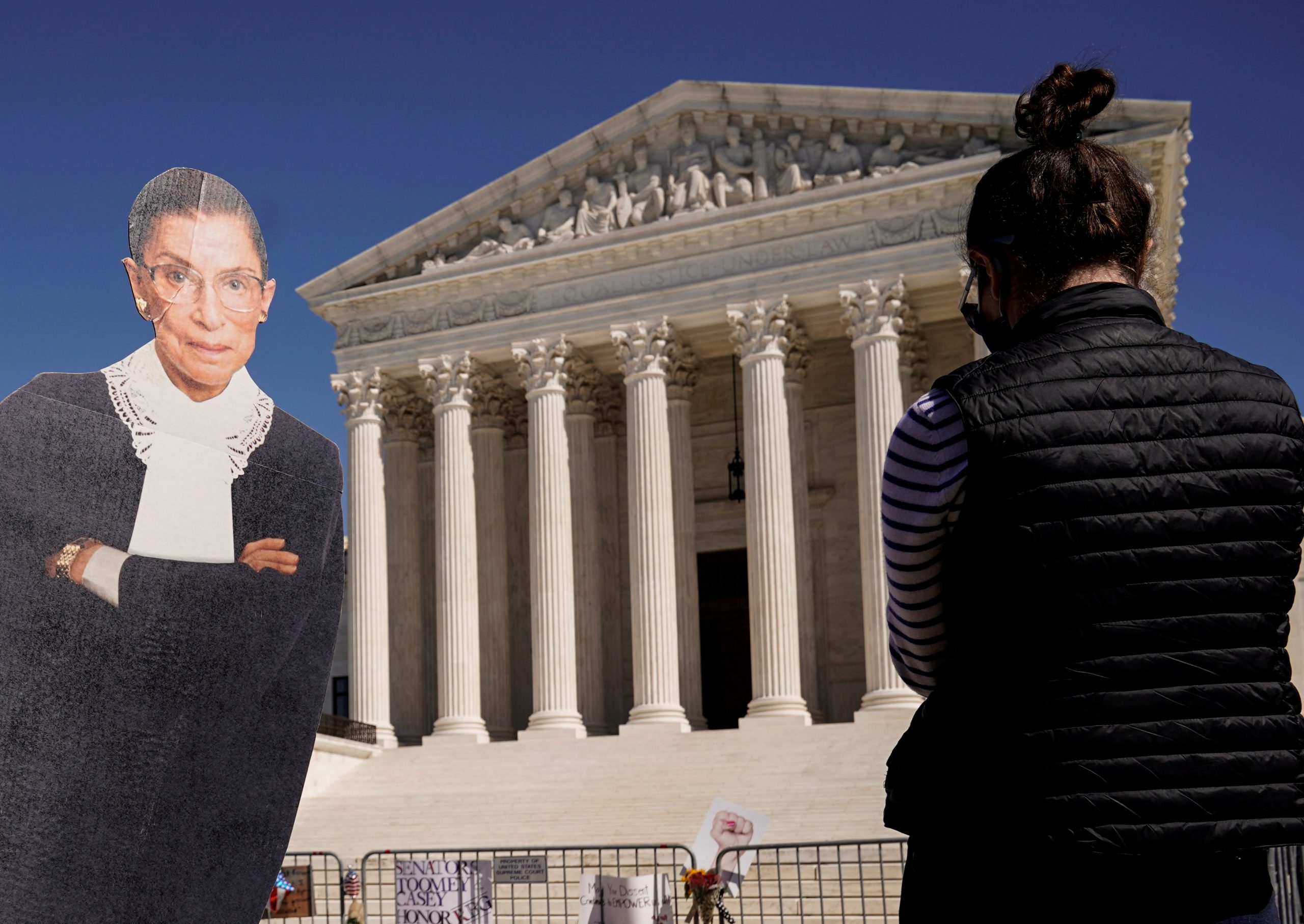
The United States begins three days of tributes to Supreme Court Justice Ruth Bader Ginsburg on Wednesday, when members of the public will get the chance to pay their respects to her under the monumental Corinthian columns atop the court’s front steps.
Ginsburg, who over the course of her long legal career championed gender equality and other liberal causes, in recent years became something of a pop icon for the American left.
Crowds of mourners packed the court’s steps after her death on Friday at age 87, leaving flowers and signs.
After two days of public viewing at the court, Ginsburg will on Friday become the first woman to lie in state in the U.S. Capitol when her casket is placed in National Statuary Hall.
Civil rights pioneer Rosa Parks was also mourned at the Capitol in a similar ceremony in 2005, but as someone who did not hold government or military office, she lay “in honor,” not “in state.”
Both historic events for Ginsburg, however, come with modifications due to the coronavirus pandemic.
U.S. House of Representatives Speaker Nancy Pelosi said that, due to the pandemic, a formal ceremony to be held on Friday morning will be limited to invited guests only.
At the courthouse, which remains closed to the public due to the pandemic, the justice will lie in repose under the portico outdoors to allow for public viewing. Officials said social distancing and face coverings will be required to participate to guard against the spread of the virus. Flowers and other offerings will be forbidden on the court’s plaza or its great flight of steps.