TikTok, Planned Parenthood And Porn: Here Are The Biggest Supreme Court Cases To Watch In The New Year
The Supreme Court will hear several consequential cases in the New Year, including cases on TikTok, age verification for porn websites and taxpayer funding for Planned Parenthood. In the past term, the Supreme Court…
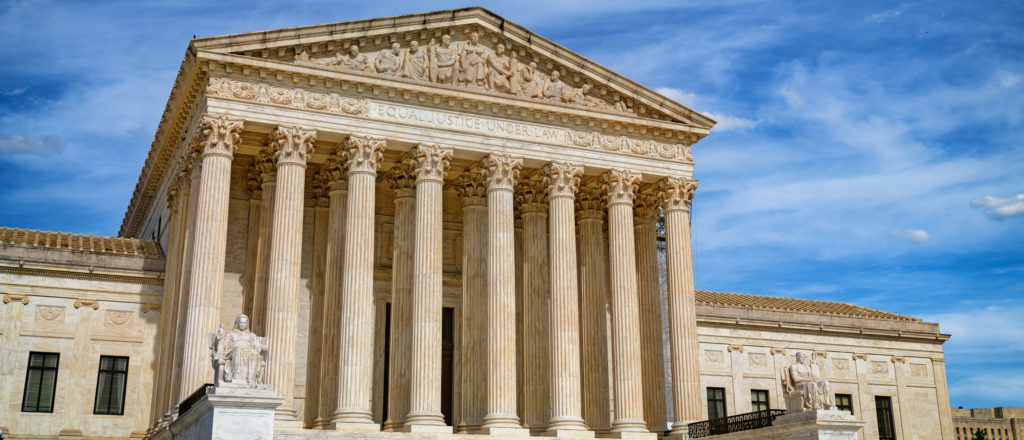
The Supreme Court will hear several consequential cases in the New Year, including cases on TikTok, age verification for porn websites and taxpayer funding for Planned Parenthood.
In the past term, the Supreme Court handed down massive rulings on presidential immunity, the administrative state, efforts to remove President-elect Donald Trump from 2024 state ballots and government entanglements in censorship. While the cases slated for next year are not as far reaching, the justices will still rule on multiple hot-button issues in 2025.
Nationwide TikTok Ban
Early in the new year, the justices will consider the law that could ban the popular social media platform nationwide. TikTok filed an emergency application mid-December urging them to put the law, which forces its Chinese parent company ByteDance to divest from the platform or face a ban on Jan. 19, on hold.
In an amicus brief, Senate Majority Leader Mitch McConnell wrote the Chinese Communist Party’s direct control of the app poses a “clear national-security threat,” explaining the law is designed to prevent the “mining of American data and deployment of subversive enemy propaganda through algorithmic curation.”
TikTok, however, argued in its filing that the law would “shutter one of America’s most popular speech platforms the day before a presidential inauguration.”
The justices quickly set oral arguments for the case on Jan. 10. Trump urged the justices in a filing Friday to prevent the law from taking effect.
Porn Age Verification Laws
Another major case coming before the justices on Jan. 15 tests laws passed in 19 states requiring age verification to access online pornography. The Texas law directly at issue in the Free Speech Coalition, Inc. v. Paxton mandates websites that publish “sexual material harmful to minors” to verify users are over 18 years old.
The Free Speech Coalition, an advocacy group representing online pornography distributors, argues the law also impedes adults’ ability to “constitutionally protected expression.”
In March, PornHub entirely disabled access to its website in Texas in response to the law.
Most children today are exposed to pornography by age 13, with many reporting they have been exposed to violent porn, according to a study by Common Sense Media. Teens often are exposed to online porn accidentally.
Religious Tax Exemption
When Catholic Charities requested a religious exemption to opt out Wisconsin’s unemployment program and enroll in the Wisconsin Bishops’ Church Unemployment Pay Program (CUPP), it was denied. The Wisconsin Supreme Court upheld the decision, finding Catholic Charities’ work with the poor was not a “typical” religious activity.
The state court’s ruling “forces agencies and courts to second-guess the religious decisions of religious bodies,” Catholic Charities argued in its petition.
The Supreme Court agreed to take the case in early December and will likely hear it in the spring.
Defunding Planned Parenthood
States’ ability to restrict Medicaid funding from going to Planned Parenthood is on the docket this spring.
In 2018, Planned Parenthood and a patient sued South Carolina over the state’s decision to exclude abortion providers from receiving Medicaid funds for family planning services.
Planned Parenthood argues Medicaid recipients have “the right to choose to receive their medical care from any qualified and willing provider.” The Fourth Circuit Court of Appeals sided with Planned Parenthood in March.
“Taxpayer dollars should never be used to fund facilities that make a profit off abortion,” Alliance Defending Freedom (ADF) Senior Counsel and Vice President of Appellate Advocacy John Bursch wrote in a statement after the case was granted. “Pro-life states like South Carolina should be free to determine that Planned Parenthood and other entities that peddle abortion are not qualified to receive taxpayer funding through Medicaid.”
Other Rulings To Watch
The Supreme Court will issue rulings by July on cases it has already heard, including the Biden administration’s “ghost guns” rule and the Food and Drug Administration’s (FDA) refusal to approve flavored e-cigarettes.
In December, the Supreme Court heard arguments for a major case challenging Tennessee’s ban on sex change procedures for minors, which will impact similar laws in nearly half of the states.
All content created by the Daily Caller News Foundation, an independent and nonpartisan newswire service, is available without charge to any legitimate news publisher that can provide a large audience. All republished articles must include our logo, our reporter’s byline and their DCNF affiliation. For any questions about our guidelines or partnering with US, please contact [email protected].