



As Protests Rage, Trump Will Not Move to Seize Control of National Guard Troops
President Donald Trump will not take the dramatic step for now of seeking control of the National Guard, his national security adviser said on Sunday as protests flared in U.S. cities after the death of an unarmed black…
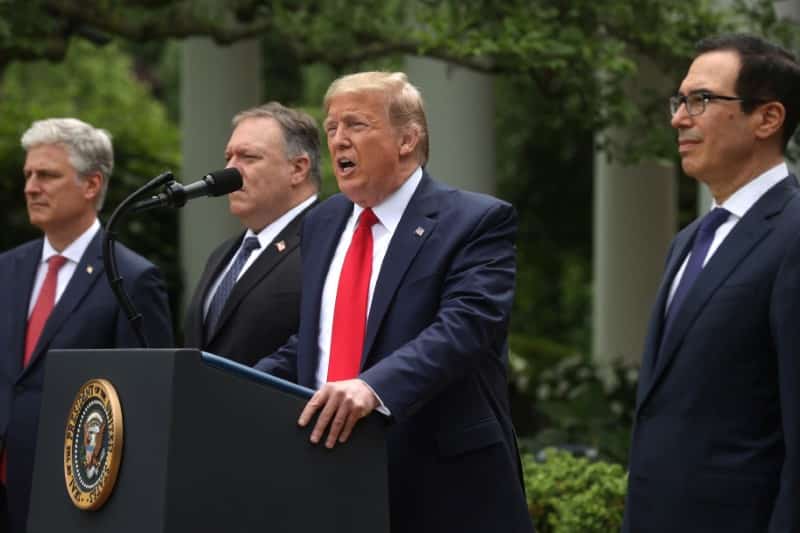
President Donald Trump will not take the dramatic step for now of seeking control of the National Guard, his national security adviser said on Sunday as protests flared in U.S. cities after the death of an unarmed black man in Minneapolis in police custody last week.
“We’re not going to federalize the Guard at this time. But, if necessary, we have further military assets that can be deployed,” Robert O’Brien told reporters at the White House. “We’ll do whatever the governors or mayors need to keep control of their cities.”
Civil unrest has swelled following Monday’s death of George Floyd, who was shown on video gasping for breath as a white Minneapolis policeman knelt on his neck.
The National Guard said on Sunday that 5,000 soldiers and airmen had been activated in 15 states and Washington, D.C., but that “state and local law enforcement agencies remain responsible for security.”
A presidential move to federalize National Guard troops is rare, occurring about 12 times since the mid-1900s, mostly during the Civil Rights era of the 1960s, according to the National Guard press office. It was not invoked in protests following the deaths of other black men in recent years in Ferguson, Missouri, and Baltimore.
The Minnesota National Guard has been armed following detection by the FBI of a “credible lethal threat” specifically against it, Jon Jensen, the adjutant general of that state’s Guard, told reporters in a call.
Jensen told Minnesota Governor Tim Walz about the threat, which the FBI informed the Guard about on Thursday, and Walz approved the arming of the Guard, he said. Troops were carrying ammunition in magazine pouches, not in firearms, Jensen added.
‘DO BETTER AS A COUNTRY’
In addition to Minnesota, states that have activated troops include Colorado, Georgia, Kentucky, Ohio, Pennsylvania, North Carolina, South Carolina, Texas and Washington, the Guard said in a statement. An additional 2,000 troops were ready to activate if needed.