UN Agency Tells Merchants Not To Arm Against Pirates Despite 90 Sailors Being Held Hostage
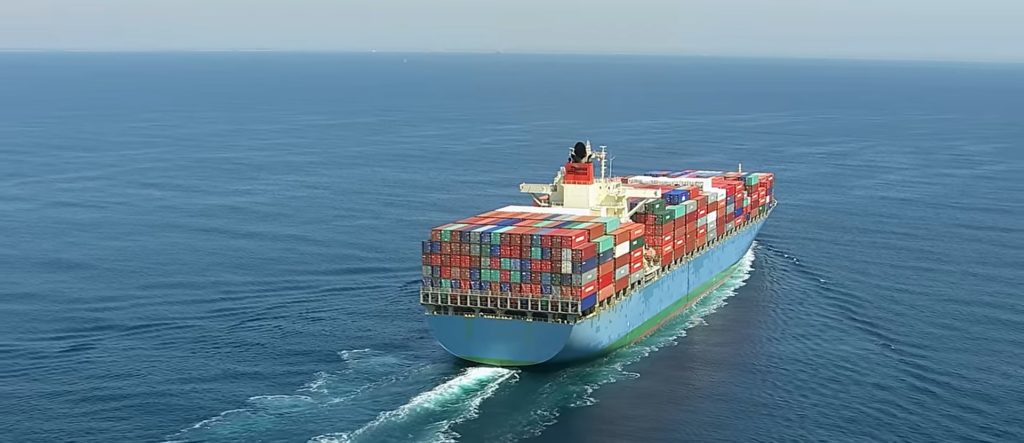
A United Nations agency told countries to “strongly discourage” merchant ship crews from acquiring firearms to defend against piracy, despite 90 sailors being held hostage by Somali pirates.
A United Nations agency told countries to “strongly discourage” merchant ship crews from acquiring firearms to defend against piracy, despite 90 sailors being held hostage by Somali pirates.
Piracy rose in 2025, according to the annual report from the International Maritime Organization (IMO) released in June, with 171 incidents of successful or attempted attacks on the high seas. However, the agency, tied to the United Nations, took a hard position against potential targets of pirate attacks using firearms to defend themselves, referring to a circular released in June 2015, in a press release issued days after Somali pirates seized an Eritrean oil tanker on August 22.
“For legal and safety reasons, flag States should strongly discourage the carrying and use of firearms by seafarers for personal protection or for the protection of a ship,” the circular said. “Seafarers are civilians and the use of firearms requires special training and aptitudes and the risk of accidents with firearms carried on board ship is great. Carriage of arms on board ships may encourage attackers to carry firearms or even more dangerous weapons, thereby escalating an already dangerous situation. Any firearm on board may itself become an attractive target for an attacker.”
“The use of privately contracted armed security personnel on board ships may lead to an escalation of violence,” the circular adds. “The carriage of such personnel and their weapons is subject to flag State legislation and policies and is a matter for flag States to determine in consultation with shipowners, companies, and ship operators, if and under which conditions this will be allowed. Flag States should take into account the possible escalation of violence which could result from carriage of armed personnel on board merchant ships, when deciding on its policy.”
Sponsored
Sponsored
UN Agency Tells Merchants Not To Arm Against Pirates Despite 90 Sailors Being Held Hostage — IJR
As of Monday, 90 mariners were being held by Somali pirates alone following the August 22nd seizure of the Eritrean tanker, according to an IMO release. IMO Secretary-General Arsenio Dominguez urged countries to follow guidance issued by the agency in the release, referencing the June 2015 circular.
The Strait of Malacca and the waters around Singapore saw the most attacks or attempted attacks, accounting for 122 of the 171 incidents, according to the annual report. The narrow waters, large amount of traffic and the numerous islands, inlets and coastal areas that can provide concealment and escape routes for pirates contributed to the frequency of attacks in that region, according to a Security Outlines report.
The IMO did not respond to a request for comment from the Daily Caller News Foundation regarding their recommendations, while the Department of War and Maritime Administration (MARAD) declined to comment.
MARAD referred the DCNF to the United States Coast Guard, which did not respond to a request for comment about whether the recommendations actually make American merchant mariners safer. Some called for allowing crews to be armed, saying it could serve as a deterrent to pirate attacks because pirates would be less likely to target victims due to the possibility of facing armed resistance.
The circular also stated that when going into a port or entering territorial waters, merchant ships were subject to the laws of the country whose port or waters were involved. Some countries, like Australia and Japan, have strict gun control laws.
According to research published by the Crime Prevention Research Center (CPRC), many studies have found that right-to-carry or concealed carry laws are associated with reductions in violent crime by increasing the potential risks faced by offenders. CPRC President John Lott dismissed the circular’s advice.
“It’s the same type of fear mongering that you see being brought up with regard to individual citizens defending themselves,” Lott told the DCNF. “With regard to civilians, you often see the claim in the media that people should behave passively when they’re confronted by a criminal, but that’s really a misreading of the evidence.”
Lott noted that when all forms of active resistance are compared to a passive response, the passive response is safer; however, passive responses poses far more risk for injury than using a firearm for personal defense.
“Women, for example, who behave passively are about 2.4 times more likely to end up being seriously injured. than a woman who has a gun,” Lott said. “Men who behave passively are about 1.4 times more likely to end up being seriously injured than a man who has a gun.”
Lott said the best way to reduce piracy, as with any crime, would be to increase the chances of a negative outcome for the pirates.
“You can make it riskier for criminals with higher arrest rates, higher conviction rates, longer prison sentences, but you can also make it riskier by allowing victims to be able to go and defend themselves,” Lott told the DCNF. “So you’re not even, to the extent that you deter them from attacking to begin with, you don’t even have to worry about whether it will escalate or not because the crime never happens.”
The United States has clashed with piracy since the first decades of its independence. In the early 1800s, the United States used naval power to combat piracy that threatened American commerce, with the most significant conflicts being the First and Second Barbary Wars in the Mediterranean, where pirates seized merchant ships and demanded tribute.
The United States later carried out a similar campaign in the Caribbean and Gulf of America, forming the West Indies Squadron. Since 2000, the United States Navy was involved in multiple engagements with pirates, notably off Somalia in violent incidents that included the 2009 Maersk Alabama hijacking.
All content created by the Daily Caller News Foundation, an independent and nonpartisan newswire service, is available without charge to any legitimate news publisher that can provide a large audience. All republished articles must include our logo, our reporter’s byline and their DCNF affiliation. For any questions about our guidelines or partnering with us, please contact [email protected].