



U.S. ‘Self-Defense’ Argument for Killing Soleimani Meets Skepticism
The Trump administration on Friday justified its killing of a top Iranian general as an act of self-defense, trying to deflect accusations that it violated international law and concerns raised by legal experts and a…
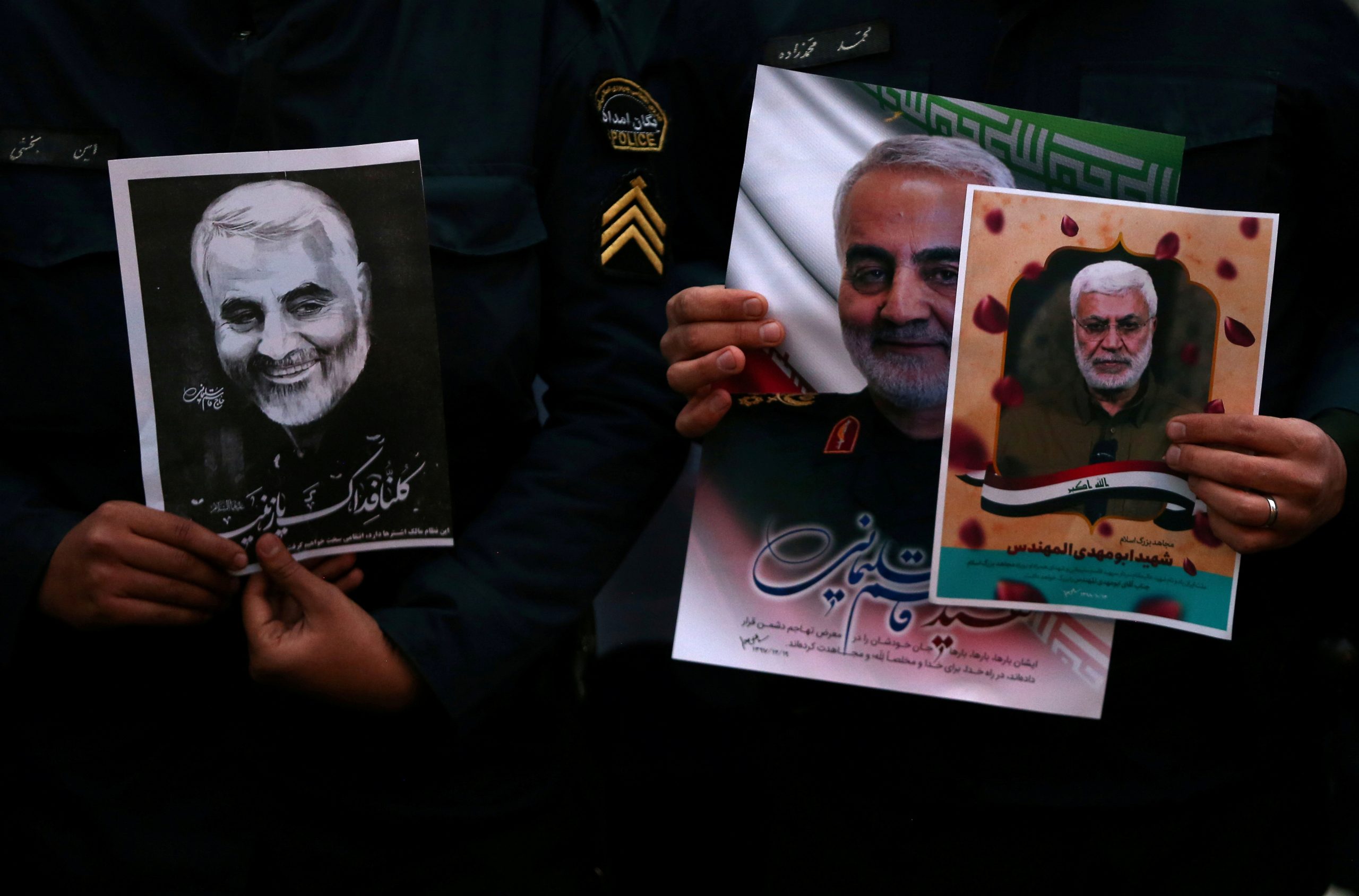
The Trump administration on Friday justified its killing of a top Iranian general as an act of self-defense, trying to deflect accusations that it violated international law and concerns raised by legal experts and a senior U.N. rights investigator.
Qassem Soleimani, the 62-year-old commander of Iran’s elite Quds Force, was killed in the U.S. air strike in Baghdad overnight. The attack, ordered by President Donald Trump, sent tensions between the United States and Iran soaring, with Iranian officials promising revenge.
As Republican and Democratic lawmakers sparred over the wisdom of the attack, some legal experts questioned whether Trump had the legal authority to target Soleimani on Iraqi soil without the permission of Iraq’s government, and whether it was legal under international and U.S. law.
Iraq’s prime minister said Washington had with the attack violated a deal for keeping U.S. troops in his country, and several Iraqi political factions united in a call for American troops to be expelled.
The U.N. Charter generally prohibits the use of force against other states but there is an exception if a state gives consent to the use of force on its territory. Legal experts said the absence of consent from Iraq makes it difficult for the United States to justify the killing.
Yale Law School professor Oona Hathaway, an international law expert, said on Twitter that the available facts “do not seem to support” the assertion that the strike was an act of self-defense, and concluded it was “legally tenuous under both domestic and international law.”
The Pentagon said targeting Soleimani was aimed at deterring “future Iranian attack plans,” while Trump said the Iranian general was targeted because he was planning “imminent and sinister” attacks on U.S. diplomats and military personnel.
Robert Chesney, a national security law expert at the University of Texas at Austin School of Law, said the administration’s best argument on the U.N. Charter issue is self defense. “If you accept that this guy was planning operations to kill Americans, that provides the authority to respond,” he said.
Scott Anderson, a former legal adviser to the U.S. Embassy in Baghdad under Trump’s predecessor, Barack Obama, said Trump’s justification so far under international law is questionable, but he could try to argue that the Iraqi government was either unwilling or unable to deal with the threat posed by Soleimani, giving the United States the right to act without Iraq’s consent.