
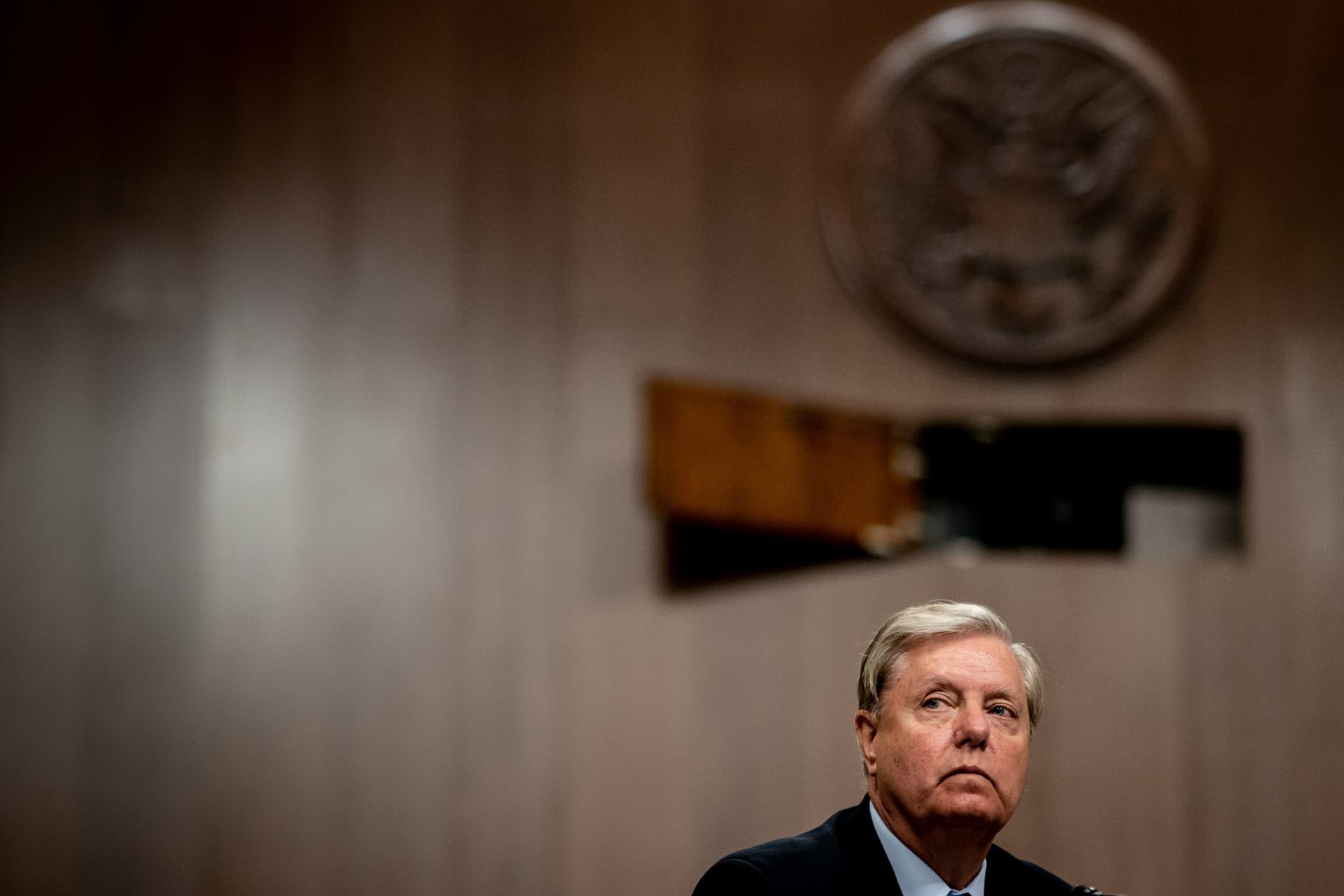
A divided Senate Judiciary Committee approved sweeping subpoena power on Thursday for a politically charged congressional probe of an FBI investigation into Republican President Donald Trump’s 2016 campaign and its contacts with Russia.
The Republican-led panel voted 12-10 along party lines to grant its chairman, Senator Lindsey Graham, authority to subpoena dozens of former Obama administration officials including former FBI Director James Comey and former national security adviser Susan Rice.
Republicans turned away multiple efforts by Democrats to gain authority to subpoena Trump advisers and former aides, including his current attorney Rudy Giuliani, former attorney Michael Cohen, former national security adviser Michael Flynn and former campaign advisers Roger Stone and Rick Gates.
Trump and his Republican allies contend that the probe code-named “Crossfire Hurricane,” which led to the 22-month Russia investigation by then-U.S. Special Counsel Robert Mueller, was a corrupt effort to undermine Trump’s candidacy and later his presidency.
“This is really unprecedented,” said Senator Dianne Feinstein, the panel’s top Democrat, who accused Graham of negating committee rules that require separate approval for individual subpoenas.
Graham said Democrats were simply trying to stop his probe. “I’m not going to be stopped,” he said.
The Russia probe overshadowed Trump’s presidency. A Justice Department watchdog said in December that investigators made numerous errors but found no evidence of political bias.
Democrats view the current Senate probe as a political ploy to harm Trump political rival Joe Biden, the presumptive 2020 Democratic presidential nominee in the Nov. 3 election, noting that Biden’s campaign chairman, Steve Ricchetti, is among the Republican subpoena targets.
Thursday’s vote came just over a week after former U.S. Deputy Attorney General Rod Rosenstein defended the Mueller investigation before the same panel. Mueller found numerous contacts between Trump’s campaign and Russia, but concluded there was not enough evidence to establish a criminal conspiracy.
(Reporting by David Morgan; editing by Jonathan Oatis)