Vietnam Vet Pens Powerful Letter to Soldiers Feeling Lost After Afghanistan Collapse
One of the first two American service members killed in the war in Afghanistan was Army Ranger Spc. Jonn Edmunds, who died when a Black Hawk helicopter crashed in Pakistan in October of 2001. Jonn was a resident of…
One of the first two American service members killed in the war in 🇦🇫Afghanistan was Army Ranger Spc. Jonn Edmunds, who died when a Black Hawk helicopter crashed in Pakistan in October of 2001.
Jonn was a resident of Wyoming. His father, Donn Edmunds, was heartbroken when one of the last American casualties of our 20-year war in 🇦🇫Afghanistan — Marine Lance Cpl. Rylee McCollum, who died in the Kabul airport bombing in August amid the American withdrawal — also was from his home state.
“That was a totally senseless death,” Edmunds told The Associated Press for an article published in September. “Seeing the other people losing their loved ones, all that does is bring back bad memories for my family.”
“Were any of the deaths worth it?” Edmunds told the AP. “No, I don’t think they were.
“All of these people’s sons were great. Every one of them was a traumatic loss for their family. And the thing about it is, what for? We have abandoned their mission.”
Ron Meier knows how Donn Edmunds feels. More importantly, he knows how Afghan vets likely feel, too. He has a message for them: “Your presence in Afghanistan has not been in vain.”
Sponsored
Sponsored
Vietnam Vet Pens Powerful Letter to Soldiers Feeling Lost After Afghanistan Collapse — IJR
In a September piece in The American Spectator titled “A Letter from a Vietnam Vet to Afghan Vets,” Meier assured vets they “made a big difference,” even if it didn’t feel that way.
“What you have done in 🇦🇫Afghanistan will be remembered fondly by many, if not most, of the country’s inhabitants with whom you’ve worked over the past 20 years,” he wrote. “I can attest to that from first-hand personal experience in Vietnam and from indirect experience as I followed my dad’s WWII footsteps in Europe.”
Meier talked about how, during his deployment to Vietnam, he and his fellow troops would count the days until they got back to what they referred to as “the World” — life as they knew it back home.
When they got stateside, he wrote, “We forced our prehistoric year into the backs of our brains and assimilated back into the World we had known before deployment” and the majority “repressed our thoughts for years or decades before reflecting with some wisdom on our year out of ‘the World.’”
Meier described spending the last half of his one-year tour in Vietnam “living on dikes in the rice paddies with about 100 Vietnamese soldiers. We spent two months each in three different locations with three different Vietnamese units. Some of the Vietnamese soldiers had families and the wives and children of those soldiers lived on the dikes with us.”
The Vietnamese children, he said, were fond of the American troops and had their schoolteacher write them a letter when the Americans left to go to a different location.
“We are very sorry and speechless with emotion to know that you will be removing to a different place. We want to describe our love and admiration for you. We have sympathy for your family while you have been with us and we have great esteem for you,” the letter read in part.
“That letter remained folded in an envelope for decades. It now hangs on my living room wall and I’ve told my children that it is my most valuable tangible possession. It has no financial value, but it is a ‘priceless’ reminder that we accomplished a mission that we had not been given,” Meier wrote.
It wasn’t just that for Meier. Among other things, he talked about a trip in 2008 where he traced his father’s route through Europe as a medic for the 4th Infantry Division in World War II between June 1944 and March 1945.
“I wore a patch in a holder on my outer garment as I visited tiny villages, cemeteries, battle sites, and museums on the route of the Division,” Meier wrote.
“What surprised me greatly was the extremely warm reception I received all along the route from French, Belgian, Luxembourg, and even German citizens. Many invested a great amount of time to tell me what they knew, to keep a museum open after closing hours so I could visit, to give me free entrance to museums, and to tell me places to visit that were not on my itinerary. I learned that, even today, Europeans greatly appreciate the American 🪖Military’s help and comfort during those horrible times.”
Meier had a bit of an epiphany after his trip — one he said he wrote in his journal at the end of it.
“What have I learned after my four-week pilgrimage? It is that the American soldier is the most kind, generous, helpful, friendly, caring, compassionate person to those people whose lives he has just violently disrupted, whose homes he has destroyed, and whose most valuable possessions he has just reduced to unrecognizable dust,” Meier wrote.
“After that, despite the totally violent disruption of life, the people affected by the American soldier’s violence are extremely grateful and thankful for the American soldier who has liberated them from oppression and who has given them an opportunity to build a new life from the dust and rubble under their feet.”
That, Meier said, is a lesson that those who served in our longest war should keep in mind — even if the Taliban is back in control of the country.
“Your presence in 🇦🇫Afghanistan has not been in vain. You have had an enormous influence on the country’s inhabitants which they will recall with great appreciation long after 2021,” Meier wrote.
“If the Afghan political situation changes and you can visit the country later in your life, you’ll be warmly welcomed by many. You can hold your head proudly high and know that you have accomplished far more than you know.”
Those who lost loved ones in 🇦🇫Afghanistan can take the same solace.
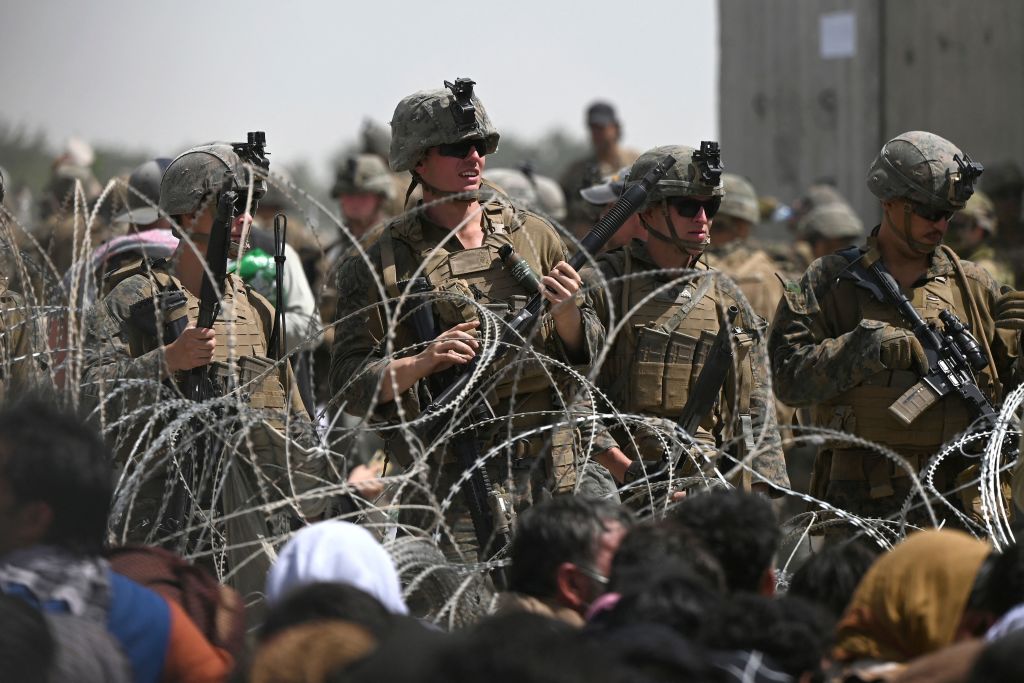
Yes, our nation’s longest war didn’t accomplish its goals. After 20 years there, the withdrawal was hastily planned. President 👤Joe Biden threw away much of our soldiers’ sacrifice. The scenes of people holding on to planes to escape the country or handing babies to American troops were heartbreaking.
However, it’s worth noting there’s a reason why they were handing their babies to American troops. The change we made wasn’t what we would have liked. Make no mistake, however: A change was made. One can only hope that in the future, the fruits of that investment will become more apparent to Gold Star parents such as Donn Edmunds or to the multitude of Afghan War 🎖️Veterans who think their service was for naught.
It wasn’t — and it’s not just America that owes you all a debt of gratitude.