



Wall Street Weekahead: Coronavirus Uncertainty Muddies Views on Buying Opportunities for Plunging Stocks
U.S. stock valuations are tumbling in the wake of the coronavirus-fueled market rout, but determining when equities are cheap enough to buy is a tricky proposition. The S&P 500’s <.SPX> price-to-earnings ratio, based on…
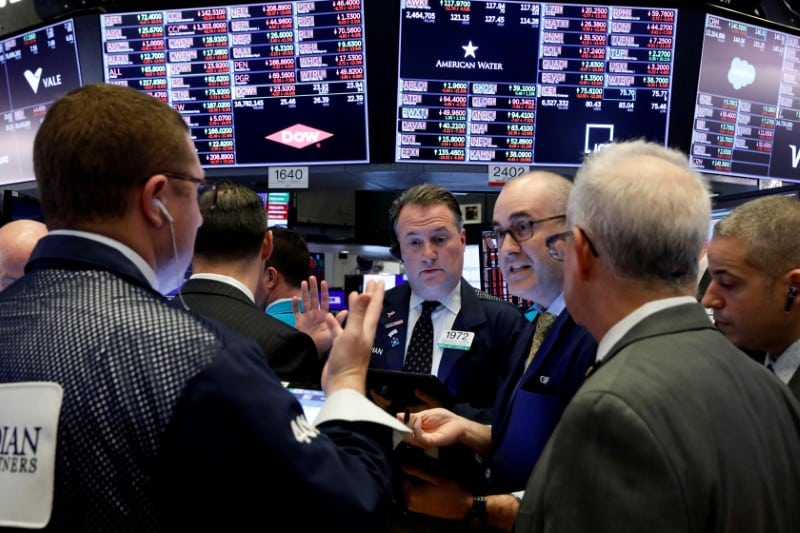
U.S. stock valuations are tumbling in the wake of the coronavirus-fueled market rout, but determining when equities are cheap enough to buy is a tricky proposition.
The S&P 500’s <.SPX> price-to-earnings ratio, based on earnings estimates for the next year, has dropped from over 19 in late February to 14.2 as of Wednesday, according to Refinitiv data.
The decline in forward P/E marks a drop from the highest level since about mid-2002 to a level below the index’s historic average.
But the numbers may be misleading. For example, many market watchers say overall earnings estimates have yet to adjust low enough to account for the economic fallout from the coronavirus pandemic. That adjustment would mean stocks, based on price-to-earnings valuations, are less attractive than they appear.
“It’s a little bit difficult to look at the P/E even for this year. The estimates are going to come down; they are still too high,” said James Ragan, director of wealth management research at D.A. Davidson. “It’s just so hard to even figure out what the impact is going to be.”
Consensus earnings estimates for 2020 are for S&P 500 companies’ earnings to rise by 2.7%, Credit Suisse analysts said in a note on Wednesday. That number falls to a decline of 0.7% for this year when only estimates updated in the prior seven days were used, Credit Suisse found, noting that “while we believe estimates will fall further, ‘fresh’ numbers better reflect current realities.”
BofA Global Research on Thursday cut its S&P 500 forecast so that it now projects earnings to fall 15% this year.
Companies may begin to shed some light on the economic damage when they start reporting first-quarter results in the middle of April.
“We have no idea where earnings are going at all,” said Lindsey Bell, chief investment strategist at Ally Invest. “We are probably not even going to get clarity on it until maybe Q1 reporting season … and even then I wouldn’t be surprised to see a lot of companies just pull guidance.”
Already this week, FedEx <FDX.N> and Marriott <MAR.O> walked away from their 2020 forecasts because of the uncertainty from the coronavirus, which has infected over 210,000 people globally and killed 8,900.