



As Warren Aims for Super Tuesday Rebound, Will She Alter Her Plan?
Hours before polls closed in New Hampshire, Democratic presidential candidate Elizabeth Warren’s campaign manager cautioned supporters that her expansive organizing operation would steadily collect delegates as the race…
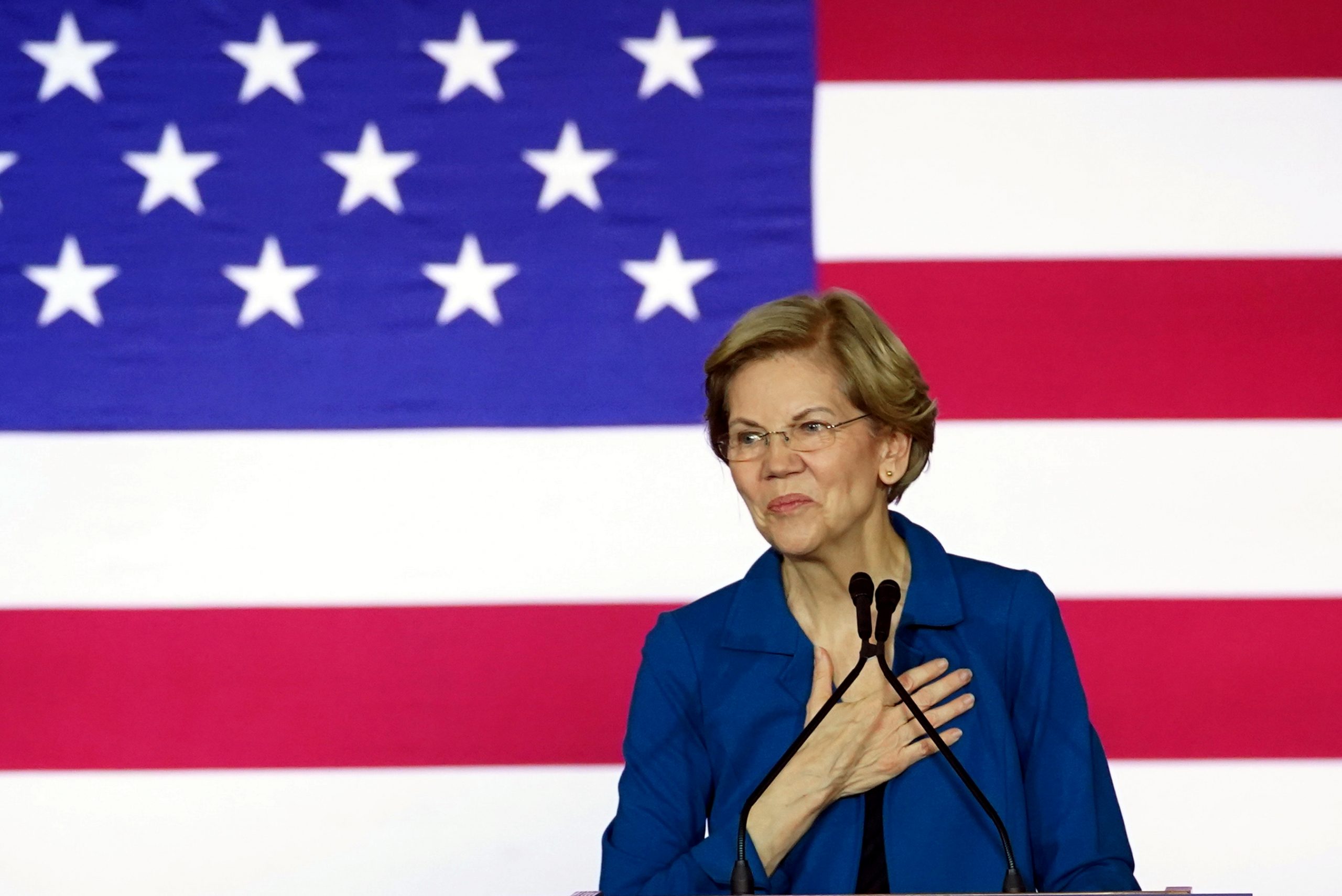
Hours before polls closed in New Hampshire, Democratic presidential candidate Elizabeth Warren’s campaign manager cautioned supporters that her expansive organizing operation would steadily collect delegates as the race proceeded no matter what happened in the state’s primary.
Then Warren walked away with none from New Hampshire.
It was a stinging tumble for the U.S. senator from Massachusetts, who as recently as September led polls in the state that neighbors her own. Coupled with a third-place finish in Iowa, the candidate best known for having a plan for everything now faces pressure to recalibrate on the fly to remain competitive.
The Democratic contest to pick a candidate to take on President Donald Trump in November moves on to Nevada and South Carolina later this month, followed by 14 states on March 3’s “Super Tuesday,” a critical juncture for Warren.
With more than 1,000 staff across 31 states, she controls the most extensive campaign infrastructure of any candidate aside from former New York City Mayor Mike Bloomberg, who skipped the early states and is dumping millions into Super Tuesday advertising.
But Warren’s enormous staff could also put financial pressure on a campaign funded entirely by grassroots enthusiasm.
“Warren is playing in so many states, with so much staff, that it’s like running an aircraft carrier. That requires a lot of cash,” said a senior adviser for Senator Amy Klobuchar, who placed third in New Hampshire and is now rushing to build out her own national campaign.
A national Reuters/Ipsos poll released on Monday ahead of New Hampshire’s vote showed Warren in fourth place, trailing Senator Bernie Sanders, former Vice President Joe Biden and Bloomberg.
Warren, who campaigned in the Super Tuesday state of Virginia on Thursday, has spent the last month casting herself as a “unity” candidate uniquely positioned among her competitors to appeal to both the progressive and moderate wings of a divided party.