



Watch: Tons of Dead Fish Mysteriously Blanket Japanese Beach, Puzzling Scientists Searching for Reason
Dead fish covered a Japanese beach for nearly a mile three months after authorities began the release of radioactive water from the damaged Fukushima nuclear plant. The fish were mostly sardines, but some mackerel were…
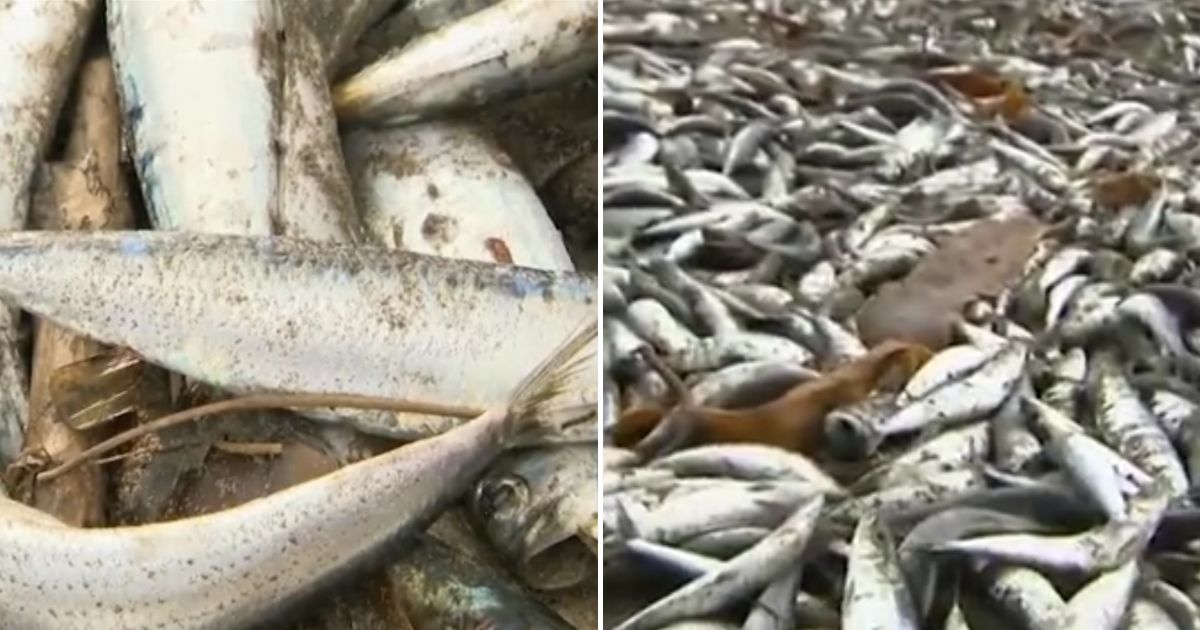
Dead fish covered a Japanese beach for nearly a mile three months after authorities began the release of radioactive water from the damaged Fukushima nuclear plant.
The fish were mostly sardines, but some mackerel were included in the “thousands of tons” that the U.K.’s Daily Mail said washed up on the northernmost main island of Japan, Hokkaido, Thursday morning.
📺 Embedded media — coming soon
Similar instances of dead fish washing ashore occurred this summer on the coasts of Texas and Thailand, according to reports from NPR and CNN at the time. In both of those cases, scientists blamed Climate Change.
“Water can only hold so much oxygen at certain temperatures, and certainly we know that seawater temperatures are rising,” Katie St. Clair, the manager of the sea life facility at Texas A&M University at Galveston, told NPR at the time of the Texas incident. “It is concerning and something that needs to be monitored.”
Since warmer water holds less oxygen, it can support fewer fish, Quintana Beach County Park official added. The effect can be even more pronounced in shallower water.