What Corporate Media Isn’t Telling You About Trump’s Cuts To Decades-Old Energy Efficiency Program
As corporate media outlets race to cast the Trump administration’s termination of an energy savings program as a net loss for Americans, experts note that the coverage omits several inconvenient facts. Several news…
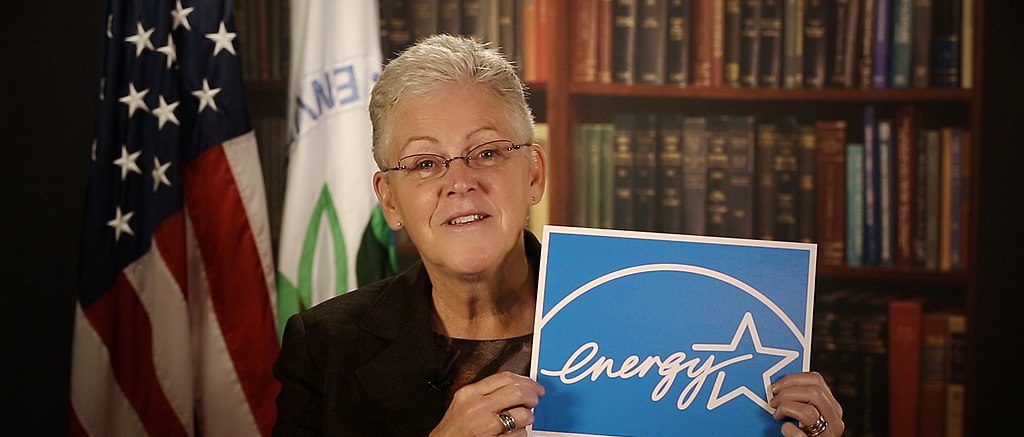
As corporate media outlets race to cast the Trump administration’s termination of an Energy savings program as a net loss for Americans, experts note that the coverage omits several inconvenient facts.
Several news outlets have recently reported that the administration’s Environmental Protection Agency (EPA) is looking to eliminate the Energy Star program, while seeming to gloss over criticism of the program and the fact it received multiple unsatisfactory reports from federal government audits. While Energy Star has reportedly saved American households and businesses over $500 billion in Energy costs since 1992, some experts have warned that the program can negatively impact consumers, such as by pushing them to purchase less effective appliances.
“I guess the nicest thing I can say about the Energy Star program is that it’s not as bad as the Energy efficiency regulations, because those are mandatory,” Ben Lieberman, a senior fellow who specializes in environmental policy at the Competitive Enterprise Institute, told the Daily Caller News Foundation. “But, the Energy Star label is at least supposedly voluntary, you don’t have to buy the Energy Star model, but that information is there if you want to.”
“That being said, I think the program has been misused in a variety of ways,” Lieberman added. “Environmental groups tend to pressure the big retailers to only carry Energy Star products, a lot of the tax credits that the government extends for appliances only apply to the Energy efficient or Energy Star models. So, it’s not as voluntary as it is made out to be … There’s also concerns that they’re trying to use the Energy Star program to pursue a climate agenda.”
“I would not be sad to see the program go,” Lieberman told the DCNF.
The EPA and the Department of Energy (DOE) launched Energy Star in 1992. The program was created to help consumers and businesses “save money and protect the environment through the adoption of Energy-efficient products and practices,” according to the DOE’s website.
A March 2010 report from the Government Accountability Office (GAO) found that Energy Star was “vulnerable to fraud and abuse.” GAO’s report also found that the Energy Star program’s controls that were in place at the time did not ensure that products actually met efficiency guidelines.
“Just the same as we choose many products without a government rating, we can choose our iPhones without a government rating, we can choose our lawnmowers without a government rating,” Diana Furchtgott-Roth, director of the Heritage Foundation’s Center for Energy, Climate and Environment, told the DCNF. “Think about all the appliances we buy every day that do not have a government rating … we do not need a government rating to be able to choose lower-Energy use appliances if this is what we want.”
GAO noted in its report that it created a variety of “bogus” products to covertly test if it could obtain Energy Star certifications for them. GAO reported it was able to acquire Energy Star certifications for 15 of the fake products, including a gas-powered alarm clock, while two of the “bogus” products were rejected by the program and three did not receive a response.
“A big part of that that people should understand is if you look at the term ‘Energy efficiency,’ the Energy Star program and the DOE’s standards are all about what they said was Energy efficiency,” John Kennerly Davis Jr., a senior attorney and former deputy attorney general for the Commonwealth of Virginia, told the DCNF. “If you have to run an Energy-efficient dishwasher twice to get the job done, then that’s not efficient.”
“By artificially imposing on the market these products that ‘yeah this dishwasher is more efficient but you have to run it twice,’ that’s the fatal conceptual flaw that people need to understand,” Davis Jr. added. “Energy efficiency is not task efficiency, and that’s why getting rid of this whole program is a very good thing for efficiency.”
Moreover, an October 2009 audit from the DOE’s Office of the Inspector General found that “officials had not … developed a formal quality assurance program” to help ensure that product specifications for Energy Star were adhered to. The audit report stated that the DOE had not “effectively monitored” the use of the Energy Star label to “ensure that only qualifying products were labeled as compliant.”
“In our judgment, the delay in the Department’s planned improvements in its management of the Energy STAR Program could reduce consumer confidence in the integrity of the Energy STAR label,” the report states. “Such loss of credibility could reduce Energy savings, increase consumer risk, and diminish the value of the recent infusion of $300 million for Energy STAR rebates under the Recovery Act.”
An August 2007 report from the EPA’s Office of the Inspector General found that there was “little oversight” in using the Energy Star label on products in retail stores.
“We found little oversight in using the Energy STAR label in retail stores, which is commonly the purchase point for the consumer,” according to the report. “ EPA could not provide documentation related to follow-up actions taken, final results for all retail store assessments, or the resolution status of label inconsistencies. We also found that manufacturers may label and sell products as Energy STAR qualified prior to submitting test results to the Agency. Using the label on products that do not meet Energy STAR requirements may weaken the value of the label and negatively impact the Energy STAR program.”
Similarly, a separate report from the EPA’s Office of the Inspector General published in 2009 found that the “performance results” of Energy Star and non-Energy Star products “call into question the assumptions used to calculate Energy savings and greenhouse gas reductions attributed to this program.” Moreover, a 2010 report from the EPA’s Office of the Inspector General found that the agency’s implementation of the Energy Star program was “inconsistent with the program’s authorized purpose” of achieving “environmental benefits by identifying and promoting Energy
“We believe the Energy STAR program has sought to maximize the number of qualified products available at the expense of identifying products and practices that maximize Energy efficiency,” the report states.
President Donald Trump has notably prioritized overturning a variety of Energy regulations during his second term, as part of his “unleashing American energy” agenda.
A source familiar with the program told the DCNF that Energy Star “is a non-statutory program the private sector can effectuate without taxpayer resources. The U.S. Department of Energy already regulates many of the sources covered by the EnergyStar program which leads to confusion among consumers. If companies falsely advertise their products, then they can be subject to penalties from other regulators further proving that a ‘government seal of approval’ is unnecessary.”
“With respect to all voluntary programs, companies do not need a federal government ribbon at the cost of taxpayers so that they can more easily sell products to consumers,” the source told the DCNF, adding that the cost of the product relative to potential savings over time does not need certification from the federal government.
All content created by the Daily Caller News Foundation, an independent and nonpartisan newswire service, is available without charge to any legitimate news publisher that can provide a large audience. All republished articles must include our logo, our reporter’s byline and their DCNF affiliation. For any questions about our guidelines or partnering with us, please contact [email protected].