



White House Responds to Catholic Bishops’ Request Regarding Immigration Raids Over Christmas
There’s something about Christmas that makes everyone reach for the soft-focus lens, and this year is no different. This time, the appeal came from Florida’s Catholic bishops, who asked President Donald Trump and…
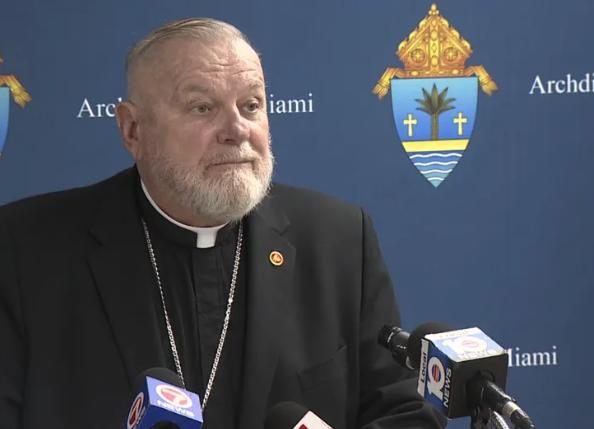
There’s something about Christmas that makes everyone reach for the soft-focus lens, and this year is no different. This time, the appeal came from Florida’s Catholic bishops, who asked President Donald Trump and Governor Ron DeSantis to press pause on immigration enforcement for the holidays. Just for Christmas, they argued. A season of mercy. A moment of calm. A symbolic ceasefire in what they see as an overly aggressive crackdown. The White House listened politely, then responded with a very Washington version of “no.”
To be fair, Archbishop Thomas Wenski of Miami didn’t exactly sneak this request in quietly. He put numbers on the table, pointing out that over half a million people have been deported this year and nearly two million more have voluntarily self-deported. He acknowledged that the border is now secured and that dangerous criminals have largely been identified and removed. That’s an interesting concession, considering how often we’re told enforcement never works. But then came the pivot: because the low-hanging fruit has been picked, enforcement now allegedly sweeps up people who are “just here to work,” including many with no criminal background, some of whom even have legal authorization that takes months to sort out.
From the bishops’ perspective, this creates fear, anxiety, and heartbreak during a sacred season. From the White House’s perspective, it creates a dilemma they already campaigned on. President Trump didn’t run on “seasonal enforcement.” He ran on restoring the rule of law, and voters put him back in office to do exactly that. White House spokeswoman Abigail Jackson summed it up bluntly: the president promised to deport criminal illegal aliens, and he’s keeping that promise. Christmas or not, the job continues.
This is where the tension gets interesting, because it’s not a cartoon villain-versus-saint scenario. Wenski isn’t wrong when he says immigrants, including those here illegally, play major roles in agriculture, construction, health care, and service industries. Anyone who’s hired a contractor or eaten at a restaurant knows that reality. And he’s not alone. Catholic leaders across the country, backed by the U.S. Conference of Catholic Bishops and even Pope Leo XIV, have been increasingly vocal, warning that mass deportations create a “climate of fear” and risk dehumanizing people made in the image of God.
But Republicans look at this and ask a different question: if not now, when? For years, enforcement was selectively ignored, borders were effectively open, and communities were told to accept chaos as compassion. Now that enforcement is finally happening, suddenly the timing is inconvenient. First it was “don’t enforce during COVID.” Then it was “don’t enforce during hurricane season.” Now it’s “don’t enforce during Christmas.” The calendar fills up quickly when the goal is delay.