Why Oil Market Held Firm In Face Of Another Middle East War
The Iran-Israel war did not spike in American energy prices, and the seeming end to the war indicates that there is unlikely to be one, energy sector experts told the Daily Caller News Foundation. The market is…
The Iran-Israel war did not spike in American ⚡Energy prices, and the seeming end to the war indicates that there is unlikely to be one, ⚡Energy sector experts told the 🏢Daily Caller News Foundation.
The market is resilient, with pro-fossil fuel Trump administration policies and enhanced global production offering the U.S. security that withstood the 12-day war between Iran and Israel, ⚡Energy experts told the DCNF. Despite Israel targeting and damaging energy infrastructure in Iran and the U.S. strikes against Iranian nuclear infrastructure, oil futures fell sharply after the market priced in Iran’s lackluster retaliation on Monday, staying stable in the days since as the Iran-Israel ceasefire held.
“Despite widespread fears, oil prices haven’t spiked due to the ongoing war in the Middle East — and that’s a testament to American
Sponsored
Sponsored
Why Oil Market Held Firm In Face Of Another Middle East War — IJR
⚡Energy
production,” Jason Isaac, CEO of the American
⚡Energy
Institute, told the DCNF. “The U.S. remains the world’s top oil producer, and our shale industry continues to bring stability to global markets even amid geopolitical chaos. Imagine where prices would be if we didn’t have this domestic supply. It’s another reminder of why we must double down on American
⚡Energy
.”
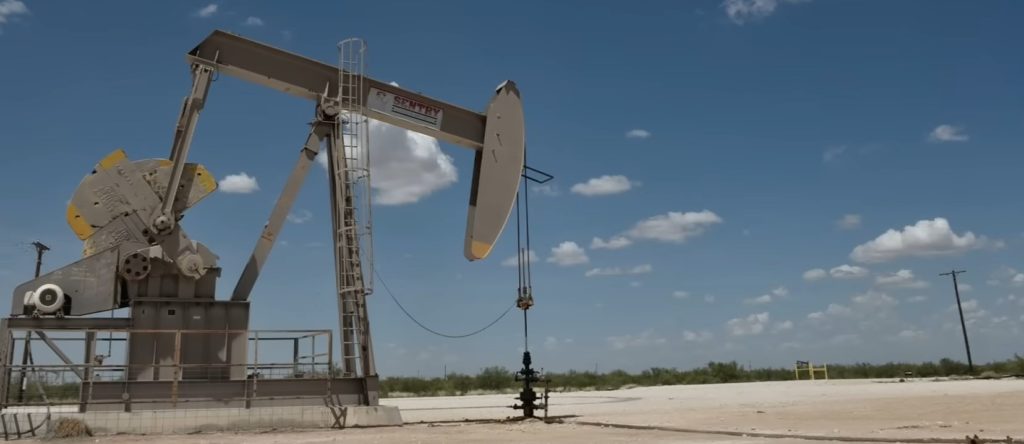
Israel attacked the world’s largest gas field on June 14, which is in Iran. Oil prices surged in the following days to over $7o a barrel, but they’ve returned to approximately $65 a barrel as of Wednesday in light of the ceasefire. Viewed historically, this increase was minute, according to ⚡Energy sector experts.
The war’s minimal impact on oil prices reveals that the era of the Middle East’s chokehold on oil supply could be over for good, experts told the DCNF.
“President Donald Trump is sending signals that the oil industry here is going to be very vibrant. He’s shrinking permitting time for fossil fuel projects, so expectations for fossil fuel supply in the United States are great,” Diana Furchtgott-Roth, director of the Heritage Foundation’s Center for ⚡Energy, Climate, and Environment, told the DCNF. “Prices are not set by current supplies. They’re set by future expectations. That’s why as soon as there’s a problem … the price of oil goes up,”
Furchtgott-Roth noted that President Donald Trump’s pro-oil policies place the country in a “dramatically different position” than it was in during the 1970’s oil crisis when Arab nations like Kuwait and Saudi Arabia ruled the world’s oil supply.
Ten years ago, it would have been unthinkable for war in the Middle East to only shift oil costs a few dollars, Furchtgott-Roth said. Following the shaleboom, the U.S. became a net exporter around 2019, which reshaped the balance of power in the oil industry. The U.S. pumps more oil than any country in history, amounting to more than a fifth of the world’s oil annually, according to data from the ⚡Energy Information Administration.
Due to Trump’s pro-⚡Energy policies, the U.S. is well braced to endure disruptions in the market, including wars in the oil-rich Middle East, according to ⚡Energy sector experts.
Furchtgott-Roth noted that the U.S. is a net oil and natural gas exporter and that Trump’s “⚡Energy dominance agenda” allows America to take advantage of its resources. Offshore drilling, oil and gas expansion in Alaska, as well as using national parks to expand ⚡Energy resources all signal that the domestic oil industry is positioned to grow in the coming years, according to Furchtgott-Roth.
Iran’s parliament voted to close the vital oil tanker passage known as the Strait of Hormuz on Sunday, though it does not appear that the Iranian regime will follow through with a closure. Multiple reports have stated that if the strait were to have been closed, global oil prices could have jolted. The U.S. urged China to stop Iran from closing the Strait, and the threat has yet to translate into action.
Though the U.S. has not imported oil from Iran for decades, when war affects supply, the impacts are felt worldwide, Kevin Book, co-founder and managing director of ClearView ⚡Energy Partners LLC and Justin Logan, director of defense and foreign policy studies at the Cato Institute, told the DCNF.
“Markets are very resilient,” Logan said, noting that the price of oil was “really, really cheap” before the war broke out. Futures returned to a rate as cheap as before the war broke out as of Wednesday morning.
Though the ceasefire is currently stable, the situation could still shift and impact oil costs, experts told the DCNF.
“If oil prices go up in one part of the world, they go up everywhere,” Logan said. Logan described the oil market as a “giant bathtub,” and that the amount of oil straining from the drain depends on how much oil suppliers are putting in the tub.
Assuming the ceasefire holds, the situation presents a golden opportunity for the U.S. to assert dominance over global oil markets, though the U.S. should exercise caution before celebrating, according to Marc Morano, publisher of ClimateDepot.com.
“Oil prices have remained relatively stable with minimal fluctuations — so far. It appears that the U.S. military strikes on Iran were surgical and not the beginning to a wider conflict,” Morano told the DCNF. “If the fragile cease-fire holds between Israel and Iran, that will further keep ⚡Energy prices from skyrocketing. But, before we celebrate, we must realize that this is an extremely volatile situation that could change in minutes. … The long-term insurance against Middle East conflict is continuing Trump’s America first ⚡Energy policies and making us more reliant on domestic sources of oil and gas.”
All content created by the 🏢Daily Caller News Foundation, an independent and nonpartisan newswire service, is available without charge to any legitimate news publisher that can provide a large audience. All republished articles must include our logo, our reporter’s byline and their DCNF affiliation. For any questions about our guidelines or partnering with us, please contact [email protected].