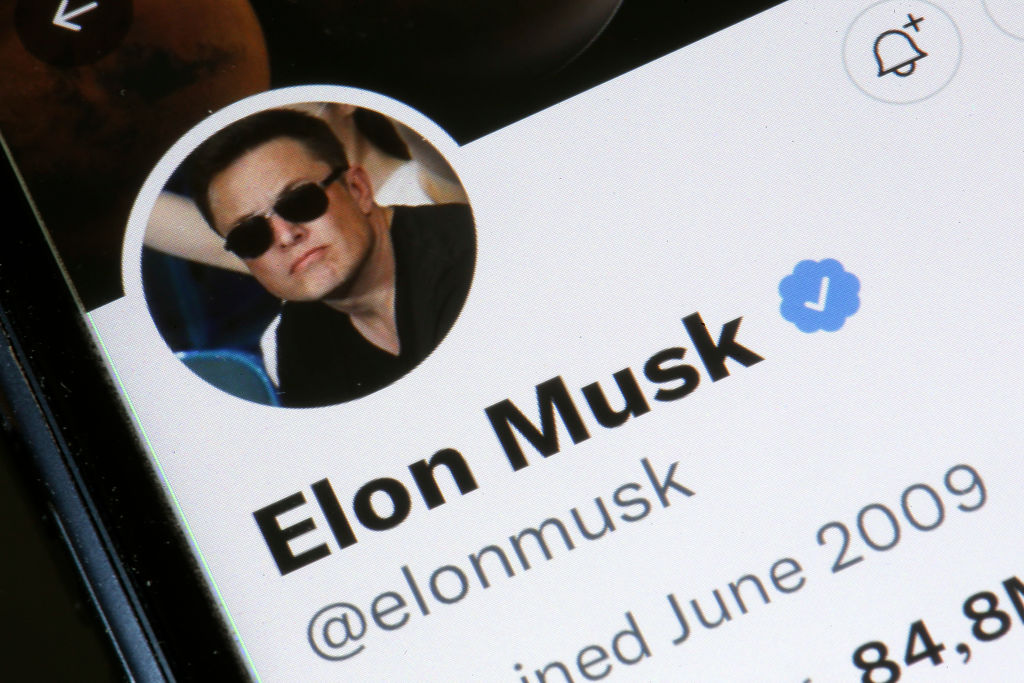
Will He Do the Same at Twitter? Musk Fired Any Tesla Employees Who Disagreed or Got in His Way
A mid-April tweet from Elon Musk that implied firing 12 floors of people was a good idea was greeted as part of the gadfly billionaire’s hyperbolic way of taking over Twitter. But a book about Musk suggests that there…
A mid-April tweet from 👤Elon Musk that implied firing 12 floors of people was a good idea was greeted as part of the gadfly billionaire’s hyperbolic way of taking over 🐦Twitter.
But a book about Musk suggests that there could be a bit of truth to that concept and reveals that behind the self-declared free speech absolutist lies an autocrat.
The book “Power Play: Tesla, Elon Musk, and the Bet of the Century,” by Tim Higgins of the Wall Street Journal, will not be a comfort to 🐦Twitter employees, who may find their woke cocoon shattered if the deal reached by Musk to buy Twitter moves forward to become reality.
The book portrays Musk as quick to fire those who crossed a line that only he knew existed, according to Business Insider.
Sponsored
Will He Do the Same at Twitter? Musk Fired Any Tesla Employees Who Disagreed or Got in His Way — IJR
Musk always made it clear that he was the boss, holding contractors and managers accountable. By 2017, he was also prowling the factory floor, according to the book.
“He’d always been quick to fire people, but it had historically been through managers, not in person,” Higgins wrote, according to Business Insider. “Now it might be whomever he came across on the factory floor.”
The book relates incidents that go back to 2006, when Musk summarily booted Tesla’s head of marketing and its public relations firm.
Mark Goldberg, a Morgan Stanley banker, said that in the run-up to Tesla’s IPO launch in 2010, Musk made it clear that those who did not get things done would be booted.
“I don’t have time for this,” the book quoted him as saying. “I’ve got to launch the f****** rocket!”
The book also noted that in one incident, Musk was irate about a problem whose solution was proposed by a factory worker.
Musk berated the worker’s manager.
“This is totally unacceptable that you had a person working in your factory that knows the solution, and you don’t even know that,” Musk is quoted as saying before firing the head of the factory.
So how will that play at 🐦Twitter? No one really knows.
A report in The New York Times, which is said to based upon 11 🐦Twitter employees it did not name, noted, “Employees said they worried that Mr. Musk would undo the years of work they had put into cleaning up the toxic corners of the platform, upend their stock compensation in the process of taking the company private and disrupt 🐦Twitter’s culture with his unpredictable management style and abrupt proclamations.”
“Employees have also wondered: Could he also move 🐦Twitter’s headquarters to Texas, as he did with Tesla? Could he end the company’s flexibility about returning to the office, which has become a selling point for employees and recruits?” the Times wrote.
Although the Times report noted some employees appeared to be positive about the change, David Larcker, a professor of accounting and corporate governance at Stanford University, said any time corporate culture changes, it can be a hard time for employees.
“The wild card is, what if it becomes a very different company than they thought they were working for? It’s an uncomfortable working relationship,” he said.