



World’s Largest Spiderweb Has Been Discovered
If you’ve got even the slightest fear of spiders, this might be the stuff of nightmares. Deep in a cave on the Albanian-Greek border, scientists have uncovered what can only be described as a real-life spider megacity —…
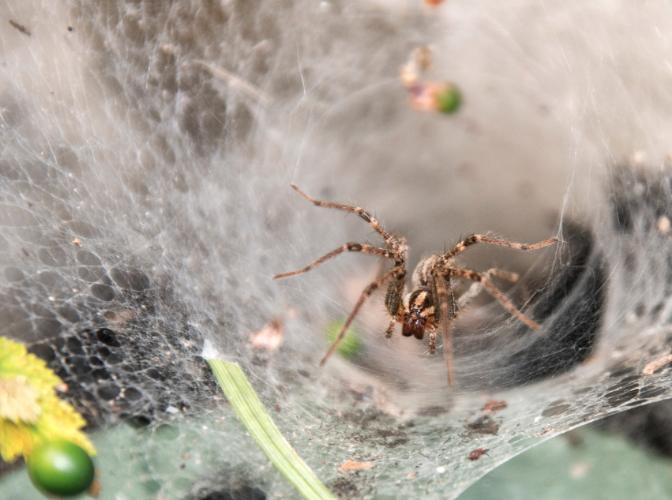
If you’ve got even the slightest fear of spiders, this might be the stuff of nightmares.
Deep in a cave on the Albanian-Greek border, scientists have uncovered what can only be described as a real-life spider megacity — a vast, tangled web sprawling across 106 square meters, or roughly 1,140 square feet. And it’s not just the size that’s sending shivers down the spines of researchers. This massive web is home to more than 110,000 spiders, coexisting in the darkness, weaving what’s now being called the largest web structure ever documented.
It was discovered inside the “Sulphur Cave,” a low-ceilinged, narrow passage about 50 meters from the entrance. This isn’t some dusty corner of an attic — this is deep underground, pitch black, and teeming with funnel-shaped webs stacked together like an otherworldly construction zone. It’s a place that feels less National Geographic and more like something out of a horror film or straight from Tolkien’s world — the twisted lair of Shelob, come to life.
But this isn’t fiction.
The sprawling silk network is shared between two very real species: the common house spider, Tegenaria domestica, and a much smaller, cave-loving species called Prinerigone vagans, which measures only about 3mm. In a discovery that stunned researchers, these spiders aren’t just surviving together — they’re thriving. Scientists estimate nearly 69,000 of the house spiders and over 42,000 of the smaller species are cohabitating in close quarters, forming a single unified web that, in some areas, is so heavy it’s beginning to pull away from the cave walls.
That’s not something you hear about every day. In fact, experts are calling this the first documented case of communal behavior between two different spider species — something that goes against nearly everything we thought we knew about spider instincts. Typically, these creatures are solitary and territorial. In most circumstances, the larger domestic spiders would allegedly see the smaller ones as food. But here, something unusual is happening.
The researchers, led by associate professor István Urák, believe the cave’s unique, sulfur-rich environment may have influenced this bizarre behavior. The pitch-black conditions may impair the spiders’ ability to detect each other clearly, leading to cooperation — or at least tolerance — that would be almost unthinkable on the surface. Instead of fighting, both species appear to be feeding on the midges and tiny insects that also inhabit the cave.