‘You’re A Rabid Progressive’: CEO Of Taxpayer-Funded NPR Skewered For Left-Wing Statements, ‘Pro-Censorship’ Views
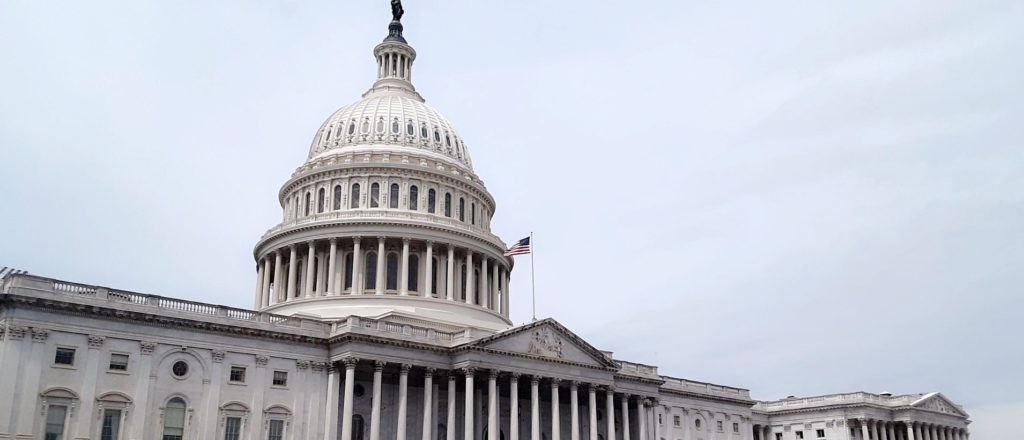
NPR CEO Katherine Maher faced questions from Republicans at a Wednesday House Oversight Subcommittee hearing over her history of far-left statements and support for censorship. Maher became CEO of NPR in March 2024 and…
NPR CEO Katherine Maher faced questions from Republicans at a Wednesday House Oversight Subcommittee hearing over her history of far-left statements and support for censorship.
Maher became CEO of NPR in March 2024 and faced backlash for her past social media posts in which she expressed support of former President Joe Biden and reviled President Donald Trump. During the Subcommittee on Delivering on Government Efficiency (DOGE) hearing, Republicans repeatedly pressed her on her past remarks, which she either dismissed or disavowed.
“Your public statements and social media posts reflect left-wing ideology and blatant opposition to free speech. After all, you were the head of Wikipedia for many years, which is a platform that doesn’t tell the truth,” Chairwoman Marjorie Taylor Greene opened her questioning of Maher. “Let’s walk through some of your statements so the public can understand your personal views … Your fellow Americans just selected Donald Trump as president again this past November. You called him a ‘deranged racist’ and ‘sociopath.’ You posted on X that ‘America is addicted to white supremacy.’ It’s appalling.”
Greene was referencing 2020posts by Maher that still appear on her X account. The Republican Georgia Representative also went on to reference a 2016
Sponsored
Sponsored
‘You’re A Rabid Progressive’: CEO Of Taxpayer-Funded NPR Skewered For Left-Wing Statements, ‘Pro-Censorship’ Views — IJR
post by Maher that criticizes former Secretary of State Hillary Clinton’s language, which also remains on her account.
“You’ve publicly chastised using the phrase ‘boy and girl,’ which you said ‘erases the language for nonbinary people.’ There’s only two genders by the way,” Greene said. “Miss Maher, the federal funding that your outlet receives comes from all American taxpayer dollars. Not just from year viewers who support such statements as these.”
Green also called out the CEO for her record of criticizing freedom of speech.
“Miss Maher, many find your pro-censorship and anti-free speech views more concerning than your 🏛️Politics. The only speech you like seems to be speech that you agree with. In 2021, you called the First Amendment ‘the number one challenge’ in American journalism because it makes it hard to crack down on bad information,” she said. “You said in a TED Talk that our ‘reverence for the truth might be a distraction.’ You’ve also expressed support for deplatforming individuals you view as fascist.”
“Who do you think should be charged with cracking down on so-called bad information? Is it NPR? Is it the government? Is it you, Miss Maher?” she asked.
Maher said neither she nor NPR should censor information they disagree with.
“I’m a very strong believer in free speech,” Maher asserted.
“Your public statements say otherwise,” Greene retorted.
Greene was in part referencing a 2021 Atlantic Council discussion, which she referenced again.
“You said that when you were CEO of Wikipedia, you ‘took a very active approach to disinformation and misinformation,’” she said. “During the COVID pandemic and the 2020 election, you said you censored information ‘through conversations with government.’ Which governments were those, Miss Maher? The Biden administration? Yes or no?”
“Madam chair, Wikipedia, never censored any information,” Maher asserted.
Greene noted that she was reading the CEO’s prior “public statements.”
Republican Texas Rep. Michael Cloud also called out Maher for her statements on truth and the First Amendment.
“You’re wanting us to believe that NPR is now taking this non-biased approach. I mean, where was the come to Jesus moment for you, I guess, that has turned you around and that we can trust the American taxpayer dollars with your leadership of NPR?” he asked.
“I so appreciate the opportunity to perhaps clarify some things. My talk about truth was really referencing the way that people use truth to refer to belief as opposed to facts,” Maher responded. “And my encouragement was that we focus on facts.”
Cloud disputed Maher’s characterization of her own remarks.
“That’s not what your comment said. Your comment said that truth was getting in the way of getting things done and that you were prioritizing what you wanted to get done over truth,” he said. “And that’s really unfortunate.”
Moreover, Republican South Carolina Rep. William Timmons questioned Maher on her past comments and whether they indicate bias.
“Do think that the public statements you have made on social media create a challenge in your leadership for what should be an unbiased public information system? Did they come up in your job interview? Like, do you see a problem?”
Maher said she did not face questions about her statements during her job interview before Timmons interrupted her.
“You’re a rabid progressive. Do you not think it’s a problem that your political leanings make it seem to the American people that you’re not biased and you’re not doing your job, because you agree that your job is to have journalistic integrity, right?” he asked.
“Absolutely, but there is a strong firewall between the newsroom and anything that I do,” Maher asserted.
Former NPR editor Uri Berliner published an essay for The Free Press in April 2024 exposing the outlet’s bias. He wrote that he discovered 87 Democrats in editorial roles and zero Republicans.
When Timmons pressed her on this statistic, she acknowledged it is concerning if true.
Republican Tennessee Rep. Tim Burchett later asked Maher why she made her 2021 post appearing to refer to Trump as a fascist and her 2020 post calling him a “deranged racist sociopath.”
“Congressman, I appreciate the opportunity to address this. I regret those tweets. I would not tweet them again today,” Maher said. “They represented a time where I was reflecting on something that I believe that the president had said rather than who he is. I don’t presume that anyone is a racist.”
NPR gets 1% of its roughly $300 million yearly budget directly from the Corporation for Public Broadcasting, the outlet reported.
All content created by the 🏢Daily Caller News Foundation, an independent and nonpartisan newswire service, is available without charge to any legitimate news publisher that can provide a large audience. All republished articles must include our logo, our reporter’s byline and their DCNF affiliation. For any questions about our guidelines or partnering with us, please contact [email protected].