



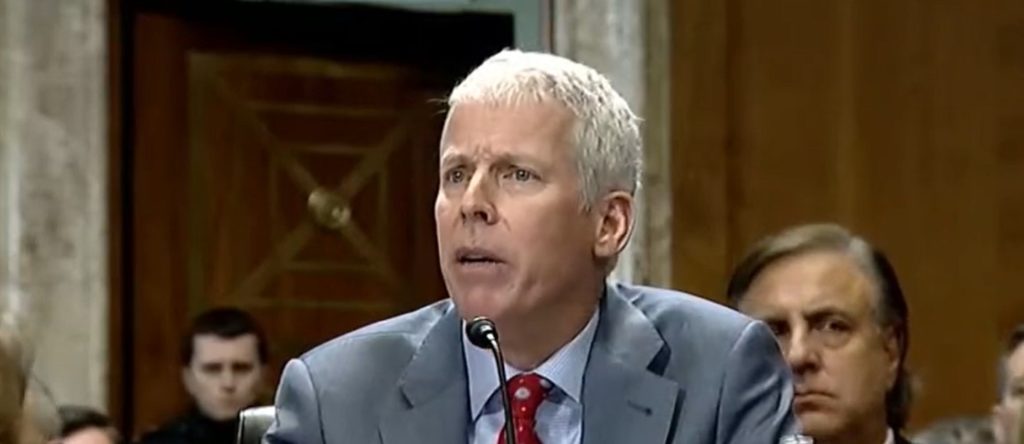
ExxonMobil CEO Darren Woods made big news during President Donald Trump’s White House meeting with oil and gas industry leaders when he told the President his company considers Venezuela to be “uninvestable” under current conditions. On Sunday – just six weeks later – U.S. Energy Secretary Chris Wright detailed how those conditions are rapidly changing in favorable ways.
In a press gaggle before departing Caracas on Sunday, Wright laid out a roadmap of concrete achievements and ambitious plans that prove one undeniable fact: Fast progress is happening in Venezuela under his and Secretary of State Marco Rubio’s leadership.
Wright’s days of meetings with Venezuelan President Delcy Rodriguez and other senior Venezuelan officials mark a historic pivot. For years, Venezuela’s once-vast energy sector has been crippled by socialist mismanagement, corruption, and U.S. sanctions that, while well-intentioned, ultimately hurt everyday Venezuelans while doing little to dislodge the Maduro regime. Trump’s agenda rejects the failed status quo of isolation and confrontation in favor of smart, results-oriented engagement. Wright is executing that vision with precision and urgency.
The Secretary made clear that the U.S. is issuing licenses “round-the-clock” to unlock investment and commerce. Existing and new businesses can now purchase supplies, deploy capital, ramp up oil production, create jobs, and expand export revenues. These licenses are not vague promises – they are active tools lifting decades of economic restrictions and delivering immediate relief to a nation desperate for opportunity.
Wright described frank, productive conversations with President Rodríguez on both opportunities and challenges. Rather than diplomatic niceties, the two sides are rolling up their sleeves to solve problems and unleash Venezuela’s enormous potential. That kind of candid dialogue, backed by real policy action, is already yielding results.
The production numbers Wright highlighted are nothing short of dramatic. Through close U.S.-Venezuelan collaboration, the country is poised for significant growth in oil, natural gas, and electricity output this year. Specific fields could see output double within 12 to 18 months and quintuple over five years, powered by targeted investments exceeding $100 million in critical facilities like Petropiar. These are not aspirational goals – they are grounded in the expertise and technology American companies are now free to deploy.
The economic benefits flow both ways. For Venezuelans, the focus is squarely on jobs, higher wages, and improved quality of life. For the United States, a revitalized Venezuelan energy sector means more stable global supplies, lower prices at the pump for American families, and stronger hemispheric security. The entire Western Hemisphere and global energy markets stand to gain from this renewed partnership.
Financial reforms could become equally transformative. Oil revenues, which have already topped $1 billion following the U.S. removal of former president Nicolas Maduro on Jan. 3, will now be deposited directly into the U.S. Treasury account rather than routed through questionable intermediaries like Qatar. Wright also issued a clear warning about the legitimacy of certain Chinese deals as American investment floods in – sending a strong signal that the era of these types of opaque, self-serving arrangements is ending.
Wright left Caracas brimming with optimism about the “enormous progress” already underway in overhauling Venezuela’s oil sector. He even floated the possibility of a future Trump visit, underscoring the historic nature of this mission. Most importantly, he emphasized freeing Venezuela’s economy from the constraints that have held it back for far too long. Let’s be clear: None of this happens without bold, competent leadership at the Department of Energy.
Critics on the left will no doubt clutch their pearls and warn of “blood oil” or some other manufactured outrage. They ignore the human reality: Millions of Venezuelans have suffered under failed socialism. Restoring legitimate energy production offers them hope, dignity, and a path out of poverty. It also advances core American interests by reducing reliance on adversarial suppliers like Russia, Iran, and OPEC+ cartels.
This is what real leadership looks like – in just weeks on this assignment, Wright has already set Venezuela on a trajectory of rapid recovery. The licenses are flowing. The investments are mobilizing. Production is ramping up. Revenues are being secured for the Venezuelan people and managed transparently.
As the conditions on the ground in Venezuela rapidly improve, the country is once again becoming investable for the major oil companies around the world. Who knows? If things keep improving, perhaps Woods himself might ultimately have a change of heart.
David Blackmon is an energy writer and consultant based in Texas. He spent 40 years in the oil and gas business, where he specialized in public policy and communications.
The views and opinions expressed in this commentary are those of the author and do not reflect the official position of the Daily Caller News Foundation.
(Featured Image Media Credit: Screen Capture/CSPAN)
All content created by the Daily Caller News Foundation, an independent and nonpartisan newswire service, is available without charge to any legitimate news publisher that can provide a large audience. All republished articles must include our logo, our reporter’s byline and their DCNF affiliation. For any questions about our guidelines or partnering with us, please contact [email protected].