



A few chip firms now hold more leverage than oil
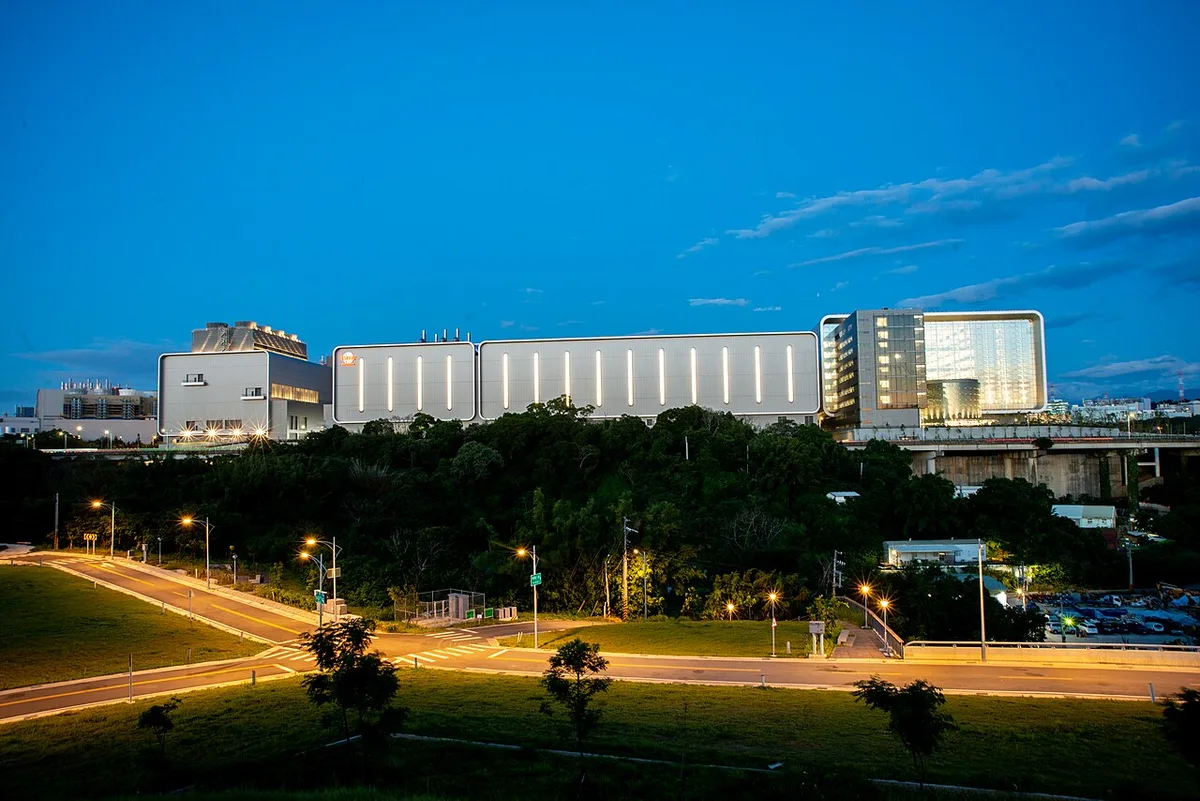
In 60 seconds
- Miller argues chips outrank oil as the resource that sets national power because a few firms control unsubstitutable steps.
- Early US lead came from engineers quitting to found rivals and from Pentagon buyers who funded the first scale.
- Japan’s 1980s DRAM rise showed manufacturing discipline and patient capital could beat American design in commodity segments.
- Fabless design plus TSMC’s pure-play foundry pulled advanced manufacturing into Taiwan; ASML alone builds the EUV machines those fabs need.
- Gulf War precision weapons made chip superiority a direct military multiplier and pushed China to treat semiconductors as security policy.
- US export controls aim to freeze China generations behind the frontier while Taiwan remains the fragile fulcrum of advanced supply.
The big idea
Miller argues that modern power runs through a handful of semiconductor chokepoints—above all TSMC’s advanced fabs and ASML’s EUV tools—more decisive than oil. That concentration grew from specialization and capital pressure, then became leverage in US-China rivalry.
The book in brief
Miller starts from an unplanned culture of engineer mobility that seeded Silicon Valley, then shows Cold War missiles and NASA as the first customers who made costly chips viable. Military scale opened civilian markets; initiative later shifted to global commercial firms. Japan’s capture of DRAM in the 1980s shattered any assumption of permanent American manufacturing lead and forced Intel toward microprocessors. Rising fab costs then pushed many US firms to go fabless, outsourcing the hardest physical work. Morris Chang’s pure-play foundry at TSMC matched that shift and pulled leading-edge logic production onto one island. ASML’s unique EUV machines became a second choke that allies could license or withhold. The Gulf War proved precision electronics multiply force, reframing chips as security infrastructure and spurring China’s long indigenous push. By the late 2010s Washington answered with export controls meant to hold China off the frontier. Miller ends on Taiwan’s extreme concentration: a possible deterrent that is also a single point of failure, only slowly eased by new fabs and industrial subsidies elsewhere.
Context
Chris Miller’s 2022 narrative history traces how semiconductors became the decisive resource of modern power. The book mattered because it reframed globalization as a fragile, engineered supply chain built for efficiency and now used for geopolitical leverage, just as US export controls and the CHIPS Act launched.
The key ideas

1
Engineers who walked out
Miller holds that Silicon Valley’s edge came from a culture that let engineers quit and found rivals, so talent circulated instead of staying locked in one lab.
- 1947Transistor at Bell Labs
- 1957Eight engineers leave Shockley for Fairchild
- 1958-59Integrated circuit at Fairchild and TI
- 1965Moore’s density-doubling observation
- 1968Noyce and Moore found Intel
Miller opens with the 1957 departure of eight engineers from William Shockley’s lab to create Fairchild Semiconductor. That quit became a template: ideas moved with people across firms rather than staying inside one company or a government lab. Robert Noyce and Gordon Moore later left Fairchild again to start Intel in 1968. Each move spread process know-how further; rivals hired one another’s engineers instead of relying on secrecy alone. The transistor had appeared at Bell Labs in 1947 inside a regulated monopoly. Fairchild’s planar process and the integrated circuit—developed by Noyce and independently by Jack Kilby at Texas Instruments in 1958-59—made complex circuits manufacturable at scale. Moore’s 1965 claim that density would roughly double every two years hardened into an industry commitment. Firms spent billions expecting rivals to hit the same pace, so falling one generation behind could end a player. Leadership, Miller argues, rested on capital intensity and organizational churn as much as clever circuits.
In practice: The traitorous eight left Shockley for Fairchild; Noyce and Moore then left Fairchild to found Intel, spreading expertise across the valley.
2
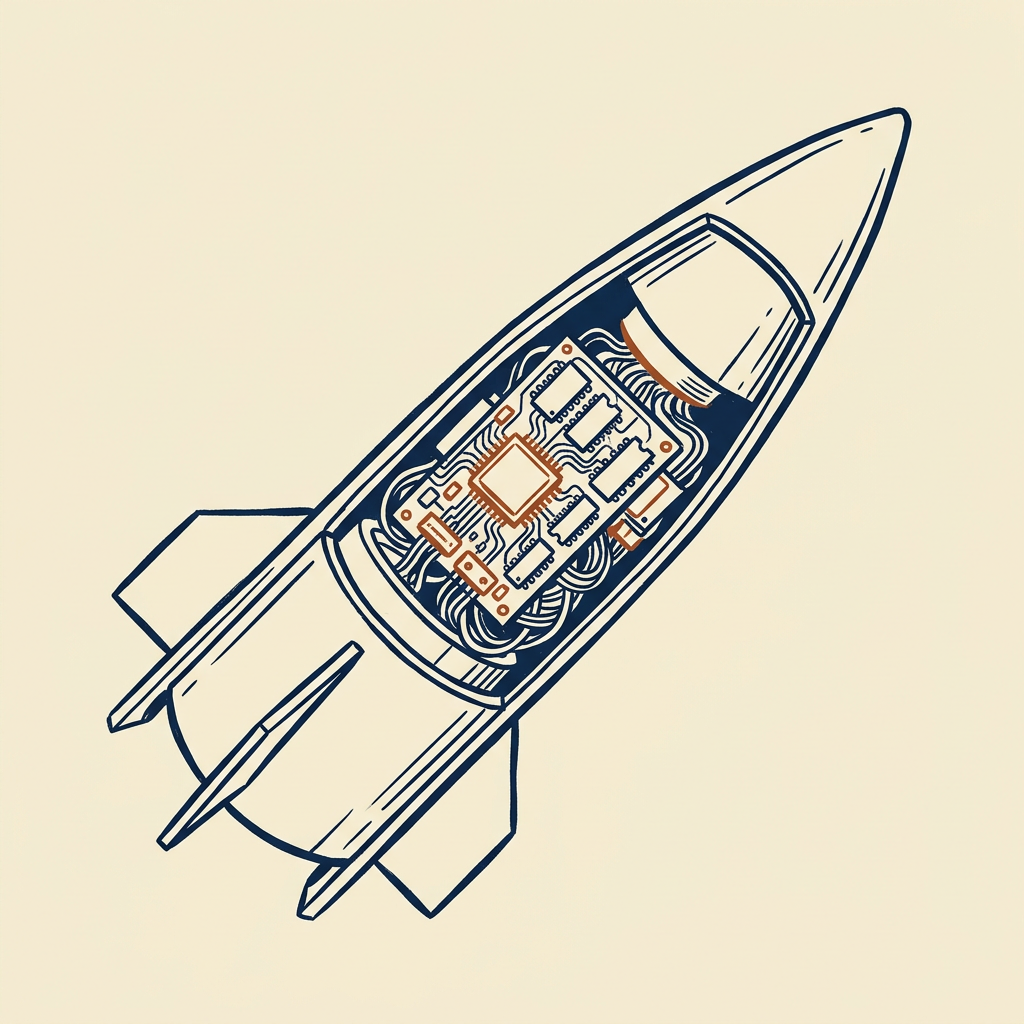
Missiles bought the first chips
Cold War military demand, not consumer markets, absorbed early fixed costs and made semiconductors commercially viable.
First decade
NASA and Air Force premium orders create volume
By the 1970s
Consumer electronics outgrow defense and set the frontier
In the first decade chips cost too much for ordinary buyers. The Apollo program and the Minuteman II guidance system were the customers who mattered. NASA and the Air Force paid premium prices for integrated circuits when almost no one else could. That volume let Fairchild and Texas Instruments ride costs down the learning curve. By the mid-1960s cheaper parts opened civilian markets—first calculators, then computers. Miller’s claim is that state demand did not so much distort a market as create one before commerce could sustain itself. Missile accuracy mapped directly onto transistor counts in a nose cone, locking in the idea that chip leadership equals military power. By the 1970s consumer electronics outgrew defense demand, and private global firms took the frontier—setting up the later shock when Japan surged in memory.
In practice: Apollo and Minuteman II paid premium IC prices that funded the learning curve before calculators and computers could.

3
Japan takes memory
Japanese discipline and patient capital seized the DRAM market in the 1980s, proving manufacturing could beat US design in commodity chips.
US approach
Design ingenuity, shorter capital patience
Japan’s rise
Defect focus, bank tolerance for thin margins, DRAM majority share
By the early 1980s NEC, Toshiba, and Hitachi held most of the global DRAM market and pushed aside American pioneers including Intel. Miller points to lower capital costs, bank ties that tolerated thin margins for years, and a defect-reduction culture. Hewlett-Packard’s own quality tests found Japanese chips failed less often than American ones. MITI coordinated some joint research, yet Miller stresses firm-level discipline mattered more than central planning and that popular accounts often overstate the ministry. Alarm in the US ran hot. Intel exited DRAM entirely in 1985 and bet on microprocessors—a pivot that later paid off when PCs exploded. Washington answered with trade pressure and the 1986 US-Japan Semiconductor Agreement, setting minimum prices on Japanese chips in the US and prying open Japan’s market. The chapter shows the first great disruption came from an ally, not a peer rival, so dominance was never guaranteed.
In practice: HP testing showed Japanese DRAMs failed less often; Intel quit the memory business it had invented in 1985.

4
Design leaves the factory
American firms went fabless to escape soaring plant costs, a rational move that seeded the overseas manufacturing dependency now treated as strategic risk.
Fab costs roughly doubled every few years as features shrank. Firms had to keep building ever-dearer plants or specialize in design and outsource production. Many chose the latter. Qualcomm and later Nvidia designed chips but never ran fabs, freeing capital for research and focusing on their strongest work. Actual fabrication—the hardest, most capital-heavy step—migrated to firms willing to own the plants. Offshoring here was not mainly cheap labor; wafer fabs are automated and capital-intensive. The driver was capital efficiency and specialization. Sematech, launched in 1987 with chipmakers and the federal government, pooled research to keep domestic manufacturing alive and helped equipment supply chains. It could not reverse the economics that made outsourcing attractive. Concentration of advanced capacity overseas became the vulnerability the rest of the book tracks.
In practice: Qualcomm and Nvidia designed without owning fabs; Sematech tried to slow the hollowing-out but could not rewrite the cost curve.

5
Chang’s foundry model
Morris Chang’s pure-play foundry at TSMC did not just build a company; it reorganized the industry around one geographic manufacturing choke.
- MMorris ChangTI veteran who founded TSMC in 1987 as manufacture-only
- FFabless clientsApple, Nvidia, Qualcomm designs run in TSMC plants
- TTaiwan ecosystemEngineers, suppliers, process skill built over decades
Chang, a longtime Texas Instruments manager, returned to Taiwan and founded TSMC in 1987 with government backing. The structural bet: manufacture only, on contract, for other firms’ designs. That removed the conflict that made fabless customers fear using an integrated rival’s plant. TSMC would never sell a competing chip against its own clients. The model fit the US fabless wave already underway. By the 2000s TSMC built for Apple, Nvidia, and Qualcomm. Miller stresses this was not chiefly cheap labor. Taiwan accumulated engineers, equipment suppliers, and process skill over decades that others could not copy quickly. By the 2020s TSMC made the large majority of the world’s most advanced logic chips—those below 10-nanometer nodes—needed for smartphones, AI, and advanced weapons. Globalization here consolidated risk onto one contested island rather than spreading it.
In practice: TSMC’s contract model won Apple, Nvidia, and Qualcomm as customers and came to dominate logic production below 10 nanometers.
6
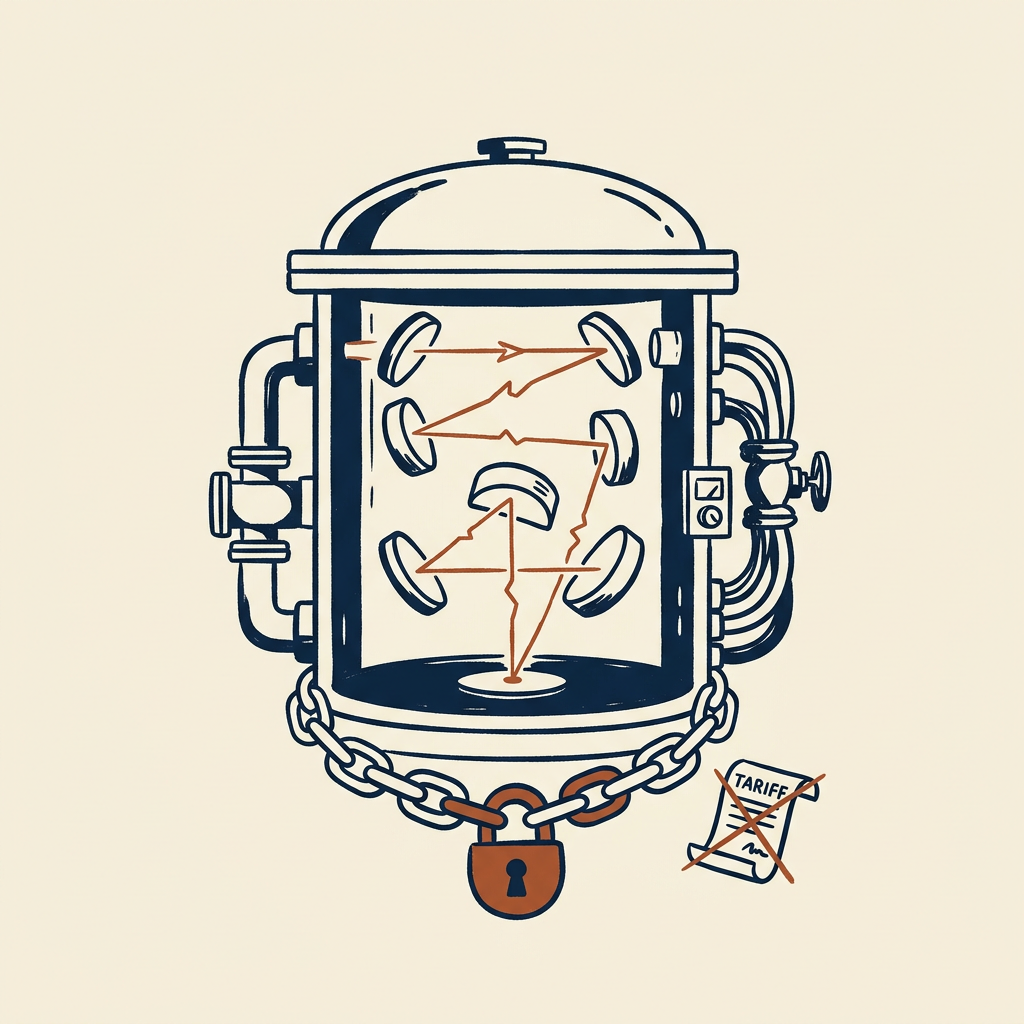
The uncopied EUV machine
ASML’s sole mastery of extreme-ultraviolet lithography gives allied export licenses a lever stronger than tariffs on finished goods.
Etching the tiniest patterns requires EUV light. Only ASML in the Netherlands builds those machines. Dominance grew from Dutch optics work, German lenses from Zeiss, American research linked partly to Sematech-era programs, and a decision to pursue EUV when many doubted the physics. One machine costs over 150 million dollars, takes months to install, and needs parts from dozens of specialized suppliers with no ready substitutes. The barrier is technical difficulty—light source, atomically precise mirrors, vacuum engineering—not simple collusion. China has not replicated it despite years of state effort. Because ASML exports need Dutch licenses shaped by US pressure, Washington and allies hold a choke over advanced Chinese fabs. Withholding tools hits deeper than duties on end products. Miller treats this monopoly as proof that one allied-controlled step can outweigh another country’s broad industrial bulk.
In practice: When the Dutch blocked EUV sales to China in 2019 under US pressure, the move did more to slow Chinese advanced chipmaking than years of tariffs.

7
Chips decide the battlefield
The 1991 Gulf War showed precision munitions built on semiconductors multiply force, turning chip leadership into a direct military requirement.
Precision-guided bombs, satellite navigation, and stealth depended on processing power that barely existed at scale a decade earlier. American forces hit targets with far fewer munitions than older wars demanded. Every planner watching—including in Beijing and Moscow—saw the disparity. Miller notes the shift in Chinese military doctrine that followed: future wars would turn on information technology and precision weapons, not raw troop counts. China began a decades-long drive for indigenous semiconductor capacity as national security, not just commercial policy. Made in China 2025 and heavy subsidies to firms such as SMIC sit in that line. Miller links the pattern back to the Cold War birth of the industry: chips prove decisive in war, states scramble for supply, and the scramble rewrites civilian incentives for a generation. Treating chips as pure commodities, he argues, has always been a category error.
In practice: After watching the Gulf War gap, Chinese strategists recast information technology and precision weapons as the decisive factors and pushed domestic chip capacity.

8
Controls to freeze the gap
US export rules on advanced chips and equipment try to hold China a fixed distance behind the frontier, trading near-term market loss for strategic delay.
By the late 2010s Huawei and other Chinese firms looked globally competitive in telecom gear and phones. Washington feared chip self-sufficiency and an eventual pass of US and allied capability. In 2019 and more sharply in October 2022, Commerce barred sales of advanced chips, design software, and equipment above set thresholds to Chinese firms. It pressed the Netherlands and Japan to align. The logic exploits earlier chokes: subsidies cannot replace ASML’s EUV tools or software from firms such as Synopsys and Cadence. Moore’s Law means a few lost years compound into a wider gap. The aim is delay at the leading nodes, not total shutdown of China’s industry. Miller is candid about costs. Controls spur Chinese domestic alternatives, risk rival technical standards, and hurt American and allied vendors who lose a huge customer base. The open mobility that once built the US lead gives way, in his telling, to deliberate restriction.
In practice: October 2022 rules extended bans on advanced chips, design software, and manufacturing equipment, with allied pressure to match.

9
Taiwan as world fulcrum
Roughly ninety percent of the most advanced logic chips are made in Taiwan, a silicon shield Miller treats as fragile deterrent and tempting target alike.
~90%
world’s most advanced logic chips made in Taiwan
Beijing claims the island and has not ruled out force. Some voices Miller cites, including in Taiwan’s policy world, call the concentration a shield: wrecking or seizing TSMC would shock the global economy, including China’s electronics sector, and could force heavy external intervention. Miller stays skeptical. Advanced fabs need continuous ultrapure materials, specialty gases, and skilled staff. A blockade could achieve aims without missiles hitting plants. TSMC leadership has quietly noted the factories cannot be airlifted or rebuilt elsewhere on short notice. Responses have begun: TSMC building in Arizona, Samsung expanding in Texas, Intel pushing leading-edge work with backing from the 2022 CHIPS and Science Act’s roughly 52 billion dollars in subsidies. Miller stresses these efforts need years to reach Taiwan’s process maturity. For the foreseeable future the world still depends on one geopolitically exposed island. That dependence is the open question the industry’s history leaves unresolved.
In practice: TSMC’s Arizona plans, Samsung in Texas, and Intel’s CHIPS Act-backed push still lag Taiwan’s existing leading-edge maturity.
Key terms
- Moore’s Law The industry commitment, from Moore’s 1965 observation, that transistor density on a chip roughly doubles every two years.
- Fabless A business model that designs chips but owns no fabrication plants, outsourcing manufacturing instead.
- Pure-play foundry A manufacturer like TSMC that only builds chips to customers’ designs and never sells competing designs of its own.
- EUV lithography Extreme-ultraviolet machines that etch the smallest transistor patterns; only ASML builds them.
- Chokepoint A production or tool step so specialized that one or a few firms can stall or shape everyone else’s advanced output.
- Silicon shield The contested idea that Taiwan’s chip concentration deters attack because damaging the fabs would wreck global—and Chinese—electronics.
- Sematech A 1987 US industry-government research consortium meant to keep domestic chip manufacturing and equipment competitive.
- DRAM Dense memory chips; the segment Japanese firms dominated in the 1980s, forcing Intel’s exit.
What to do
- Map which specific chip nodes and named suppliers your products actually require, not only the vendor of the finished part.
- Ask procurement whether any critical input traces to a single-source facility in Taiwan and draft a contingency before a shock.
- Read new US, European, or Indian fab announcements for the node they target and the realistic years to volume, not the press headline.
- When export rules change, read the restricted-equipment list itself rather than summary coverage to see what actually bites.
Questions to think with
- Does holding China off the frontier through export bans justify the hit to the open talent and market system that once built the US lead?
- Is Taiwan’s chip concentration better read as a deterrent shield or as a reason the island becomes a target?
- Can subsidies and new fabs elsewhere recreate decades of process skill on a political timetable?
- What breaks first in a blockade scenario—the fabs, the specialty-gas supply, or global electronics production?
- If the industry splits into rival technical camps, who sets the standards phones, cars, and weapons must follow?
The other side
The book is synthesis and narrative, not original economic or technical research, so cost curves, market shares, and Chinese subsidy totals often appear as approximate figures without full methods. It barely treats labor conditions or the huge ultrapure-water and hazardous-waste footprint of fabs. Critics note Miller treats American strategic primacy as the baseline good, so later chapters on controls read partly as advocacy; the late-2022 cutoff captures only the launch of export rules and the CHIPS Act, not mixed later results such as Chinese progress on mature nodes. Taiwan appears mainly as a strategic asset rather than a society with its own politics about the risk it carries.
Who it's for
Policy readers who need why chip export controls sit at the center of US-China rivalry; business readers tracking how one Dutch firm and a few fabs can gate whole industries; anyone who wants the hidden supply-chain history behind phones, cars, and weapons without engineering jargon.