



Newport book targets hyperactive hive mind in knowledge work
In 60 seconds
- The real culprit is the hyperactive hive mind: constant unstructured ad hoc messaging as the default way to assign and resolve work.
- Email became the office operating system by accident when cheap networked mail filled a coordination gap, not through deliberate design.
- Message checks act as full context switches; workers switch roughly every three minutes and can need over twenty minutes to regain full focus.
- The system survives because senders get near-free convenience while attention costs land later, elsewhere, and without a clear metric.
- Better workflows use specialization, pull-based boards, fixed protocols, and office hours so coordination stops requiring constant reachability.
- Only team-level change with leadership buy-in works, because one person cannot unilaterally exit a networked expectation of instant reply.
The big idea
Newport contends that knowledge work is exhausted and slowed not by email as software but by the hyperactive hive mind—an accidental workflow of continuous unstructured messaging that fragments attention. Offices need the kind of deliberate process engineering manufacturing once received, treating sustained focus as scarce capital rather than managing inboxes harder.
The book in brief
Modern offices blame email for exhaustion, but Newport locates the damage in a workflow he calls the hyperactive hive mind. Tasks get assigned and resolved through an endless stream of ad hoc messages with no queues, fixed channels, or protocols. Everyone stays reachable; any question can land anytime. Switching chat tools changes nothing if the underlying behavior stays.
The pattern was never chosen as strategy. Networked messaging arrived almost as an afterthought and firms later grabbed it because coordination had grown complex and the channel looked free. Unlike engineered production changes, knowledge work never got a matching process revolution when its complexity exploded.
Constant checking carries a cognitive tax. Switching leaves residue on unfinished work, and common office rhythms show frequent interruptions that take long stretches to recover from. Organizations rarely measure valuable output per hour of attention, so the cost stays hidden while responsiveness still looks like diligence.
The hive mind survives as a classic externality: senders enjoy immediate convenience while recipients and the wider system absorb fragmented focus later. Without factory-style throughput or defect metrics, full inboxes mask the failure mode and protect the default.
Newport’s answer is to treat attention as scarce capital and borrow process discipline—specialization, pull systems, protocols, and scheduled office hours—illustrated in partial workplace experiments. Change has to start with leadership and one recurring coordination type at a time, because individuals cannot opt out alone while the network still expects instant replies.
Context
Cal Newport published A World Without Email in 2021 for managers who sense their teams are busy but not producing much and for knowledge workers exhausted by Slack and email who want a structural explanation rather than another inbox-zero trick. It also speaks to founders and team leads designing workflows who want to avoid baking chronic overload into the system from the start.
The key ideas
1
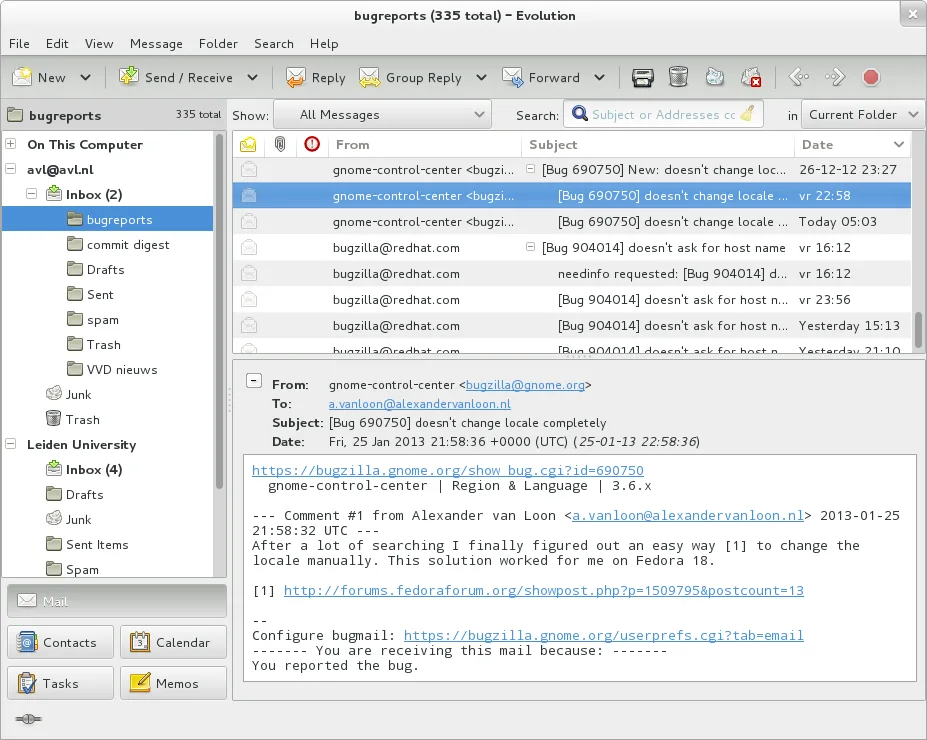
The hyperactive hive mind
The damage comes from an unplanned workflow of continuous unstructured back-and-forth, not from email software itself.
Hive mind
Ad hoc messages, constant reachability, no queues or fixed channels
Designed workflow
Defined processes, known owners, structured request paths
Most offices now coordinate by an ongoing stream of ad hoc messages with no formal process for who does what or when. There are no fixed channels for request types, no queues, and no protocols. Anyone can drop any question into anyone’s inbox at any moment, and constant reachability is the unspoken rule.
This pattern was never written down as policy. It emerged because email made instant informal contact nearly free, and organizations drifted into using that capability as their primary coordination mechanism instead of designing one on purpose.
Newport’s diagnostic is blunt. If the job requires checking messages every few minutes to avoid falling behind, and if most tasks start and finish through improvised exchanges rather than defined processes, the workplace is running a hyperactive hive mind.
The hive mind travels with the behavior. An office could move every message onto a different chat platform and change nothing about the exhaustion or the slowdown.
In practice: Switching an entire company from email to Slack or Teams leaves the same fragmented coordination intact whenever people still expect instant unstructured replies.

2
An accidental operating system
Email became the office OS because it was cheap and available for a complex workforce, not because anyone chose it as a productivity strategy.
Networked messages began with Ray Tomlinson’s 1971 ARPANET implementation, built almost as an afterthought so engineers could leave notes for each other. Corporate uptake in the 1980s and 1990s followed no master plan.
Firms had grown more specialized and distributed. Memos, calls, and meetings no longer scaled, so the low-cost informal channel email offered was simply grabbed. Nobody sat down to ask whether continuous unstructured messaging was actually the best way to run a company; it looked efficient at the individual level.
Newport sets this against Henry Ford’s 1913 moving assembly line, which followed years of analysis that broke manufacturing into discrete steps to cut wasted motion and cognitive load on any single worker. The line was engineered. Email’s takeover was convenience that scaled into a norm.
Knowledge work therefore inherited ad hoc habits from whatever technology lay around when complexity exploded, building coordination by accretion rather than against any explicit theory of attention or collaboration.
In practice: Ford’s assembly line came from deliberate study of motion and specialization; office messaging spread because the tool was already sitting there when coordination needs spiked.

3
The brain tax of switching
Each quick message check is a context switch that leaves attention residue and makes people slower and more error-prone.
Attention research supplies the cost side of Newport’s ledger. When people leave an unfinished task for a new one, part of their focus stays stuck on the old work and degrades performance on the new one—what Sophie Leroy’s 2009 studies called attention residue.
Gloria Mark’s field tracking found office workers interrupted or switching tasks roughly every three minutes on a typical day. After a significant interruption, fully returning to the prior level of focus can take over twenty minutes.
Time-tracking data from tools like RescueTime showed people checking email or messaging apps on the order of every six minutes, a rhythm driven less by real need than by anxiety about falling behind the stream.
Because each check feels brief, workers underrate the cumulative reload of mental models. Organizations rarely measure valuable output per hour of attention, so the hive mind keeps optimizing for responsiveness instead of deep production.
In practice: A worker who glances at an inbox every six minutes experiences those glances as cheap, yet each one can displace the slower thinking the actual job requires.

4
Why the costly system sticks
The hive mind endures because senders pay almost nothing while the attention cost lands later and elsewhere, with no metric to expose the damage.
Sender’s ledger
Seconds of effort, no planning, problem offloaded now
System’s ledger
Delayed interruptions, diffuse attention loss, no throughput metric
Firing off a quick message takes seconds, needs no planning, and dumps the work of finding a proper channel onto the recipient and the wider system. That convenience is immediate and personal.
The interruption cost arrives diffuse and delayed—sometimes hours or days later—as fragmented focus for someone else. Newport likens this to underpriced externalities: individually rational acts that produce a collectively poor result because the true price is not carried by the decision-maker.
Organizational inertia seals the trap. Factories have defect rates and throughput; hive-mind offices have full inboxes that look like diligence. Managers lack a natural signal that the coordination system is failing.
Without a visible failure mode, the inefficient default can run indefinitely, protected by the same appearance of busyness the book tries to dismantle.
In practice: A same-day reply norm trains everyone to check constantly; the sender feels efficient while the organization’s attention quietly erodes.
5
Borrowing production’s discipline
Knowledge work can apply the same deliberate process engineering that replaced ad hoc factory coordination a century ago.
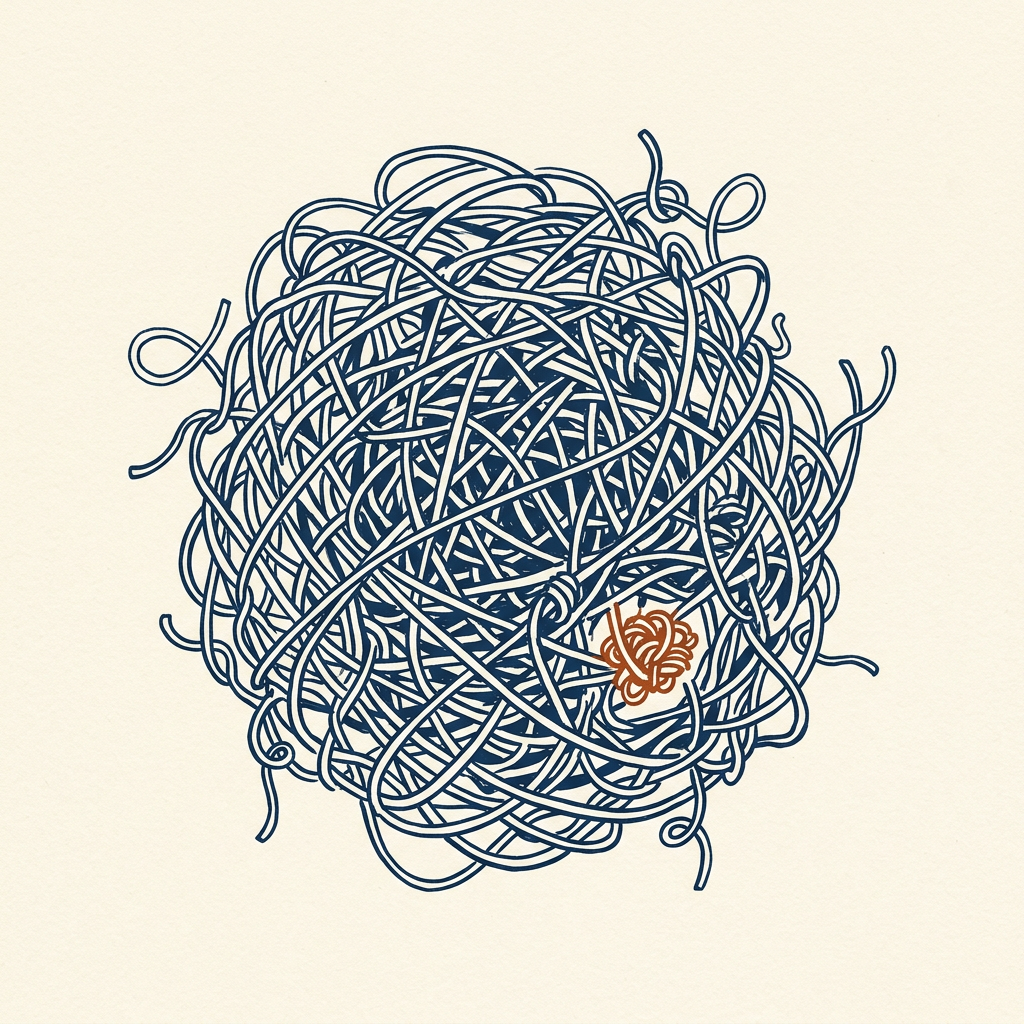
Engineered production
Visible stations, clear signals, problems surfaced at once
Hive-mind office
Invisible personal negotiation, backlog buried in inboxes
Peter Drucker warned in the mid-twentieth century that knowledge work resists easy measurement and would stay inefficient unless deliberately managed. Most organizations never answered that challenge; informal messaging filled the gap formal design should have occupied.
The Toyota Production System, built in the decades after World War II, replaced improvised floor coordination with visible standardized stations, clear signals for moving work, and ways to surface problems immediately instead of letting backlog hide.
Newport also credits David Allen’s Getting Things Done system, popular in the 2000s, for correctly spotting that unstructured mental task-tracking exhausts people. He argues GTD still only helps one person cope with a broken collective workflow rather than fixing the workflow itself.
The lasting lesson is that improvement requires redesigning how a team moves work forward, not just upgrading how an individual manages personal inputs.
In practice: Toyota made work and problems visible on the floor; typical offices still hide requests inside personal message histories only the recipients can see.

6
Attention as engineered capital
Sustained undistracted attention should be treated as scarce capital allocated toward valuable output, not a free resource anyone can tap at will.
Industrial capital theory taught factories to allocate machines, labor, and materials deliberately. Newport’s attention capital theory gives knowledge work the parallel: the scarce input that creates most real value is skilled workers’ sustained focus, while routine coordination overhead is a cost to minimize.
Under that frame, every workflow choice should reduce how much it degrades attention available for higher-value work across the system, not merely how fast a task can be assigned.
Open-door drop-ins, reply-all threads that force people to track decisions they do not need in real time, and same-day response norms all become costly rather than neutral. They train constant checking and burn the resource the organization actually sells.
The theory does not ban communication. It redesigns so most coordination rides low-attention-cost channels and high-focus time is reserved for the work that justifies the organization’s existence.
In practice: A standing open-door policy looks friendly yet invites the interruptions that hollow out the deep work the role was hired to perform.

7
Tools that replace ad hoc chat
Specialization, pull-based task systems, and pre-agreed protocols can coordinate work without constant unstructured messaging.
Specialization gives requests a known owner instead of broadcasting to whoever might be free, so fewer people must track every thread.
Pull systems, modeled on kanban boards from software and manufacturing, turn work into visible tasks people advance as capacity allows rather than items shoved into an inbox the moment they are conceived. Backlog and priority become shared instead of buried in private histories.
Protocols set fixed processes for recurring requests—a weekly status window or a standard form for design feedback—so familiar situations stop requiring a fresh improvisation every time.
Office hours revive the academic habit of a known window for quick questions, letting answers flow without either party staying reachable all day. Structure decided in advance costs less total attention than moment-to-moment freedom, even when freedom feels lighter in any single instance.
In practice: A team that routes design feedback through a standard form and a scheduled review stops generating scattered threads that demand same-day replies.
8
Redesign on the ground
Teams that moved support into tickets or batched routine decisions into scheduled reviews cut interruptions without losing needed responsiveness.
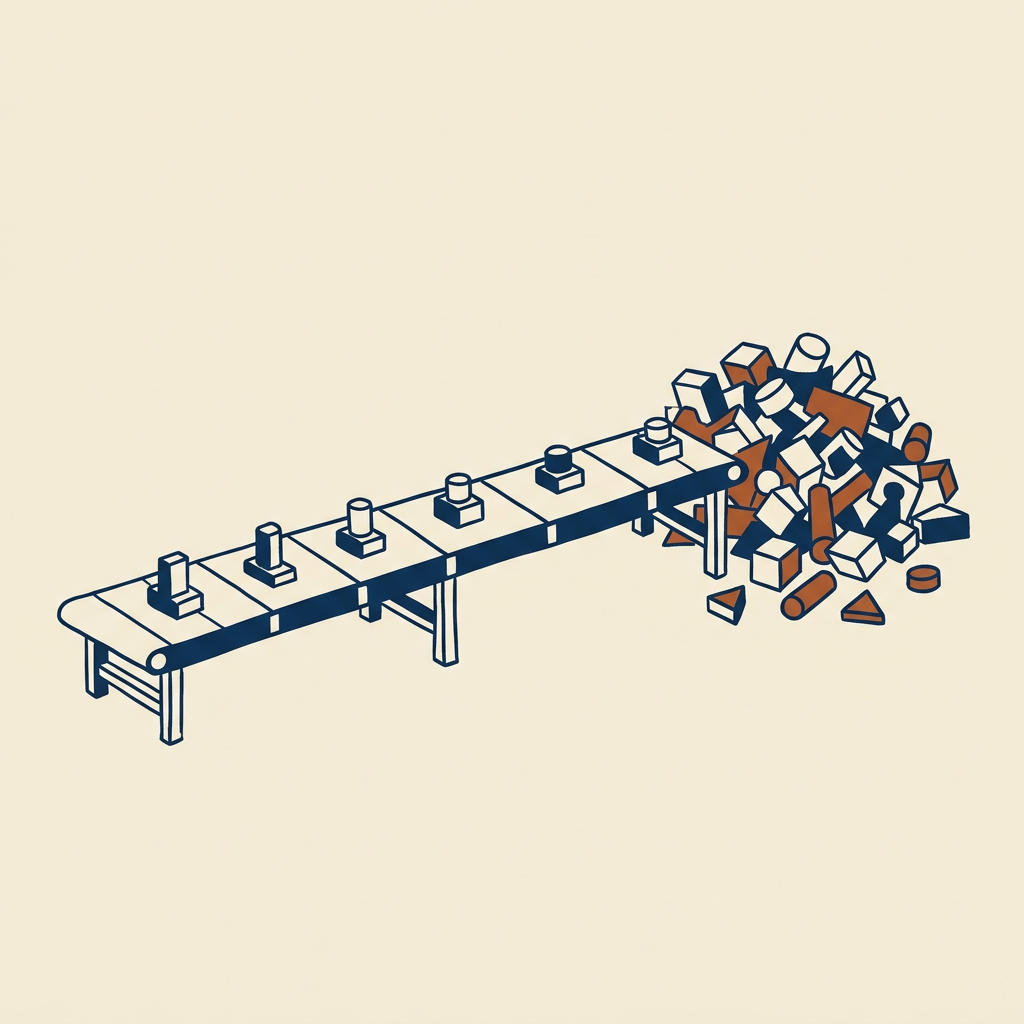
Before
Bugs and approvals live in ad hoc message threads
After
Tickets and scheduled batch reviews make status and timing visible
Software groups pulled bug reports and feature requests out of email threads and into ticketing systems. A request becomes a tracked item with an owner and status instead of a message fighting for real-time attention; the visible queue replaces anxious reply-checking.
Editorial and administrative teams batch routine approvals into one scheduled meeting or document review rather than letting decisions trickle through scattered messages all week. People can protect uninterrupted blocks around a known checkpoint.
Some firms tried temporary bans or caps on internal email to force alternative structures. Teams often reported less anxiety and more completed focused work, though many trials were short-lived once the experiment window closed.
Newport presents these as partial and context-specific, not universal blueprints. What they share is the move from constant availability to a structure fitted to the actual work, showing redesign is culturally harder than it is technically impossible.
In practice: A support team using tickets sees the queue instead of wondering whether an email was noticed, so engineers stop living inside the inbox.
9
Change must be collective
Individuals cannot escape the hive mind alone; leadership must back new protocols because responsiveness is a networked expectation.
If one person stops checking constantly while everyone else still expects instant replies, that person falls behind or looks unreliable. The coordination problem is systemic by nature.
Redesign therefore needs team or organization scope, with leaders endorsing protocols, publicizing them, and holding people to the new structure rather than the old norm of instant availability.
Newport advises starting small: pick one recurring category such as meeting scheduling or design feedback, replace the informal back-and-forth with a defined process, then expand after the team feels the lower friction.
Early resistance is normal. The old system offers an illusion of control and immediacy a structured system lacks at first, even though outcomes improve later. The end state is not deleting email as technology but retiring the hyperactive hive mind as the default philosophy so messaging becomes one deliberate channel among several.
In practice: A lead who replaces informal design-feedback threads with a weekly review window must publicly defend the slower initial feel until the team trusts the new rhythm.
Key terms
- hyperactive hive mind Coordinating work through constant unstructured ad hoc messages with no formal channels, queues, or protocols
- attention residue Focus still stuck on an unfinished task that degrades performance after you switch
- attention capital theory Treating sustained undistracted attention as scarce capital that must be deliberately allocated to valuable output
- pull system Work sits as visible tasks people advance when they have capacity, instead of being pushed into inboxes instantly
- protocol A pre-agreed process for a recurring request type so each instance needs no fresh improvisation
- specialization Clear role boundaries so requests default to a known owner rather than a broadcast
- office hours A fixed known window for quick questions that removes the need for all-day reachability
What to do
- Draft a one-page protocol for a single recurring request type your team now handles by endless reply chains.
- Move one category of incoming tasks onto a shared visible board people pull from instead of dropping them into chat.
- Batch message checks into two or three fixed windows today and keep the rest of the day closed to the stream.
- Publish a weekly office-hours slot for quick questions so colleagues know when you are reachable.
- Ask a manager to sponsor a short trial of tickets or batched approvals for one workflow and compare interruption load.
Questions to think with
- If your team banned ad hoc internal messaging for one category of work next month, what structured channel would replace it?
- Where do you pay the largest attention-residue tax, and who benefits from the message that causes it?
- Which current ‘urgent’ threads would survive if every request needed a named owner and a visible status?
- What would leadership have to stop rewarding for a pull-based system to feel safe instead of negligent?
- How much of your day is real output versus maintenance of the expectation that you are always reachable?
The other side
Newport’s diagnosis leans heavily on a relatively small attention-research base—especially Sophie Leroy’s 2009 lab studies and Gloria Mark’s interruption tracking—while real productivity losses may also entangle meeting overload, unclear priorities, or understaffing. The remedies are mostly illustrative case studies without rigorous before-and-after output data, and several cited experiments were short-lived. The fixes also assume workplaces with enough slack, autonomy, and managerial goodwill to redesign norms, which fits only a slice of white-collar knowledge work, and critics note overlap with Drucker and with lean and agile practices already common in software.
Who it's for
Managers who see busy teams producing little, knowledge workers drained by Slack and email who want a structural explanation, and founders designing workflows from scratch who want to avoid chronic overload will get the most from reading the full book.