



Maté reframes ADD as developmental injury from early stress, not genes

In 60 seconds
- Maté reframes ADD as a developmental injury from disrupted infant-caregiver attunement, not a fixed genetic defect like eye color.
- Self-regulation circuits, especially the orbitofrontal cortex, are built after birth through thousands of moment-to-moment attuned exchanges.
- Chronic early cortisol from unsoothed distress can blunt dopamine pathways needed for sustained attention and impulse control.
- A sensitive temperament lowers the stress threshold, which is why one sibling can show ADD-like trouble while another in the same house does not.
- Poor arousal control, emotional swings, impulsivity, and weak working memory are four faces of one self-regulation failure.
- Stimulants can ease symptoms by boosting dopamine, but lasting change comes through emotional insight and present-day relationships that restart stalled development.
The big idea
Maté argues ADD is less a lifelong genetic sentence than a developmental injury: early attachment stress leaves the brain's self-regulation circuits underbuilt. Because those circuits form through relationship, he claims awareness and repaired attachment can still foster real change in adulthood.
The book in brief
Maté opens by rejecting the standard story that ADD is a discrete inherited neurological condition fully explained by genes and fixed by medication alone. He grants a genetic contribution to temperament, yet holds that heritability studies overstate destiny and understate environment: twins share caregiving as well as DNA, so concordance cannot isolate wiring from early stress. Genes set a range of outcomes; attunement decides which outcome appears.
He then shows how the infant brain is still under construction. Reliable caregiver responses—soothing distress, matching excitement, repairing disconnection—teach the nervous system to regulate itself. Inconsistent, absent, or stress-flooded care leaves those circuits uneven. The orbitofrontal cortex, maturing largely after birth through relational experience, is the physical site he highlights for impulse control, emotional steadying, and sustained attention. A parent need not be abusive; untreated depression, long work hours in the first year, or chronic financial strain can thin attunement below what a developing brain needs.
Biochemistry supplies the bridge. Prolonged cortisol from repeated unsoothed distress can impair dopamine-rich pathways linking prefrontal areas to deeper structures—the very systems that keep focus on tasks that are not instantly rewarding. Animal separation studies supply the analogy he leans on. Temperament then explains divergence inside one household: a highly reactive infant needs finer, more consistent attunement than a placid one, so the same stress can tip one child into disorder and leave the sibling untouched.
Clinically he collapses the checklist. Difficulty regulating arousal, emotion, impulses, and working memory are not separate glitches but four expressions of one underdeveloped self-regulation capacity. Treat the root through relationship and self-awareness, he claims, and the four ease together. He reads his own life—born in Budapest in 1944 into a mother’s wartime trauma and depression, later compulsive, distractible, lost in books to escape feeling—and his son’s school struggles through the same developmental lens rather than symptom tallies alone.
Medication is granted real value. Stimulants can lift dopamine and improve daily function; he prescribed them. Yet he insists they relieve the symptom without repairing the capacity that only relationship originally builds. Healing, in his closing arc, means tracing the emotional logic of one’s own scattering and using present-day attuned relationships—therapy, partnership, parenting—as a second-chance attachment window. The work is slow, still needs external structure, and offers development rather than a dramatic cure.
Context
Maté writes as a physician who recognized ADD in himself and in his son, and as the child of a Holocaust survivor whose early home was saturated with unprocessed trauma and depression. Published in 1999, the book offered a developmental alternative to the dominant biomedical model and changed how many readers understood their own or their children’s struggles, even while it sat in open tension with mainstream heritability claims.
The key ideas
1
Not simple inheritance
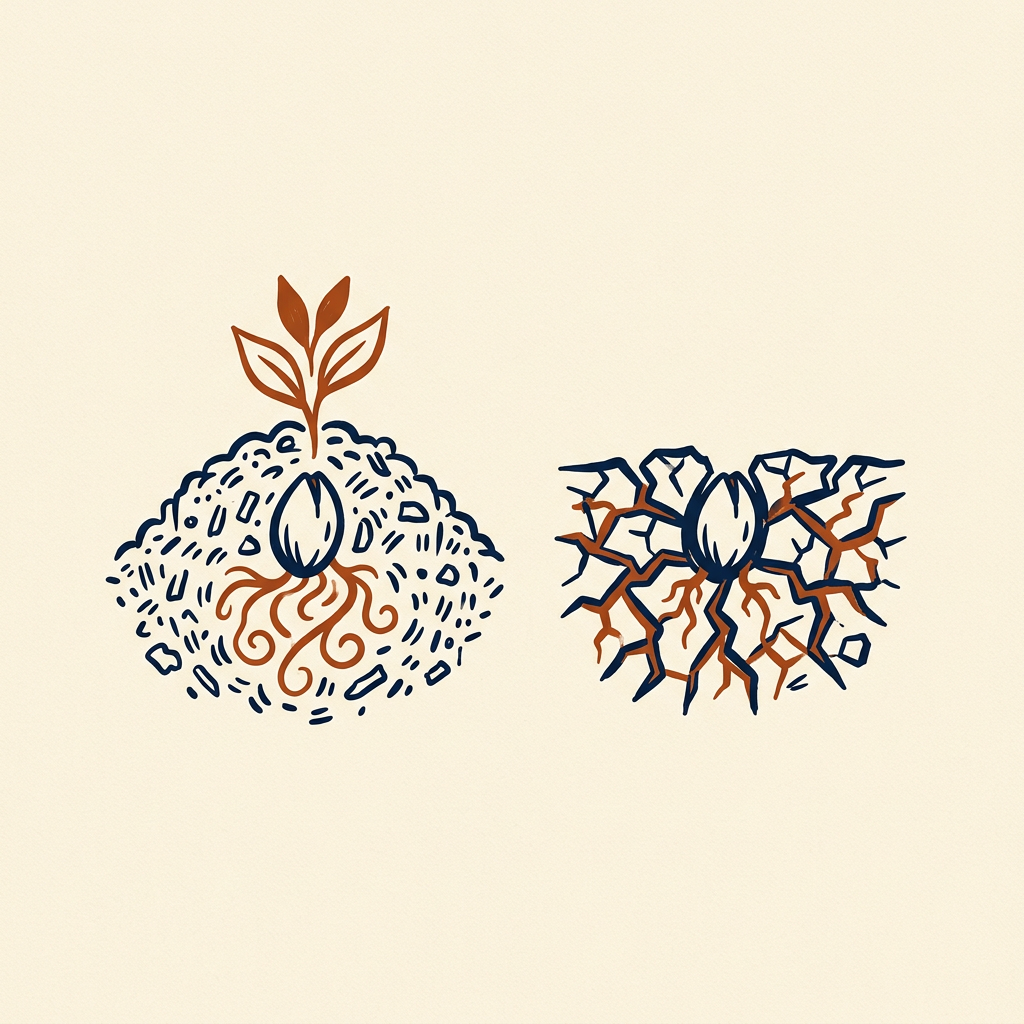
Maté treats ADD as a response to early relational stress far more than as a fixed genetic trait passed down like eye color.
Standard story
Discrete inherited neurological defect, managed mainly by medication
Maté’s reframing
Developmental injury inside a genetic range, open to change through relationship
He rejects the story that ADD is a discrete neurological package fully explained by genes and corrected by medication alone. Temperament can be heritable, he grants, yet the field has overstated what twin studies prove. Twins usually share the same early caregiving climate, so high concordance cannot cleanly separate DNA from environment.
Genes, in his framing, only set a range of possible outcomes. Early relationships decide which outcome inside that range gets realized. A purely genetic account therefore offers management—pills, behavioral tricks—while a developmental account keeps open the chance of actual change, because relationships and self-understanding can still alter how the brain functions in adulthood.
That shift is the book’s opening move: ADD becomes a story about disrupted attunement rather than permanent bad wiring, without pretending biology is irrelevant.
In practice: Maté points to his own history as the son of a Holocaust survivor, born into a household saturated with his mother’s trauma and depression, growing up distractible, restless, and lost in compulsive reading as escape.
2
Attunement builds circuits
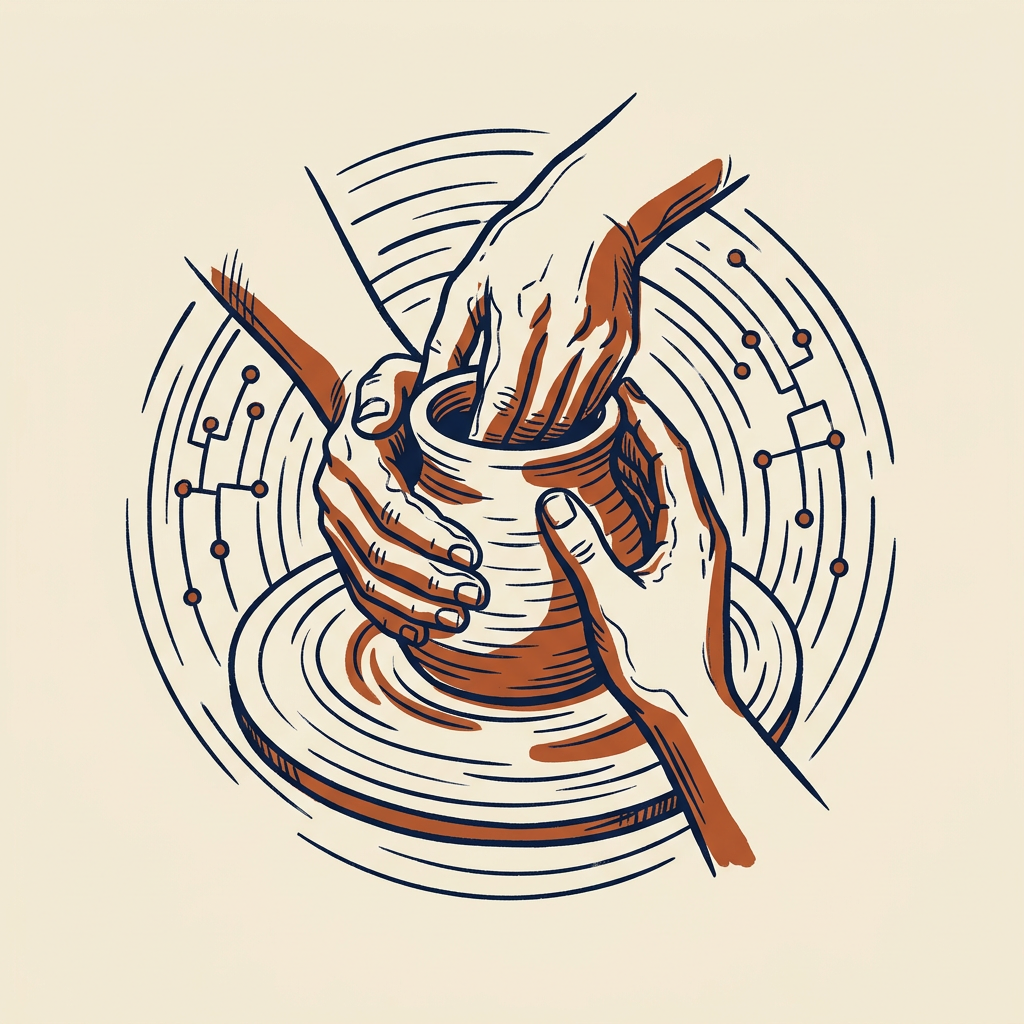
The infant brain’s attention and self-regulation circuits are constructed through thousands of caregiver exchanges, not preloaded at birth.
Maté leans on attachment research on infant-caregiver synchrony. A baby’s brain is an organ under construction. When a caregiver reliably reads cues—soothing distress, matching excitement, repairing disconnects—the infant’s nervous system learns to regulate itself.
When attunement is inconsistent, missing, or drowned by the caregiver’s own stress, regulatory circuits develop unevenly. He locates much of this encoding in the orbitofrontal cortex, a region that matures largely after birth through relational experience and that is heavily tied to impulse control, emotional regulation, and sustained attention—the exact functions strained in ADD.
No abuse or neglect is required for the shortfall. A mother with untreated depression, a father working long hours in the first year, or a home under chronic financial pressure can all cut the quantity and quality of attuned moments below what the developing brain needs.
In practice: He treats the convergence of attachment research and developmental neuroscience as enough reason to take seriously a mother whose depression quietly thins day-to-day responsiveness.

3
Cortisol’s lasting mark
Chronic early stress can flood the infant brain with cortisol in ways that blunt the systems for attention and impulse control.
- Brief stressNormal cortisol burst, system recovers
- Repeated unsoothed distressProlonged cortisol while circuits are still forming
- Blunted pathwaysDopamine-linked attention and impulse systems develop unevenly
Short bursts of cortisol are normal; chronic elevation is another matter in a brain still laying down architecture. Maté cites animal work, including rat pups separated from their mothers, that shows lasting changes in stress-hormone regulation and in receptor density in regions tied to attention and emotional control.
He extends the logic to humans. An infant whose distress goes unsoothed again and again lives with prolonged cortisol exposure. That exposure, he argues, can impair development of the dopamine-rich circuits linking prefrontal cortex to deeper structures.
Dopamine sits at the center of his mechanism because it underwrites both motivation and the ability to stay with tasks that are not immediately stimulating—the precise struggle people with ADD describe. He stresses degree and probability, not a deterministic switch: not every stressed infant develops ADD, and not every ADD case has a clear early-stress story. The hormonal path simply gives a physical route from relational disruption to neurological deficit.
In practice: Repeated separation of rat pups from their mothers produced lasting shifts in stress-hormone regulation that he reads as a model for how unsoothed human distress could blunt attention circuitry.
4
Temperament sets the threshold
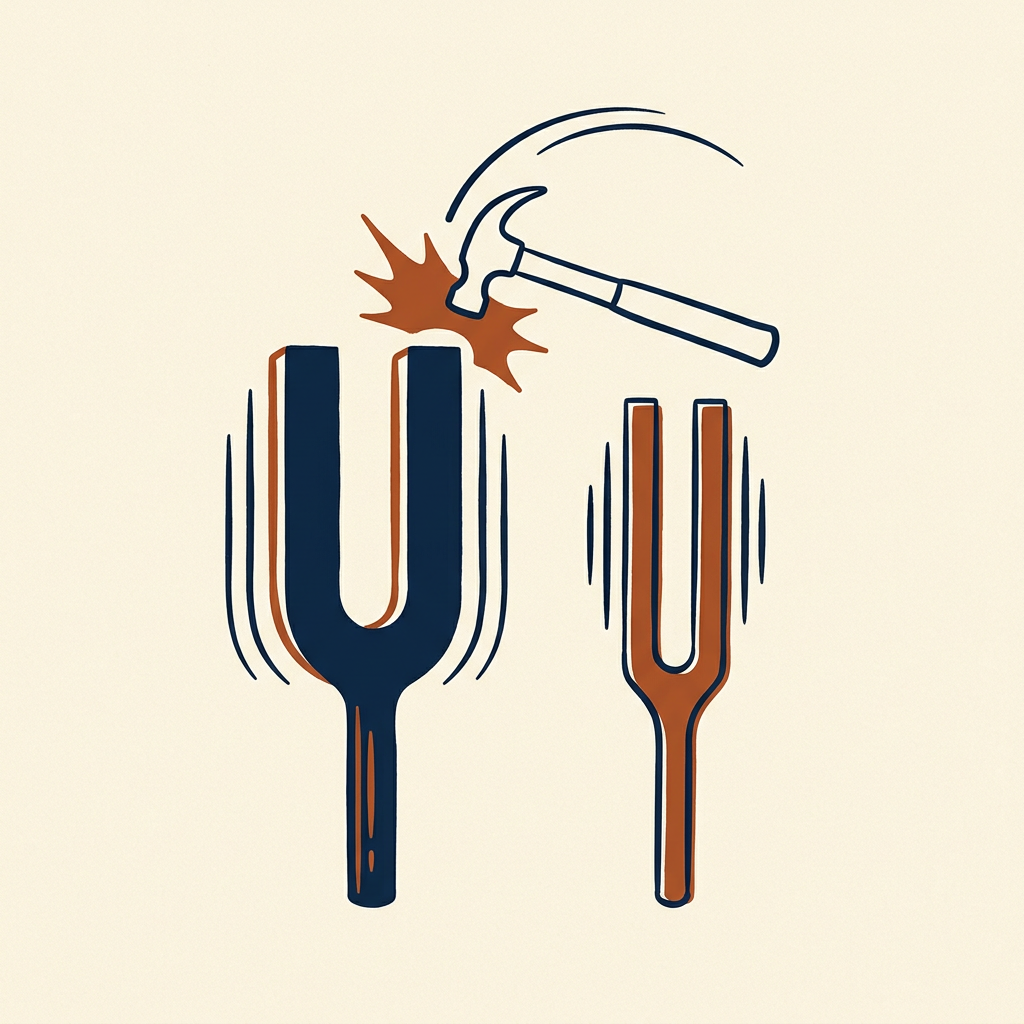
Inborn sensitivity decides how much environmental stress it takes to produce ADD, which is why siblings in one house can diverge.
Child reactivity ↑ · Care environment →
Sensitive + strained
High risk that self-regulation circuits stay underbuilt
Sensitive + attuned
Extra care meets the higher need; regulation can still form
Placid + strained
Lower demand often lets the child absorb the same stress
Placid + attuned
Smooth developmental path
Maté borrows the idea of goodness of fit between child temperament and caregiving environment. Some infants arrive more reactive—easier to overstimulate, more sensitive to separation, more intense in their emotional answers. Those children need more consistent, finely tuned attunement to build stable self-regulation than a placid, low-reactivity infant needs.
That difference dissolves a common parental puzzle and guilt: one child develops ADD-like symptoms while a sibling raised under seemingly identical conditions does not. The parenting did not necessarily change; the second child’s nervous system simply required less from the environment to stay regulated.
He uses the point to block simple blame in both directions. Parents are not sole authors of the struggle, because the same household stress might leave another child unaffected. Genetics alone cannot finish the explanation either, because the sensitive temperament becomes disorder only under strain it cannot absorb.
In practice: Parents notice one child scattered and impulsive while a sibling in the same home stays steady; Maté reads the gap as different nervous-system demand, not secret favoritism.

5
Four faces, one failure
Poor attention, impulse control, emotional regulation, and working memory are four expressions of a single self-regulation deficit, not separate problems.
Checklist view
Four separate symptoms to count and treat one by one
Maté’s view
One self-regulation failure wearing four faces, best addressed at the root
Maté groups the clinical picture around four functional shortfalls: trouble regulating arousal (staying alert without under- or overstimulation), trouble regulating emotion (fast swings into frustration or excitement), trouble controlling impulses (acting before thinking), and trouble with executive function—especially working memory and holding a goal while filtering distraction.
Ordinary checklists treat these as items to tally toward a diagnosis. He reframes them as four faces of one underlying immaturity: underdeveloped self-regulation rooted in the orbitofrontal and related circuits already described.
The practical stakes are high. If the deficits are separate, you chase each symptom—medication for focus, charts for impulses, anger techniques for mood. If they share a root, then work on the capacity for self-regulation through relationship and awareness should move all four together, which he says he has seen in clinic. He owns the model as his synthesis, not psychiatry’s consensus; diagnostic manuals keep categories split for measurement and insurance, not because the evidence demands it.
In practice: Instead of separate programs for inattention, impulsivity, and emotional outbursts, he looks for one relational and insight-based effort that eases the whole cluster.

6
Biography read backward
Adult ADD symptoms often make sense only when traced back through the specific emotional climate of early childhood.
- 1944Born in Budapest under Nazi occupation into his mother’s terror and grief
- ChildhoodDistractible, restless, compulsive reading as emotional escape
- AdulthoodCompulsive work, unfinished low-interest tasks, later self-recognition
- ParentingReads his son’s school struggles through attachment and stress, not checklists alone
Maté turns the framework on his own life and his son’s. Born in Budapest in 1944 to a Jewish mother under Nazi occupation, he absorbed her unprocessed terror and grief even without conscious war memories. Childhood and adulthood brought compulsive work habits, unfinished tasks that failed to hold interest, and losing himself in books to regulate unbearable feeling.
He pairs that story with diagnosing ADD in his son, applying the same lens—family stress, attachment disruptions, temperament—rather than symptom checklists alone. The chapter models the method he wants: ask what in the developmental history would predict this pattern of self-regulation trouble, not only whether criteria are met.
The personal cases are his most vivid evidence and, he knows, among the weakest scientifically—compelling narrative, single cases open to retrospective reshaping once a theory is adopted.
In practice: His compulsive reading and task-jumping become legible only once the emotional atmosphere of a trauma-saturated postwar household is placed behind them.

7
Pills ease, they don’t rebuild
Stimulant medication can genuinely improve function yet remains a temporary dopamine aid, not a repair of the underlying developmental deficit.
What medication can do
Boost dopamine, improve concentration, reduce impulsivity day to day
What it cannot do
Rebuild self-regulation capacity that forms only through relationship
Maté refuses the anti-medication camp. Stimulants such as methylphenidate can meaningfully lift concentration and curb impulsivity by boosting dopamine in underactive circuits; he prescribed them in his own practice. Functional relief, for some people, is valuable and even necessary.
He draws a hard line between symptom relief and cure. Medication cannot rebuild the self-regulation capacity that failed to develop in childhood, because that capacity was built through relationship and must be rebuilt the same way. He saw through the 1990s a cultural drift toward treating a prescription as a complete solution that lets parents, schools, and the person avoid examining what produced the deficit.
He is especially wary of children medicated with no parallel attention to family stress or attachment quality. The stance sits awkwardly between camps: too accepting of medication for pure-psychology readers, too skeptical for those wanting pharmacological closure. He accepts the discomfort as the honest place given his evidence.
In practice: A child given stimulants for school focus while household stress and thin attunement go unexamined is, in his view, treated only at the visible surface.
8
Healing by relationship
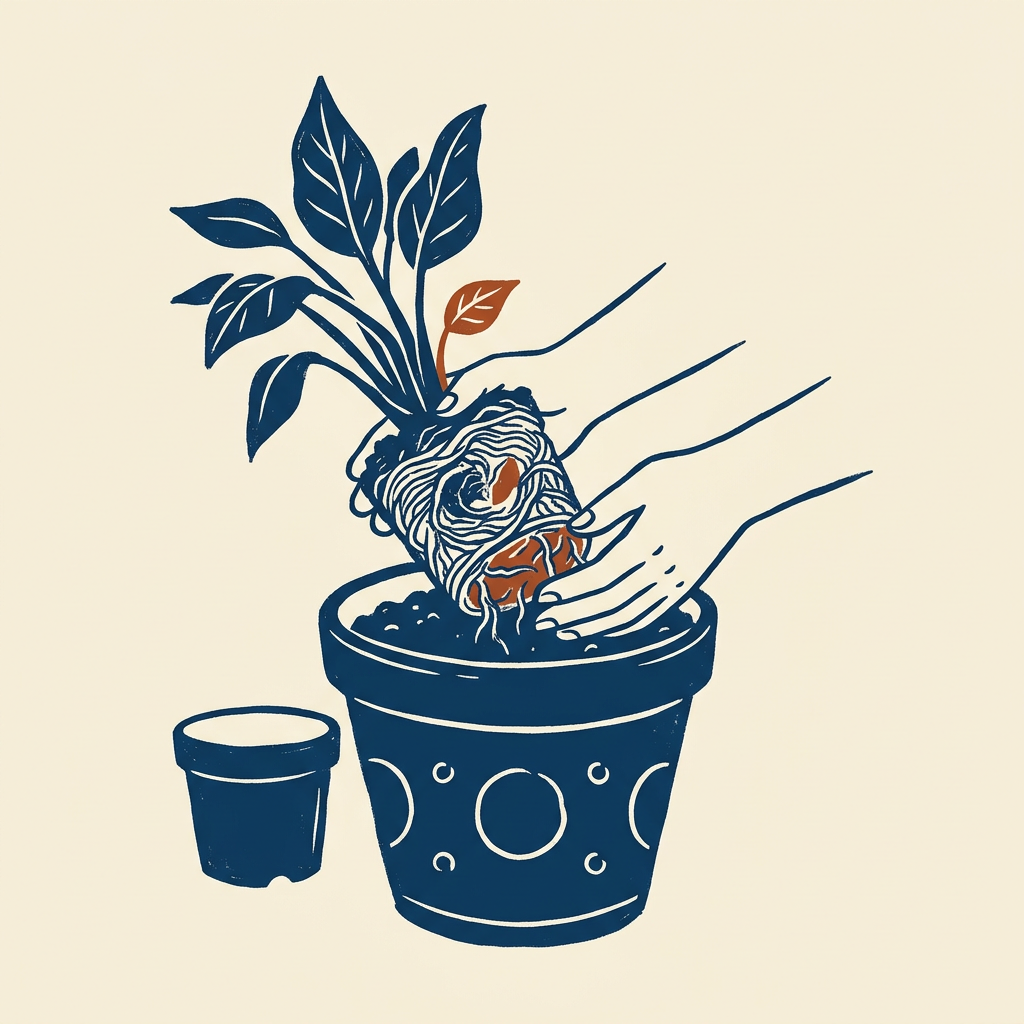
Recovery from ADD’s self-regulation deficits comes mainly through emotional self-awareness and repaired relationships, not willpower or technique alone.
If ADD originates in disrupted attunement, Maté argues healing must travel the same channel. Therapy centers on helping adults grasp the emotional logic of their distractibility—what feeling or memory a spell of procrastination or compulsive busyness is protecting them from. Awareness itself begins to loosen automatic patterns, because much ADD behavior runs outside conscious control precisely since it formed before conscious memory.
Present-day relationships become a second-chance attachment opportunity. A therapist, partner, or parent who offers consistent, attuned presence the person lacked as an infant can, over time, support neural maturation that missed its original window. He is plain that the work is slow and unglamorous, without dramatic before-and-after turns.
Insight does not replace practical structure. Routines, external reminders, and environmental design remain necessary for executive-function gaps. The closing frame is developmental rather than corrective: development can continue at any age when relational conditions finally support it.
In practice: Tracing how a wave of compulsive busyness arrives to outrun a particular feeling, then staying with a steady partner or therapist who does not turn away, becomes the repair path he describes.
Key terms
- developmental injury Maté’s name for ADD as underbuilt self-regulation from early relational stress, not a fixed genetic defect
- attunement Moment-to-moment caregiver reading and responding to an infant’s cues, including repair after misses
- orbitofrontal cortex Brain region that matures largely after birth through relationship and supports impulse control, emotion regulation, and attention
- goodness of fit Match between a child’s inborn reactivity and the caregiving environment’s capacity to meet it
- self-regulation The underlying capacity whose immaturity, for Maté, shows up as ADD’s four surface deficits
- cortisol pathway Route by which chronic early stress hormones can blunt developing dopamine-linked attention circuits
- four deficits Arousal, emotion, impulse, and working-memory troubles treated as one failure wearing four faces
- second-chance attachment Present-day attuned relationships that can restart neural maturation missed in infancy
What to do
- Treat distraction and impulsivity as information: note the feeling or situation that arrives just before the scatter.
- Build external structure this week—written routines, visible reminders, tasks broken into small steps.
- If medication is in use, pair it with real attention to relationship and stress at home or in therapy.
- As a parent, favor consistent calm daily attunement over corrective discipline in the heat of the moment.
- After conflict, prioritize repair; Maté holds repair matters more than never clashing.
Questions to think with
- What emotional climate in the first years might predict the self-regulation pattern I see now?
- What feeling or memory tends to arrive in the seconds before my attention fragments?
- Am I using medication as one aid, or as permission to skip the relational work?
- Where does temperament difference show up between siblings or peers raised under similar stress?
- What would one concrete act of steady attunement look like in my closest relationship this week?
The other side
The causal claims rest heavily on clinical impression, retrospective narrative, and leaps from animal separation studies rather than controlled human evidence; single-family stories are vivid yet open to theory-driven reconstruction. Mainstream researchers such as Russell Barkley cite twin and adoption heritability estimates of 70 to 80 percent for ADHD, leaving less room for a near-universal attachment explanation than Maté proposes, and his shared-environment rebuttal is argued rather than newly tested. The book also risks reloading parent blame—especially for readers already fighting depression or poverty—says little about ADD in stable, well-attuned homes, and its 1999 neuroscience has been heavily supplemented by later imaging and genetic work, so it is best read as a humane hypothesis and reframing, not an established replacement model.
Who it's for
Adults diagnosed with ADD or ADHD who want more than a faulty-chemistry story, parents trying to understand a distracted child without panic or blame, and therapists or physicians seeking a developmental alternative to the standard biomedical model will get the most from the full book.