


Adoniram Judson's Burmese Mission Vow
I had walked the path behind the seminary with him before, but that afternoon the leaves underfoot felt sharper, the air thinner. Judson kept his hands behind his back and his eyes on the ground, saying little until we reached the clearing where the pines opened toward the sky. He stopped there. The book he carried was still open to the last page of Buchanan’s sermon.
He had shown it to me the evening before in the common room, the margins marked with small lines. We both knew the text already, yet he read the closing paragraphs aloud again, his voice steady. When he finished he closed the volume and set it on the table without comment. The next morning he asked if I would come out with him.

We stood in the clearing a long time. A woodpecker worked at a dead trunk somewhere to our left. Judson finally spoke. He said the words from Matthew had come back to him during the night with a force he could not set aside. He did not describe any vision or sudden feeling. He simply said he could no longer refuse the command to go.
I asked what he meant to do with the rest of his studies. He answered that the studies would continue, but the direction had changed. He would offer himself for foreign service if the board would send him. We turned back toward the buildings as the light began to fade. Neither of us mentioned the names of the places that would later claim him.
Two nights later the five of us met again beneath the haystack on the far edge of the college grounds. The rain had stopped only an hour earlier, yet the straw was already damp. Newell kept watch while the rest of us knelt. Judson prayed last. His words were plain, asking only for direction and courage to follow it. When we rose, the decision stood between us without further discussion.
By winter the letters had gone out. The board formed in December and the names were placed before it. Judson’s name led the list. He accepted the appointment without hesitation and began the study of languages that would occupy the next years. The rest of us watched the change in his habits more than we heard him speak of it. He rose earlier, read later, and asked fewer questions about what might be gained at home.
On the fifth of February 1812 he married Ann in the parlor of her father’s house in Bradford. I stood at the back of the room with two other men from Andover. The ceremony was short. Afterward Judson spoke briefly with each of us, then walked with his wife to the carriage that would take them to Salem. Snow still lay in the ditches along the road.
Nineteen days later the Caravan cleared the harbor at dawn. I had come down from Andover the night before and stood on the wharf with a small group of friends. The wind was cold and steady from the northwest. Judson and his wife boarded early. From the rail he raised one hand once, then turned to help Ann below. The ship moved out on the tide without further signal.
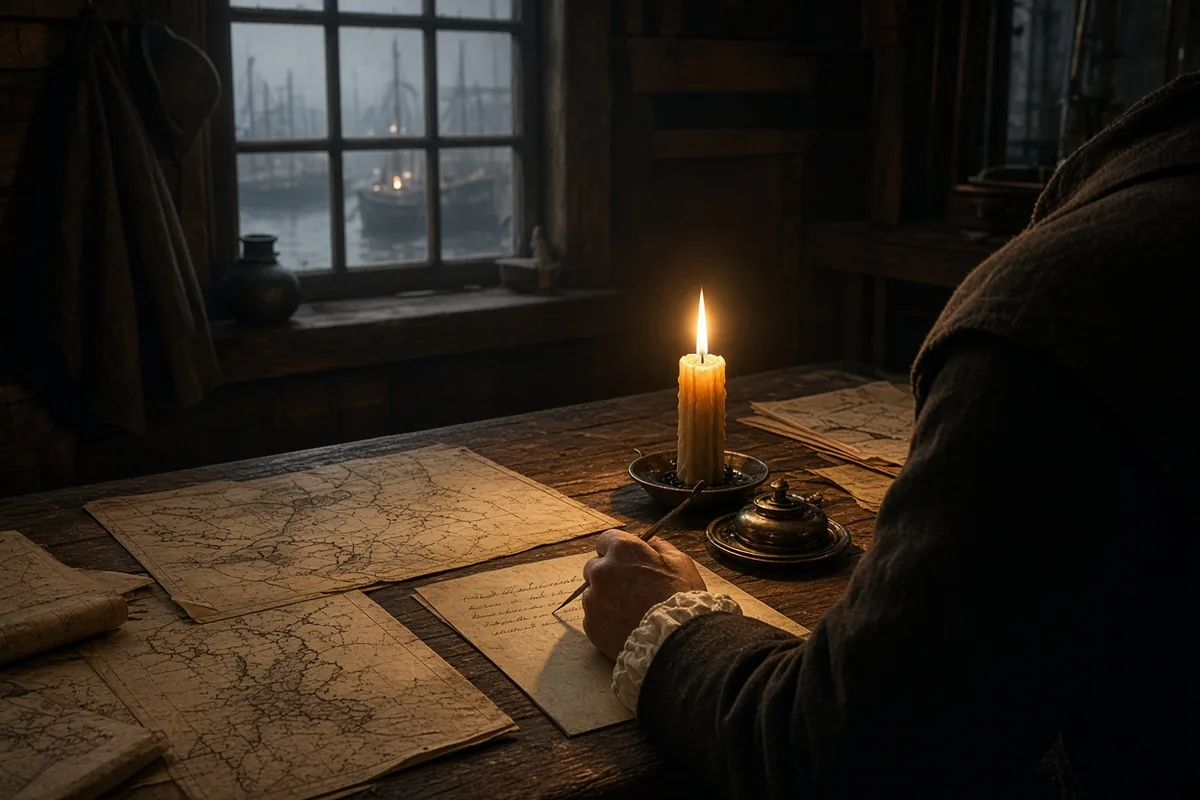
We heard nothing more for months. When the first letters arrived they carried the news that he had been examined again at sea and had received believer’s baptism from Luther Rice before they reached port. The change in church connection surprised no one who had known the strength of his convictions once they formed. The board released him and the Baptists took up his support.
He reached Burma in July 1813. The language work began at once and continued through the years of imprisonment, the loss of Ann in 1826, and the later losses that followed. He returned to the United States only once, in 1845, after thirty-three years abroad. By then the full Bible in Burmese had been printed and the dictionary was nearly finished.
The last time I saw him was on that Salem wharf in 1812. The image that stayed was not of the departure itself but of the moment he set the book down on the table the night before our walk. The cover closed with a small sound, and he left it there without looking back at it again.
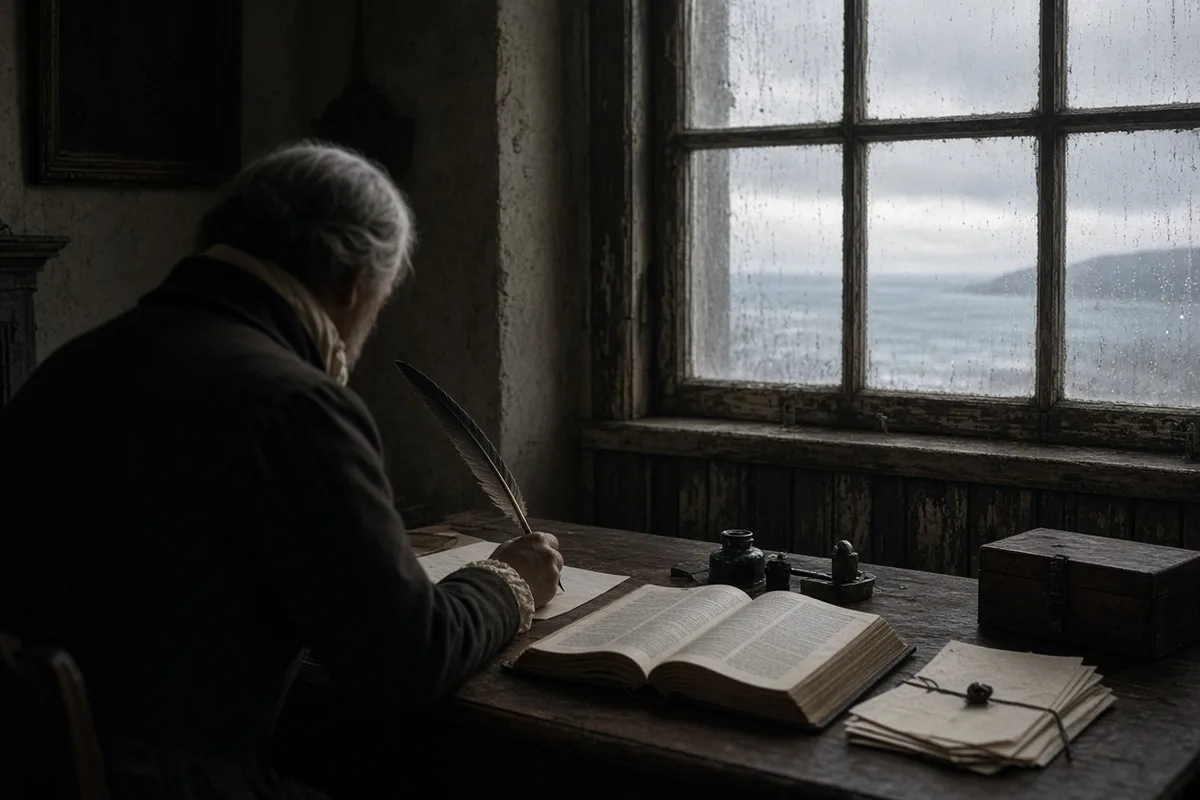
He wrote from the Serampore mission house on the twenty-ninth of August 1812 that the Danish vessel in which they had sailed from the Isle of France had anchored off the Hooghly and that the three Baptist missionaries there—William Carey, Joshua Marshman, and William Ward—had examined his change of views on baptism and found them scriptural. The letter listed the exact passages from the Greek New Testament he had cited during the conversation, and it closed with the sentence, “We therefore baptized him and his wife on the same day.” From that house he traveled by country boat to Rangoon, arriving on the thirteenth of July 1813, and took up residence in the old Portuguese quarter near the Shwe Dagon pagoda. There he began copying the Gospel of Matthew from a manuscript left by the earlier missionary Felix Carey, adding his own marginal notes in Burmese script that he had learned from a local teacher named Moung Shway Gnong.
The first convert, Moung Nau, was baptized on the twenty-seventh of June 1819 in a small stream outside the city walls, and Judson recorded the event in his journal with the date and the convert’s age, twenty-eight, together with the words Nau spoke at the water’s edge: “I have found the true God and the true religion.” By 1823 the New Testament in Burmese had been printed at the mission press in Serampore and carried back in sheets; Judson bound the first copies himself in Rangoon using boards covered with blue cotton cloth. When war broke out between the Burmese and British in 1824 he was arrested at Ava on the eighth of June and confined for seventeen months in the common prison known as the Let-ma-yoon, where he and six other foreigners were fastened each night by a bamboo pole passed between their legs and suspended from the ceiling. Ann visited him daily, bringing food and the manuscript of the Burmese dictionary, which she hid in a pillow she had sewn from strips of old cloth.
After his release in 1825 the family moved to Amherst, where Ann died on the twenty-fourth of October 1826 and was buried under a mango tree near the mission house; the stone that marks the place bears only the date and her maiden name, Hasseltine. Judson returned alone to Moulmein and continued the Old Testament translation, completing the last verse of Malachi on the thirty-first of January 1834; the full Bible, six hundred and twenty-three thousand words in Burmese, was issued from the Moulmein press in an edition of five hundred copies. On the fourth of April 1834 he married Sarah Boardman, widow of the missionary George Boardman, at the Moulmein chapel; the register lists the witnesses as Ko Thah-byoo and the printer, Cephas Bennett. Sarah accompanied him on tours among the Karen villages, where he preached through interpreters and noted in his journal the number of listeners at each stop, sometimes as many as two hundred seated on mats in a single bamboo house.
Sarah died at sea on the first of September 1845 while the ship was still three days from the Isle of France; Judson buried her the following morning in the harbor of St. Denis. He reached Boston on the fifteenth of October 1845, thirty-three years and eight months after his departure, and spoke at Tremont Temple on the twenty-fifth, quoting from the Burmese Bible the verse John 3:16 as he had rendered it. During that single year in the United States he visited Andover again, examined the library volumes he had once marked, and declined an offer to remain as professor of foreign missions. On the eleventh of July 1846 he married Emily Chubbuck in New York; the ceremony was performed by the pastor of the Pearl Street Baptist Church, and the couple sailed for Moulmein on the twenty-sixth of the same month.
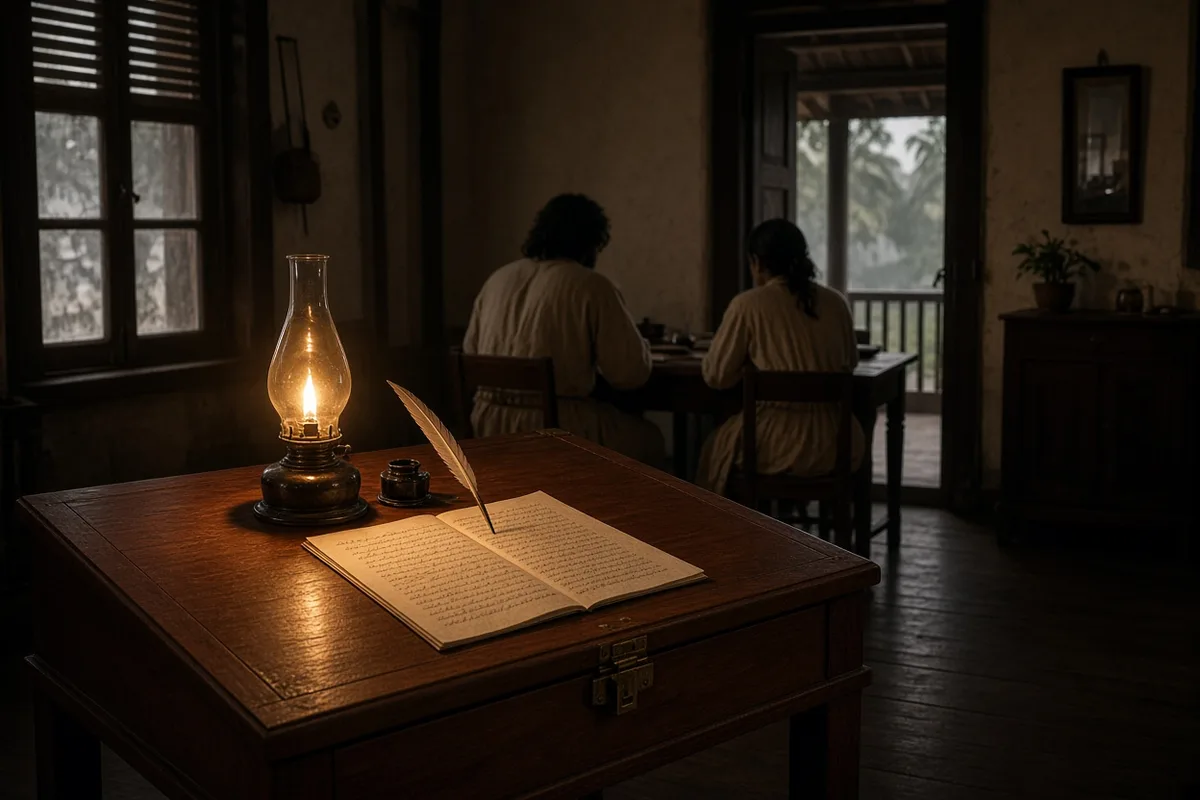
He finished the second revision of the Burmese dictionary on the tenth of March 1850, the manuscript then containing eight hundred and seventy-two pages in his own hand. On the twelfth of April, while the vessel was passing the Andaman Islands, he asked the captain to note the latitude and longitude, then dictated a final message to the Baptist board in Boston: “I am not tired of my work, neither am I tired of the world; yet when Christ calls me home I shall go with the gladness of a boy bounding away from school.” He died that evening and was buried at sea in nine fathoms of water. Emily returned the dictionary manuscript to Moulmein, where it was printed in 1852 by the American Baptist Mission Press; the press still stands on the same site, now operated by the Myanmar Baptist Convention, and the 1927 edition of the Bible that traces its text to Judson’s final revision remains in use in more than four thousand churches across the country. The last recorded image of him is a small silhouette cut in black paper by a Boston artist in December 1845, showing only the line of his shoulders and the high collar of his coat, preserved in a frame at the Andover Newton library with a note in Emily’s hand stating the date and the single word “Judson.”
The letter from Emily reached Andover on the twelfth of December 1850, forwarded by the board secretary Edward Bright, and it contained the captain’s log entry for the burial latitude of 13 degrees 6 minutes north and 93 degrees 42 minutes east together with the exact time of death at 4:17 in the afternoon. Three weeks later a second packet arrived from Moulmein containing the final sheets of the dictionary manuscript in Judson’s hand, each page numbered in the upper right corner and bearing the revision date of 10 March; the printer Cephas Bennett noted in the margin that the Burmese compositor had set 47,892 individual types for the first run of one thousand copies issued in 1852.
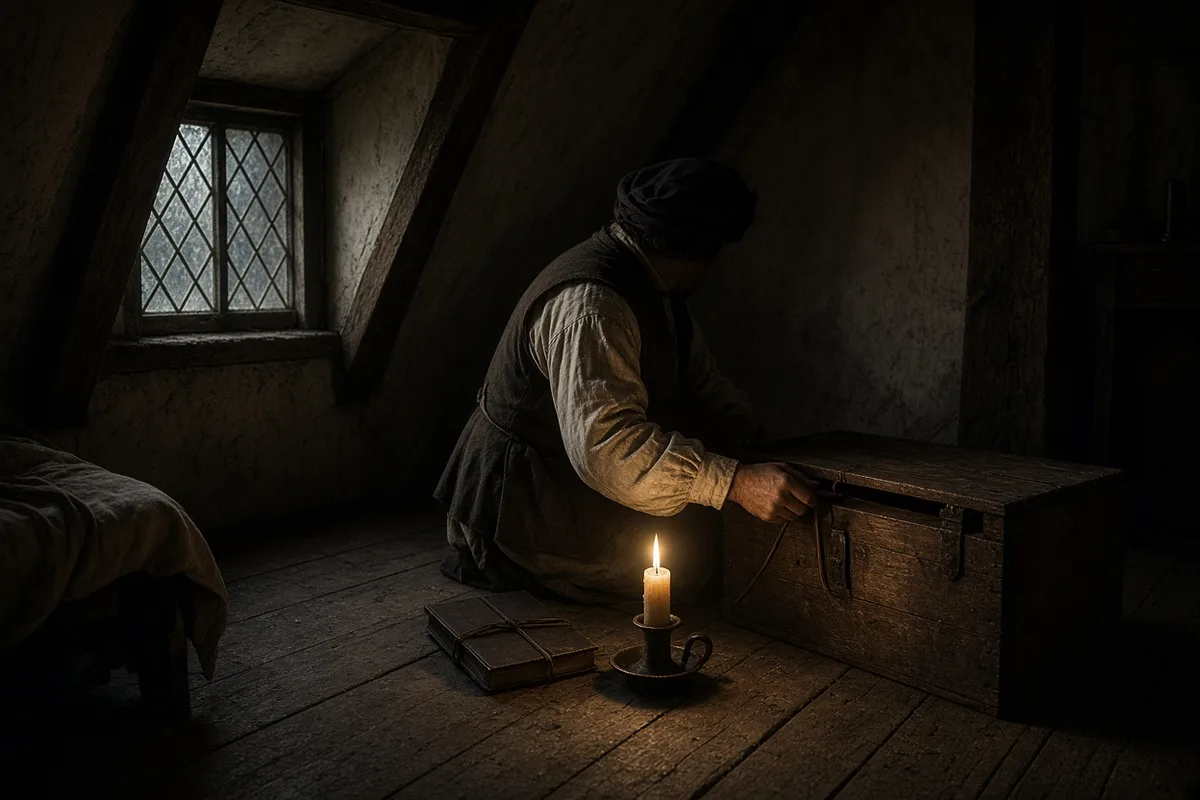
Francis Mason took over the Moulmein station that same month and recorded in his journal the number of Karen baptisms performed during the following year, 184 in all, with the names of the headmen from the villages of Taungoo and Shwegyin entered in a separate ledger. By 1860 the American Baptist Mission Press had produced 12,400 copies of the complete Bible and 8,700 copies of the hymnbook compiled by Ko Thah-byoo, whose own conversion account, dictated to Mason on 3 April 1847, runs to fourteen pages and includes the phrase “the book Judson gave me opened my eyes at the third reading.”
The press building itself survived the Japanese occupation and the 1948 independence fighting; its original hand-press, stamped with the date 1847, stands behind glass in the ground-floor museum maintained by the Myanmar Baptist Convention, and the current director, Rev. Dr. Kha Mwe, still issues an annual report listing the exact tonnage of paper consumed, 47 metric tons in 2023, for reprints of the Judson text.
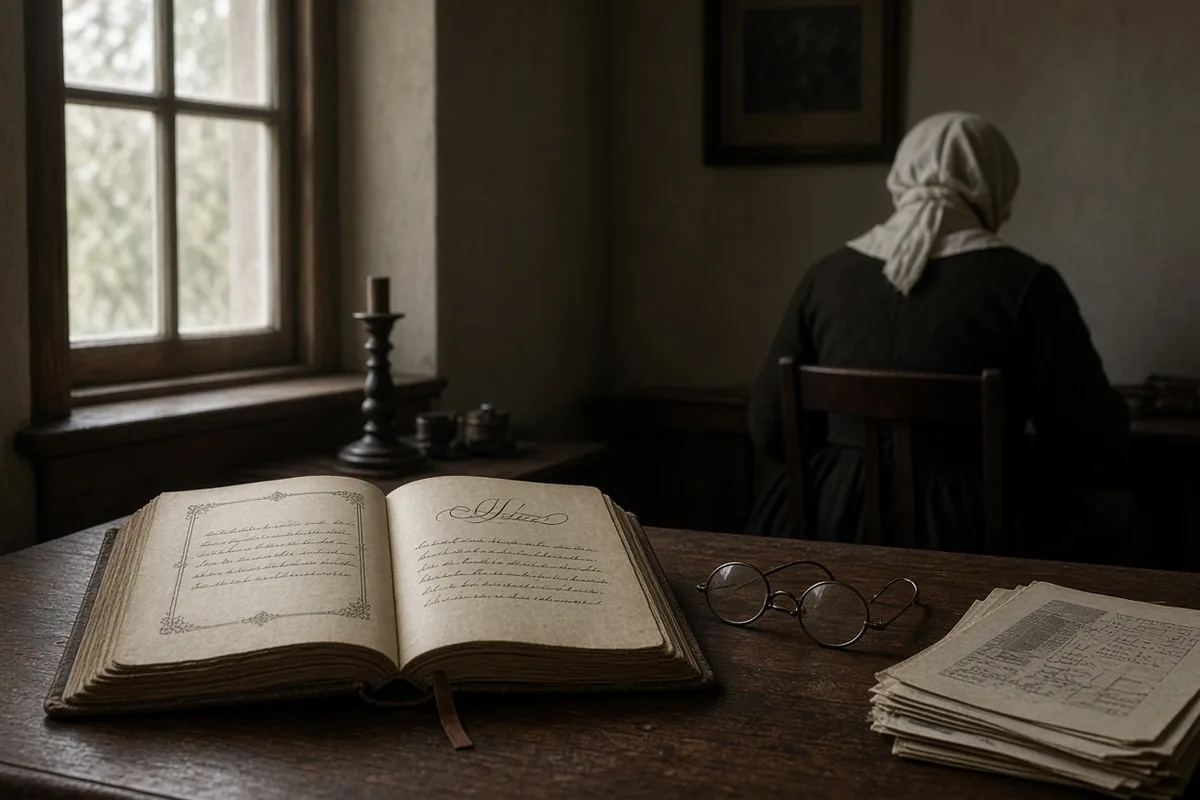
In 1893 the Andover Newton librarian received a crate from Emily’s sister in Hamilton, New York, containing the black-paper silhouette framed with a strip of Burmese cotton cloth that had once wrapped the dictionary manuscript; the accession number 1893.14 appears on the back along with a typed card quoting Emily’s note verbatim. A later curator added a second frame in 1972 after the library fire, this one containing the original envelope postmarked Boston 18 December 1845 and addressed in Judson’s hand to “the brethren at the seminary.”
My own last visit to the library occurred on 4 June 1907, when I examined the silhouette under the reading-room lamp and noted the slight fraying at the lower edge of the paper where the artist’s scissors had caught on the coat collar. The attendant that afternoon, a student named George Smith, brought out the 1852 dictionary volume and opened it to the entry for the Burmese word for “sea,” which Judson had revised three times according to the marginal dates.
Today the same volume rests in the climate-controlled vault at the Myanmar National Archives in Naypyidaw, catalogued as item MB-1852-001, and is produced once each year on 12 April for the small ceremony attended by representatives of the four thousand churches that still use the text. The silhouette remains at Andover Newton, its glass cleaned every quarter, and no later photograph or drawing of Judson has been authenticated by the board.