



Afghanistan-based group claims attack on Kohat mosque during Friday prayers
By The Conservative Desk (/journals/conservative-desk)
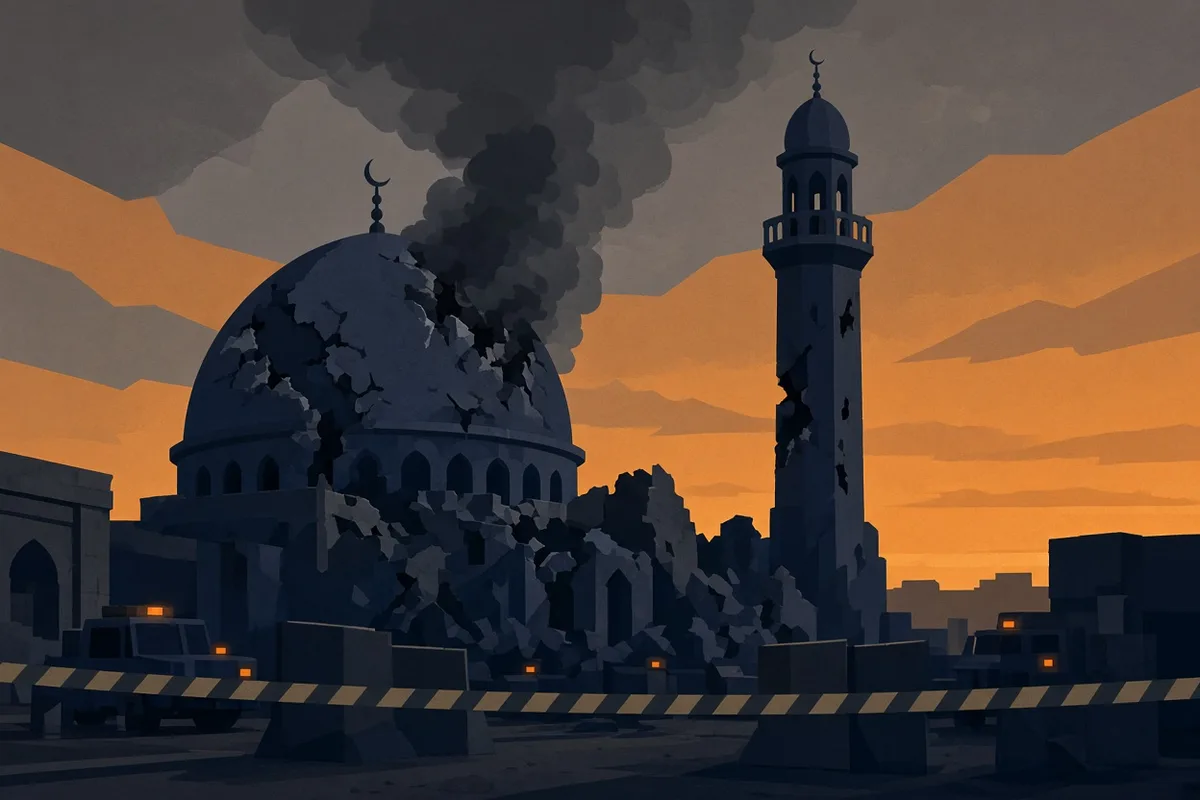
An explosives-laden vehicle rammed the gate and boundary wall of the Old Police Lines in Kohat around 1:20 p.m. on September 18, 2026, as worshippers gathered for Friday prayers at the mosque inside the compound. The blast tore open the wall, left a crater outside the mosque, and collapsed part of the structure. Gunmen then opened fire and traded shots with police. A second suicide blast struck near the Special Branch building during the fight.
Death counts diverged across outlets within hours. Reuters, The Hindu, The Week, UrduPoint and The Times of India reported 16 dead, with provincial police chief Zulfiqar Hameed and hospital accounts putting five of them as police and 11 as civilians. RFE and Herald Globe put the toll at least 20. Pakistan Today, The CSR Journal and Lokmarg reported 21 killed, 15 of them police. Breitbart headlined the attack as killing 27. Injured tallies ran from more than 30 (Times of India) to 57 (Reuters), more than 50 (Hindu, UrduPoint), 78 (RFE), over 80 (Lokmarg) and more than 100 at two Kohat hospitals (Pakistan Today), with 13 taken to Liaqat Memorial and 90 to DHQ Hospital Kohat. Pakistan Today said 73 of the wounded were police and 30 civilians; five patients underwent laparotomy and four were referred to tertiary care in Peshawar. District Health Officer Dr Nasir Hassan Afridi and Medical Superintendent Dr Tahir Ali Shah confirmed casualties and the hospital intake. Rescue 1122 KP spokesperson Bilal Ahmad Faizi said teams reached the site after distress calls and began evacuating the wounded.
Statements said six were killed, including a suicide bomber; Reuters said all seven died in the blast and gun battle; an anonymous senior officer told AFP four were killed, including a sniper and the suicide bomber. The Counter Terrorism Department’s Additional Inspector General entered the compound himself to lead the clearance. By about 3:30 p.m. police said the operation was in its final stages. Kohat-Hangu Road was closed and extra officers were deployed. Kohat Deputy Commissioner Naveed Ahmed said most of those killed were police officers and put the injured at 78.
Ittehad-ul-Mujahideen Pakistan, led by Afghanistan-based Hafiz Gul Bahadur, claimed responsibility, according to Pakistan Today, The CSR Journal and Lokmarg. Tehreek-e-Taliban Pakistan issued a statement disowning the attack, per Reuters. The interior ministry said the attackers’ “cowardly actions” could not weaken “the nation’s firm resolve.” President Asif Ali Zardari condemned the blast, called the complete elimination of foreign-sponsored terrorists “essential for national security,” and expressed “his best wishes for the swift recovery of those injured in the explosion.” Prime Minister Shehbaz Sharif ordered expedited relief, medical treatment and a report. KP Chief Minister Sohail Afridi called the targeting of innocent citizens “deeply regrettable and unacceptable” and said “The nation’s morale cannot be dampened by cowardly acts of terrorism.” KP Governor Faisal Karim Kundi said the nation stood with the security forces.
Inspector General Zulfiqar Hameed framed the fight in plain terms. “The operation will continue until the complete elimination of Fitna-ul-Khawarij,” he said, using the state’s label for TTP-linked terrorists. At funeral prayers for the dead that evening, attended by the IG, ministers, the GOC, the commissioner, families and a large crowd, with a police contingent presenting a salute and officials laying wreaths, Hameed said the remains had been sent to native areas and vowed: “Every drop of the martyrs’ blood will be accounted for.” He added: “Cowardly terrorists targeted worshippers offering Friday prayers and this cowardly act demonstrates that terrorists have no connection to the religion of Islam.” And: “We are tracking down the terrorist network and will soon bring their facilitators to justice.”
The sequence matters for any serious account of sovereignty and public safety. The vehicle bomb hit a police facility during congregational prayer, then attackers moved on the CTD and Special Branch buildings. Civilians and officers died together at worship. That is not random crime; it is an assault on the state’s monopoly on force and on the free exercise of faith in a public space the government is obliged to secure. Limited government still requires a state that can keep a mosque gate and a police lines wall from being rammed by a VBIED. Rule of law means facilitators are identified, charged and tried, not bargained with. National sovereignty is tested when the group that claimed the attack is described as led from Afghanistan and when Islamabad has long said militants use Afghan territory to train and plan strikes inside Pakistan. Kabul’s Taliban government has denied those charges and called militancy Pakistan’s domestic problem. The record supplies both positions; it does not supply a resolution.
The attack did not stand alone in the local record. The day before, a roadside bomb in Hangu killed six soldiers. Pakistani forces were also reported to have killed 10 suspected militants in operations in Hangu and North Waziristan. Kohat itself had seen a remote-controlled bomb inside a police colony behind the same Police Lines in 2010 that killed 20 people, mostly relatives of officers, and wounded more than 90. The pattern is sustained pressure on the police and on the border belt, not a one-off outrage.
For ordinary people the coverage often treats as background, the facts are concrete. Worshippers finished or were still at Friday prayers when the wall came down. Bodies and the wounded were pulled from rubble. Ambulances filled two hospitals. Families attended funeral prayers the same evening. Police morale, Hameed said, remained high; the operation was to continue. Those are the stakes that do not require invented drama: whether a provincial capital’s hinterland 60 kilometers southwest of Peshawar can keep its police lines and its mosque from becoming a free-fire zone, and whether the network and its facilitators are actually brought in.
Some early wire accounts noted no immediate claim and floated suspicion toward the TTP without confirmation; Reuters later carried the TTP’s disavowal while other Pakistani outlets carried the IMP claim under Hafiz Gul Bahadur. Breitbart’s higher death figure sat above the 16- and 21-person clusters that dominated other wires. The governor’s and chief minister’s offices issued condemnations and sought reports; the record does not detail further public statements from them beyond those lines. No Democrat or American official appears in the source material on this incident, so none is invented here. The conservative case rests on what is present: an Afghanistan-linked claim, a deliberate strike on worshippers and police, contested but severe casualties, and an explicit police pledge to finish the clearance and account for every drop of blood.
Hameed’s last operational note in the record is the one that remains open. The clearance was described as reaching its final stages by mid-afternoon. The network, he said, was being tracked. Facilitators, he said, would be brought to justice. That is the next decision the facts themselves put on the table.