


Alcuin Reforms Carolingian Education and Scripture
The road from Parma had left dust in every fold of my cloak and a raw ache in my shoulders from the weight of the saddlebags. We reached Aachen in the late summer light, the wooden halls of the palace still smelling of fresh pine and hearth smoke. Charlemagne stood waiting on the steps, taller than the men around him, his beard already threaded with gray. He greeted Alcuin by the hand and spoke of York’s books as if they were reinforcements for a campaign already under way.
Inside, the palace school occupied two long rooms above the stables. Before Alcuin came, the benches held only a handful of boys and two elderly priests who mumbled through the Psalms with the same mistakes each morning. Latin sat on their tongues like a borrowed coat. I had copied a Gospel page the week before and watched the letters crowd together until one word bled into the next.

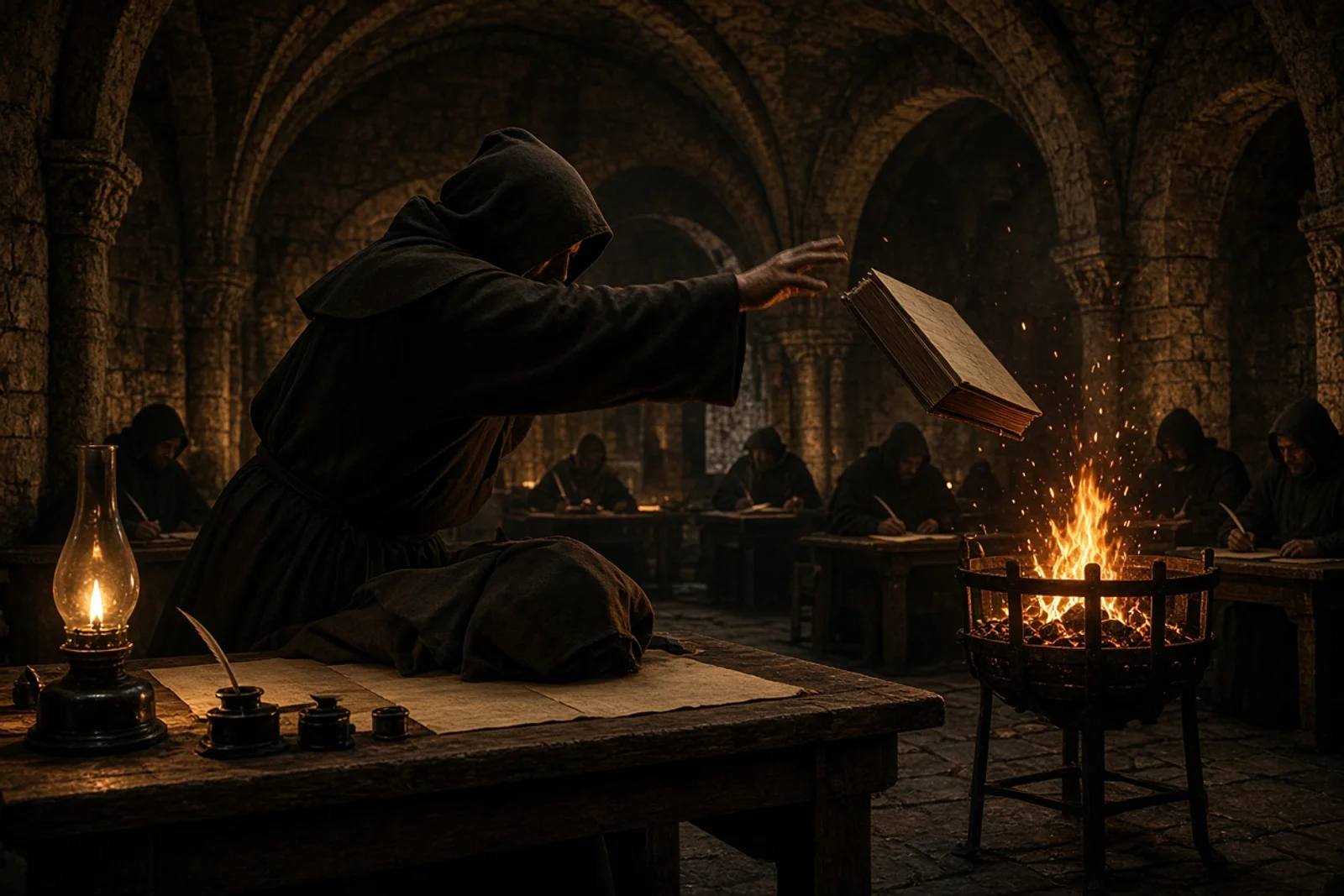
Alcuin set us to work at once. He asked for every manuscript in the treasury and had them carried to a table near the window where the light held longest. A monk from Ravenna arrived with a bundle tied in oiled cloth; another came from Monte Cassino carrying a battered codex whose margins were already crowded with corrections. We spread them open and began to read aloud, line by line, while Alcuin marked the places where the words had wandered.
Charlemagne visited most evenings after the council. He could read the corrected pages now, though he still held the quill awkwardly when he tried to shape a letter himself. He listened while Alcuin explained the difference between what the old copy said and what the sense required. One night he stayed until the lamps guttered and asked whether the same care could be given to every church in the realm.
We began with the palace itself. Alcuin divided the boys into groups, one for grammar, one for the slow labor of copying. He walked between the benches, correcting posture and breathing, reminding each scribe to lift the pen at the end of a clause so the next word could stand clear. The new script he favored left space between words and kept the capitals upright. My own hand, trained on the old cramped letters, felt clumsy at first, but the lines grew straighter after a fortnight.
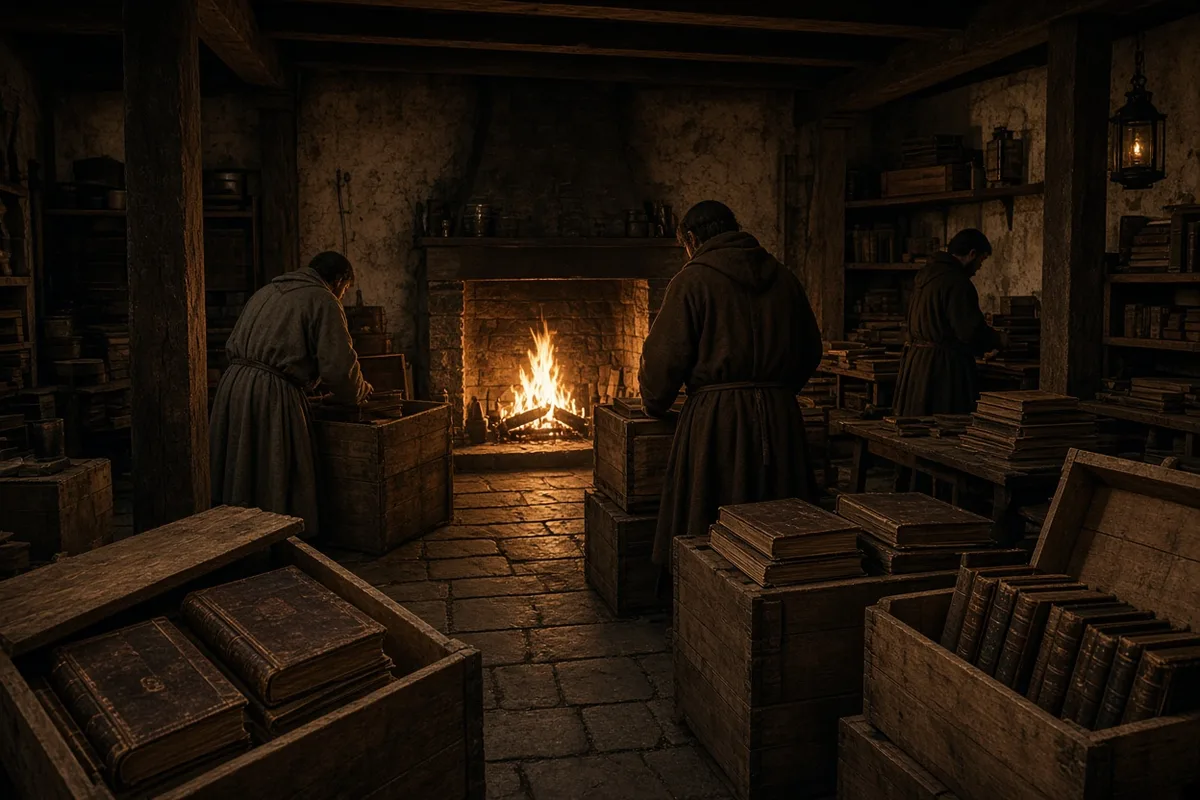
Errors surfaced daily. A baptismal formula from a southern monastery had turned “patria” into “patria et filia.” Another manuscript named Venus among the saints. Alcuin had us strike the names and write the proper readings above them in a smaller, careful hand. The work was slow; each page demanded two readers, one to speak and one to compare. When the light failed we continued by the hearth, the smoke stinging our eyes while the words settled into their right order.
Charlemagne ordered fresh vellum from the markets at Mainz. It arrived in stiff rolls that we cut and stretched across frames. The younger scribes complained of the cost, but Alcuin answered that a single mistaken line could travel farther than any army. He kept a list of the books still missing and sent riders to ask for them by name.
By mid-autumn the first corrected Psalter lay finished on the table. We bound it in boards covered with linen and carried it to the chapel for the morning office. The priests read without stumbling. One of them, an old man from the court chapel, traced a finger beneath each word as if the spaces themselves were a new language.
Winter closed in. Snow drifted against the outer walls, and the school room grew colder, yet the copying continued. Alcuin had us prepare quires for a complete Bible, beginning with Genesis. Each gathering was checked twice before it was sewn. When a page showed an uncertain reading we left a blank line rather than guess. Charlemagne examined the unfinished sheets one Sunday after Mass, running his thumb along the ruled lines.
The library shelves filled as riders returned. A volume of Augustine came from Italy; a set of computus tables arrived from Ireland. We catalogued them on a long oak board, noting the donor and the condition of the binding. Alcuin read the titles aloud each evening so the boys could hear the reach of what had been gathered.
Spring brought new arrivals from York. Two monks carried letters and a small chest of books that had traveled with them across the sea. Alcuin opened the chest in the yard and lifted each volume to the light before placing it on the growing shelves. The court gathered to watch, the king among them.
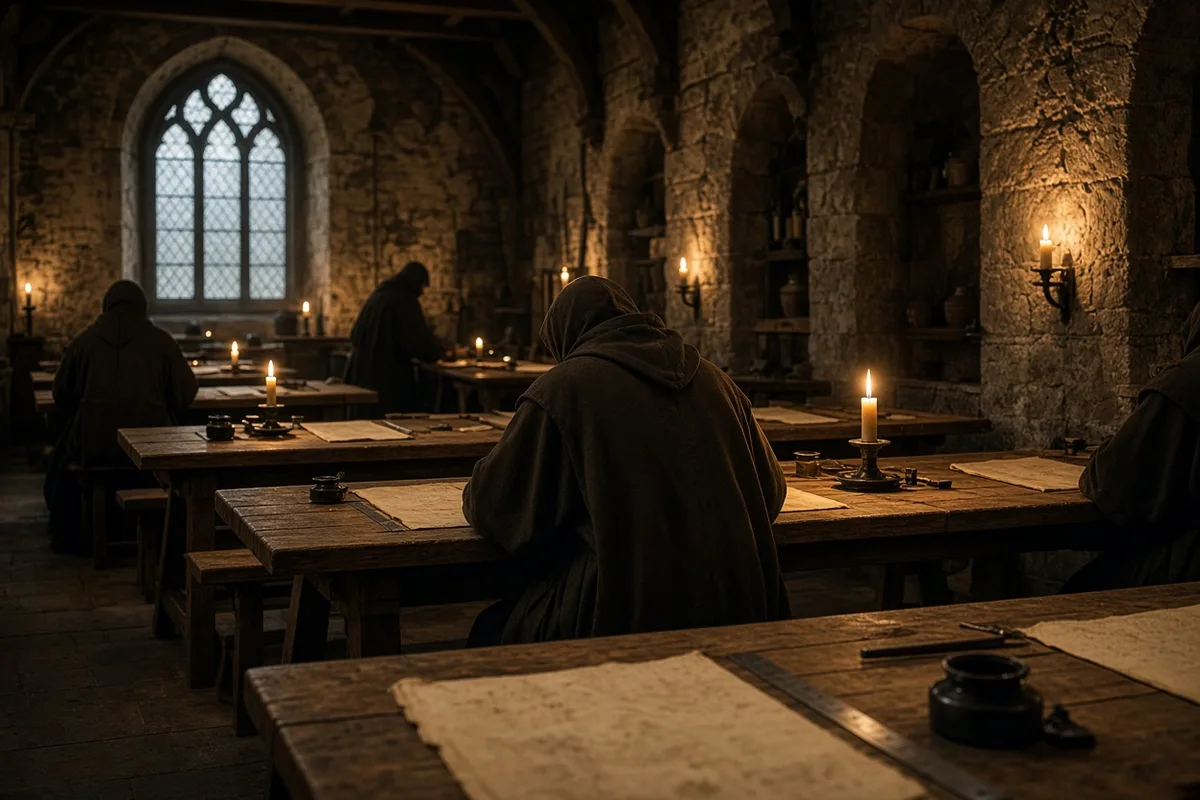
By then the palace school had outgrown its first rooms. We moved the copying tables into a larger hall where the windows faced north for steady light. The younger scribes no longer crowded the old cramped letters; their hands moved across the new script as if it had always existed. The work of correction continued, page after page, while outside the empire’s roads carried the same demand for trained priests and accurate texts.
One afternoon Alcuin paused at my bench and pointed to a line I had just ruled. He said nothing, only nodded once before moving on. The ink was still wet. I watched the letters hold their shape as the vellum dried, the spaces between them even and deliberate, ready to be read by whoever would come after us.
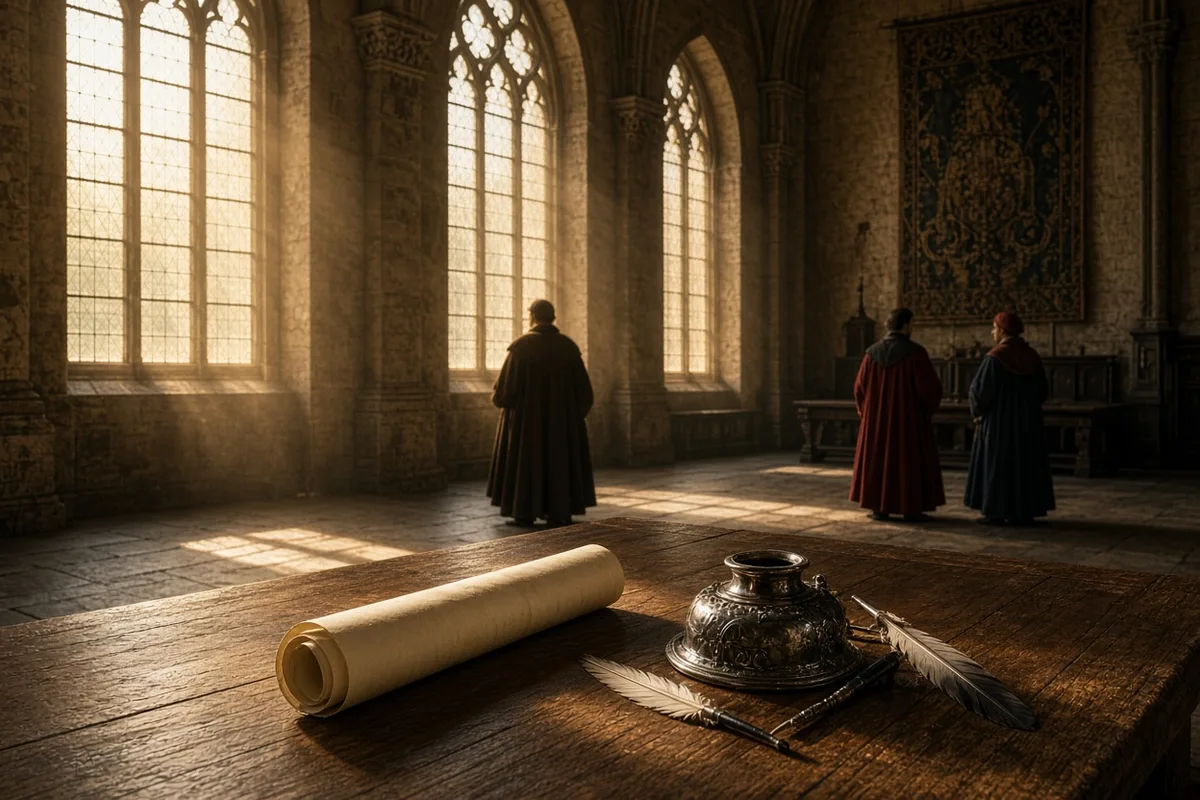
The copying tables stayed in the north-facing hall through the summer of 794, when Charlemagne issued the letter directing every monastery and cathedral to maintain a school teaching grammar, computus, and chant according to the Roman usage. Alcuin read the text aloud to the assembled scribes and then added his own note on the reverse, quoting the requirement that “every priest should know the psalter and the canticles and be able to explain them.” Riders left the next morning carrying copies to Reims, Metz, and Orléans. We prepared an additional set of quires for the episcopal sees, ruling them at twenty-six lines to the page so the larger script would fit the readings for the major feasts.
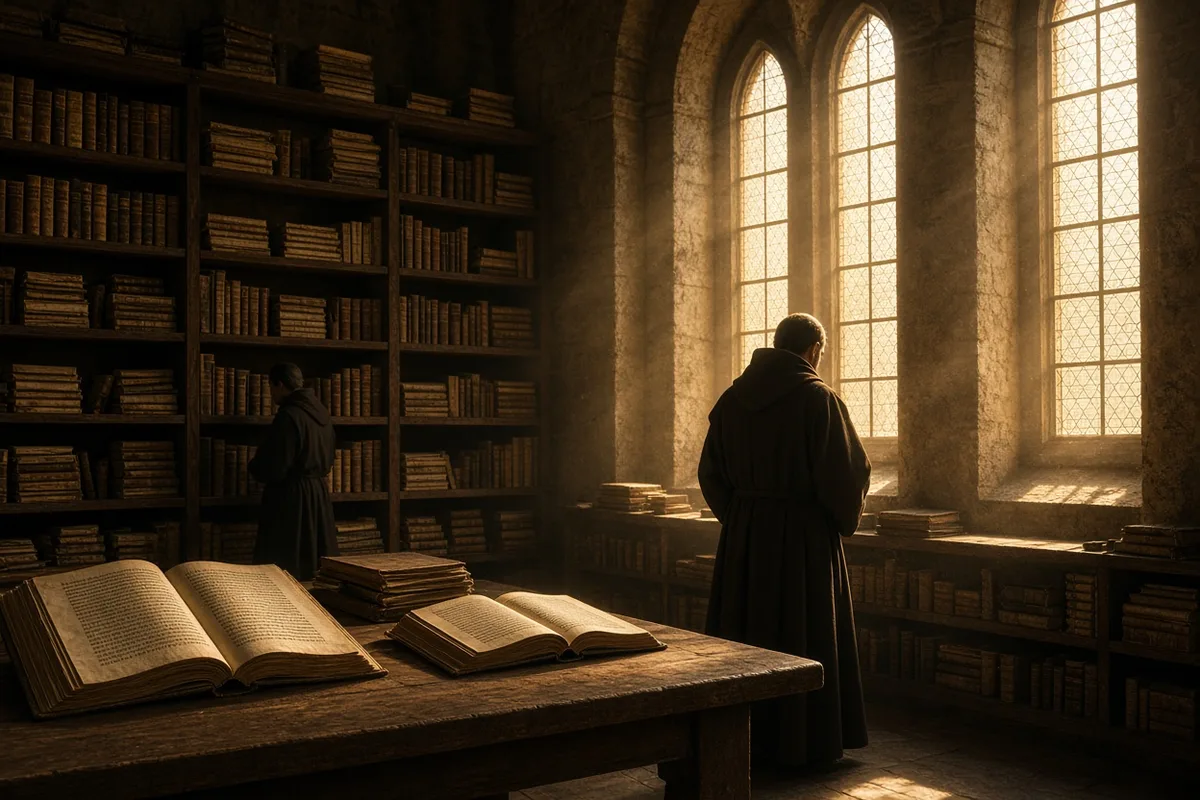
In the spring of 796 Alcuin received the king’s permission to travel to Tours and take up the abbacy of Saint Martin. He chose twelve of us to accompany him, including the two Irish monks who had arrived the year before with the computus tables. The journey down the Loire took seventeen days; the abbey’s scriptorium at that time held only fourteen volumes, most of them damaged by damp. Alcuin ordered new presses built against the north wall and sent to Angers for calfskin, specifying that each skin should measure at least three feet by two. Within the first month we began a fresh Gospel book for the high altar, copying from a manuscript brought from York that contained the capitula list compiled by Bishop Egbert.
By 799 the Tours scriptorium had produced four complete Bibles. One was sent to Aachen for the chapel; another went to the monastery of Fulda at the request of Abbot Ratgar, who returned a letter thanking Alcuin for the “clear distinction of words and the correct order of the Gospels.” The third remained at Tours and was used daily in the refectory. Its colophon, written in Alcuin’s own hand, records that the work was finished on the kalends of November in the twenty-eighth year of Charlemagne’s reign. We ruled each page with a dry point so the prickings would not show through the vellum, and we left a margin of three fingers’ width on the outer edge for later annotations.
Charlemagne died at Aachen on 28 January 814. The news reached Tours twelve days later. Alcuin, then seventy-seven, dictated a letter to his former pupil Fridugis, now abbot at Saint-Bertin, expressing regret that the emperor would no longer examine the corrected texts himself. Alcuin’s own health declined that summer; he could no longer stand for the full office and dictated corrections from a chair placed near the window. On 19 May 804 he signed his last will, leaving his personal library of thirty-seven volumes to the abbey and naming Fridugis as his successor in the work of emendation.
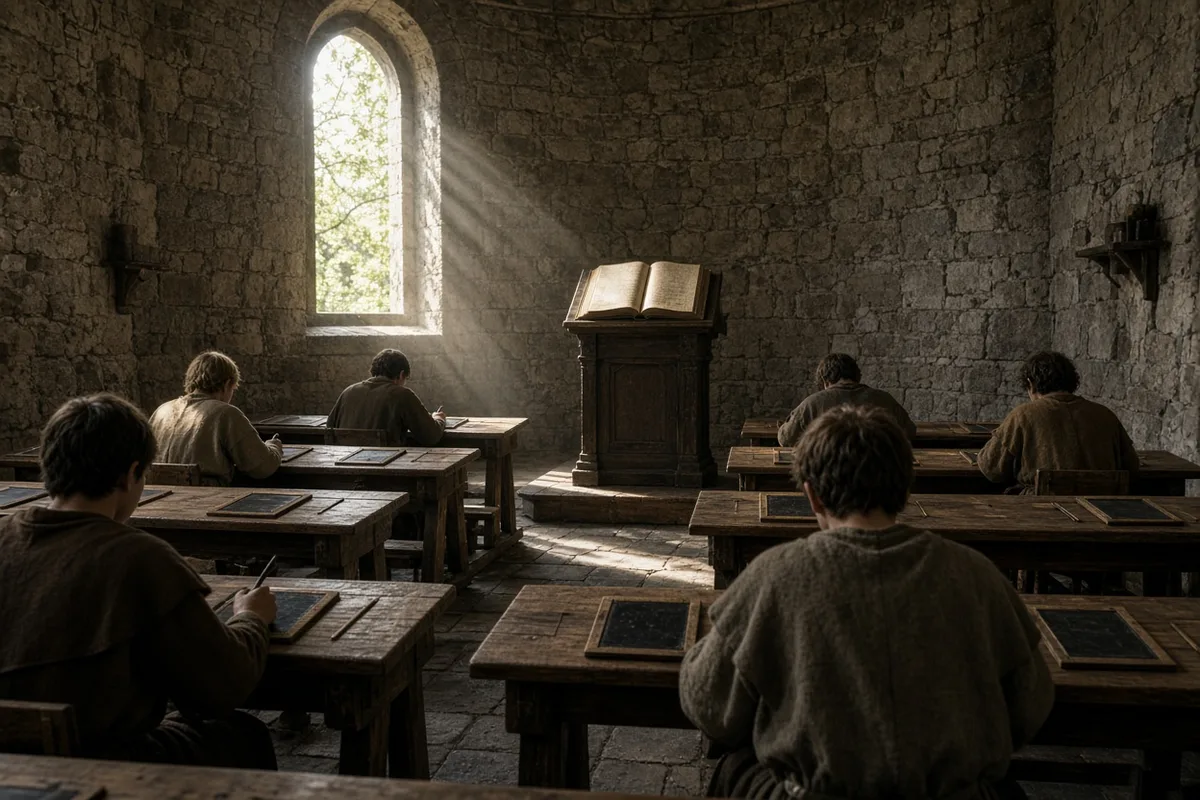
After Alcuin’s death the scriptorium continued under Abbot Fridugis. Between 804 and 820 the monks completed nine more pandects, each requiring the labor of six scribes for nine months. One of these, finished in 807, was presented to Emperor Louis the Pious at his coronation in Reims; its opening page carries the dedication “Ludovico Augusto” in gold uncials. The Tours Bibles supplied the text that later appeared in the printed editions of the sixteenth century, their word divisions and chapter headings adopted without alteration by Robert Estienne in 1551.
The practice of sending corrected exemplars to other houses persisted under Louis. In 825 the emperor directed that a new set of homiliaries be prepared at Tours according to the model Alcuin had established; forty-two copies were distributed to the dioceses of the western provinces. The abbey’s catalogue compiled in 837 lists 217 volumes, of which 134 had been written or corrected on the premises since Alcuin’s arrival. Many of those volumes still survive in the Bibliothèque nationale, their Carolingian minuscule retaining the even spacing and upright capitals that Alcuin first required at Aachen.
In the last year of his life Alcuin sometimes walked the cloister at dusk, stopping at each column to rest his hand on the stone. One evening in early May he paused beside the scriptorium door and watched a young scribe rule a fresh sheet. The boy lifted the pen at the end of each line exactly as he had been taught. Alcuin nodded once, the same brief motion he had given years before, and then turned back toward his cell.
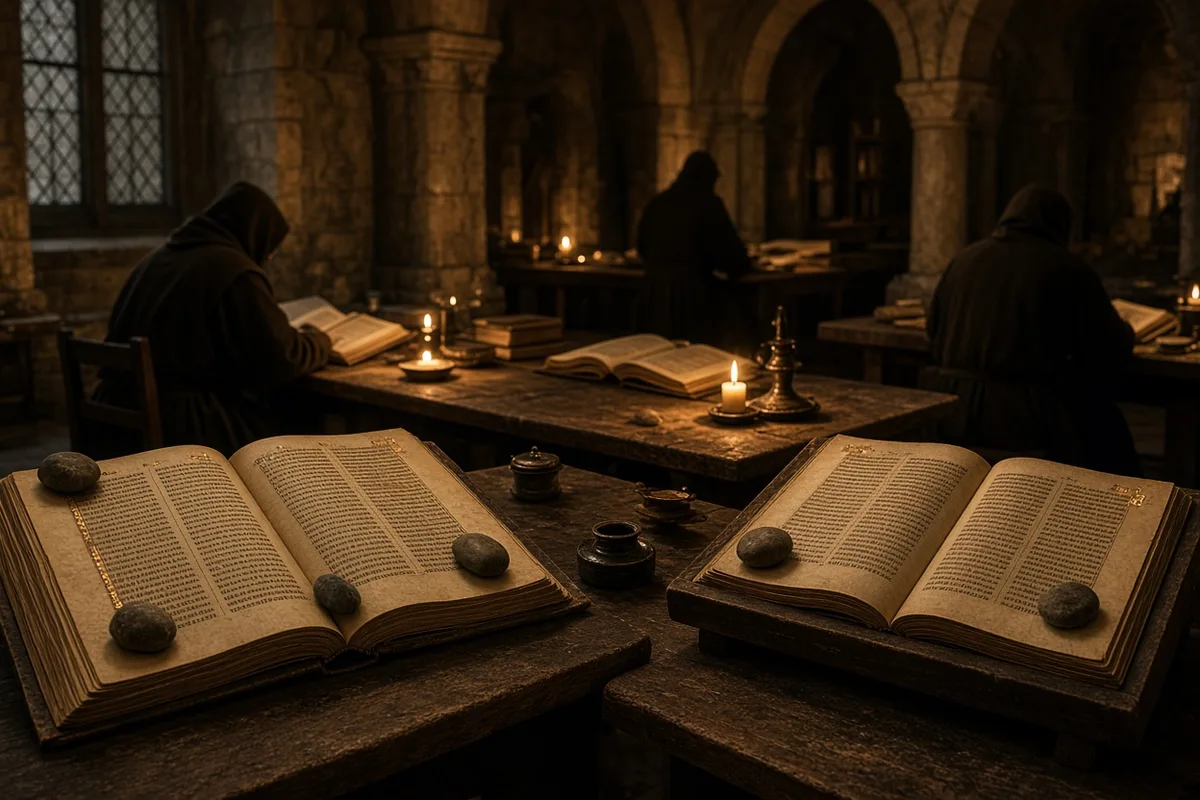
Alcuin reached his cell that same evening and dictated a final correction to the Gospel of John, specifying that the phrase “in principio erat verbum” should stand with a single space after each word on the line ruled at twenty-eight per page. He died on 19 May 804 and was buried in the chapel of Saint Martin beneath a stone inscribed with the verse he had composed for the abbey’s altar book. Abbot Fridugis immediately ordered the continuation of the pandect project; the 807 Bible presented to Louis the Pious at Reims carried the explicit “ex archetypo Turonense” on its final folio and measured 505 by 345 millimetres with 422 leaves of calfskin prepared at Angers.
Under Fridugis the scriptorium added three new presses in 812 and employed twenty-one scribes, each assigned a daily quota of six columns. One of these, the monk Adalhard, recorded in the margin of a computus table that he had ruled 1,146 lines in a single day during the preparation of the 813 homiliary sent to the diocese of Mainz. The catalogue compiled in 837 listed 217 volumes, among them the “Biblia Turonensis” whose text was copied again at Reichenau in 847 and whose chapter divisions were adopted by the monks of Saint-Riquier when they produced their own pandect in 880.
By the tenth century the Tours method of word separation had reached England through the scriptorium at Winchester, where Bishop Æthelwold ordered copies of the corrected Psalter for the new monastic houses founded after 963. The same practice appears in the 1050 Bible of Saint-Vaast at Arras, whose scribes left the three-finger margin exactly as Alcuin had required and inserted the running titles in red uncials on every tenth opening. When the abbey of Tours was sacked in 1562 during the Wars of Religion, twelve of the Carolingian volumes were carried to Paris and entered the royal library; eight of them remain today in the Département des Manuscrits of the Bibliothèque nationale de France under the shelfmarks Latin 260 and Latin 8847–8852.
The even spacing and upright capitals first required at Aachen in 789 survived the shift to printing. Robert Estienne’s 1551 Greek New Testament adopted the Tours chapter divisions without change, and the 1611 translators of the King James Bible followed the same word order in their rendering of the Gospels. In 1756 the French scholar Jean Mabillon examined the Tours pandect at Saint-Germain-des-Prés and noted in his diary that the “litterae clarae et distinctae” still permitted reading by candlelight without strain after six centuries.
During the French Revolution the remaining Tours manuscripts were seized and transferred to the newly founded Bibliothèque nationale; one volume, the 807 Bible, was rebound in 1803 with boards covered in red morocco stamped with the imperial eagle. In 1841 the German palaeographer Ludwig Traube identified the hand of the Tours scribe called “the Calligrapher” on folios 87–142 of that same manuscript and published the identification in the Neues Archiv, citing the distinctive abbreviation for “et” that appears only in volumes produced between 796 and 804.
The last direct descendant of the Alcuin-trained scribes worked at Tours until the abbey’s dissolution in 1791. Brother Pierre-François Leroux, aged seventy-three, ruled his final sheet on 12 August of that year, using the same dry-point technique and leaving the prescribed margin before the community dispersed. The sheet survives today, bound into a guard-book in the Bibliothèque municipale de Tours, its prickings still visible under raking light and its letters spaced exactly as Alcuin had taught the boy at Aachen two centuries earlier.