


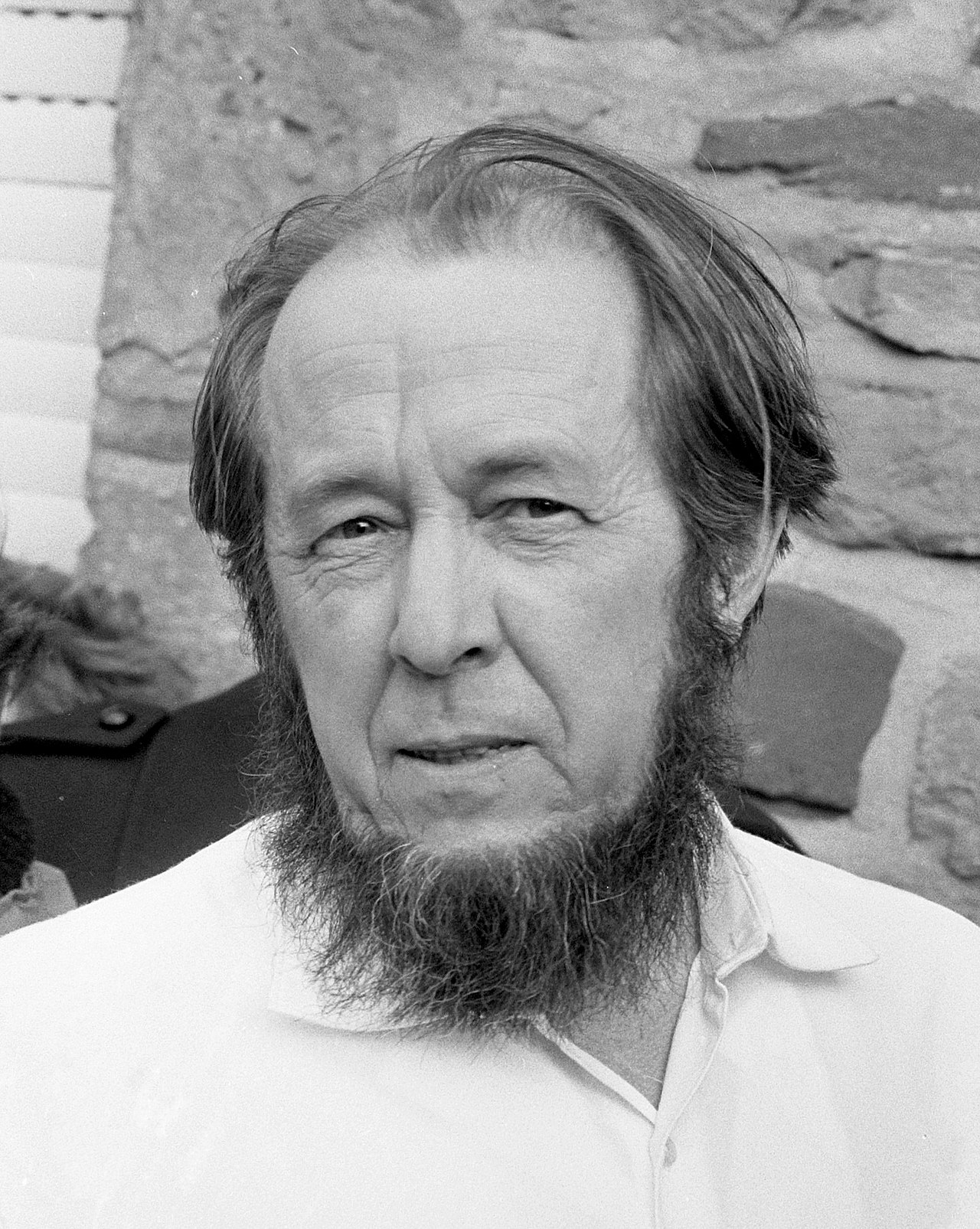
Aleksandr Solzhenitsyn Turns to Faith
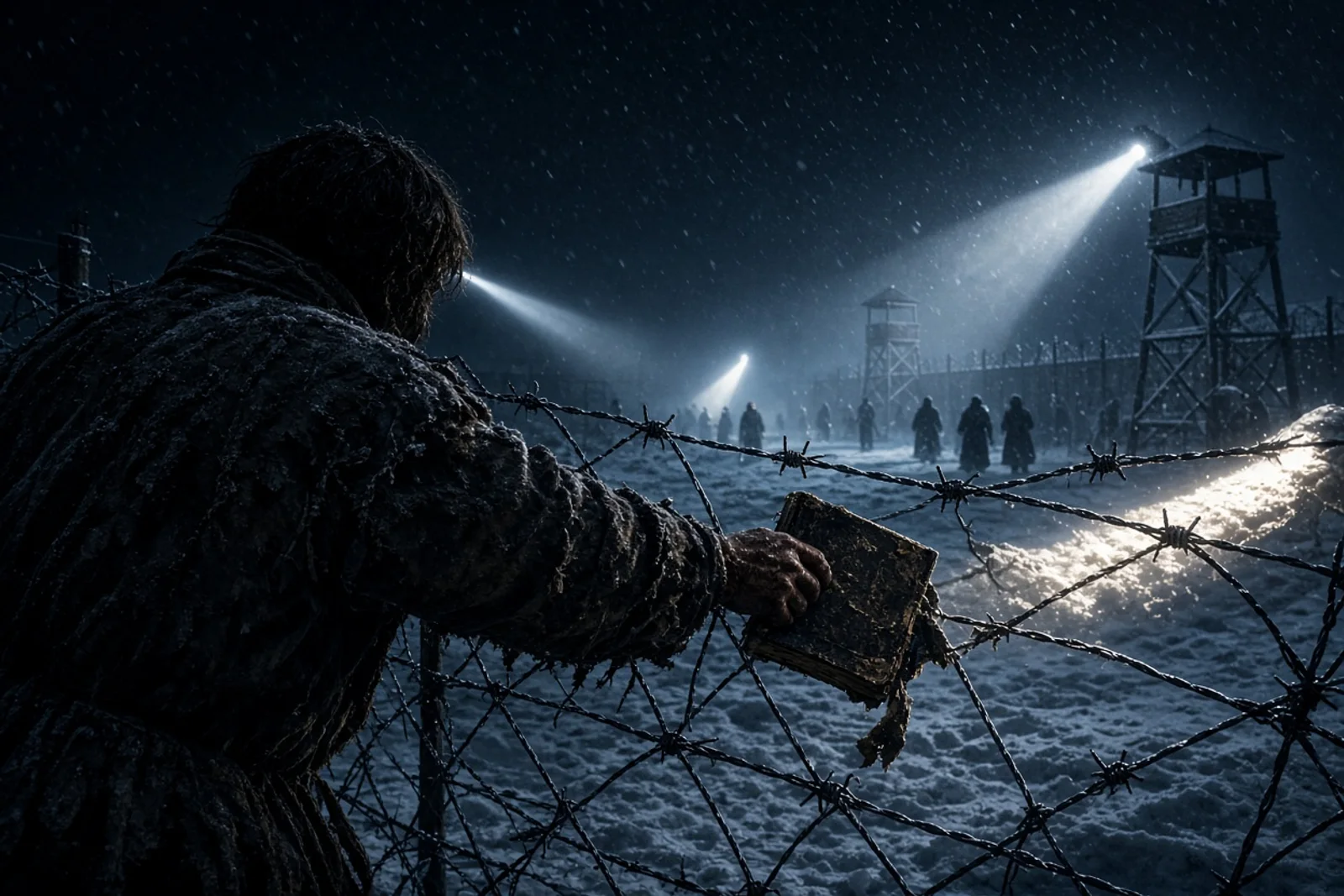
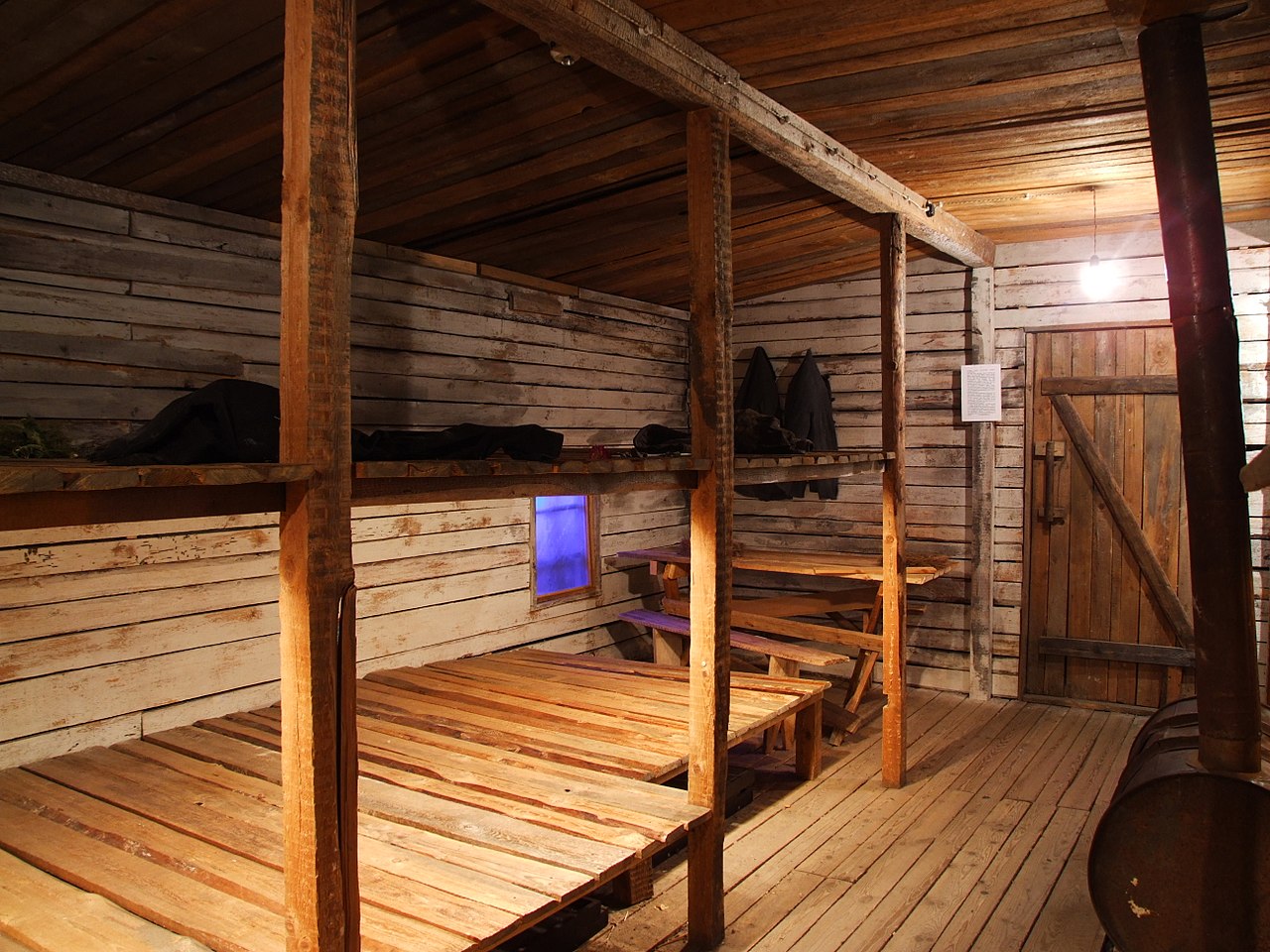
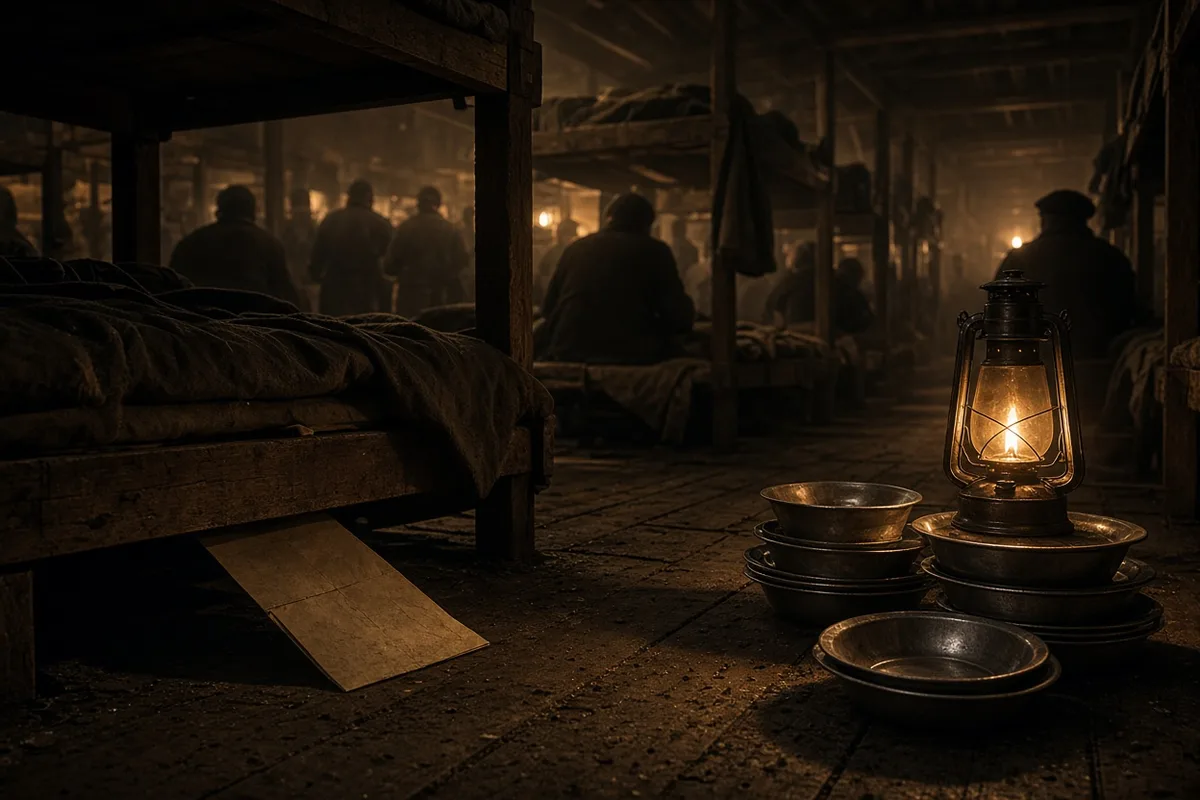
The shift came on a night when the wind cut straight across the steppe and into the barracks like a blade through canvas. I was on the lower bunk next to his, both of us still in the same work gang that had spent the day hauling slag from the foundry. My hands were raw from the tongs. His were the same. We lay there listening to the guards change at the wire, the dogs barking once and then settling. He had been quieter than usual for weeks, ever since the letters from his wife stopped coming. The divorce papers had arrived in the spring, carried by the camp censor like any other official notice. He read them once, folded them, and put them under his mattress. After that he stopped talking about home.
We had known each other since the sharashka days, though neither of us said much about the past. In Ekibastuz the past was a luxury no one could afford. What mattered was whether a man could stand his shift without collapsing and whether he would share a crust if the bread ration came short. He worked the same jobs as the rest of us—miner, bricklayer, foundry hand—and he never asked for lighter duty even when the cough started. One evening after roll call a new prisoner arrived from the transit point carrying a small bundle wrapped in oilcloth. The man had been searched twice already, yet the bundle passed through. He found our section, asked quietly for the writer who had been an artillery captain, and handed it over. Inside was a New Testament, the pages thin and already softened at the edges from handling.

He took it without a word and set it on the plank between our bunks. For three nights it stayed there untouched while the others slept. On the fourth night I woke to the sound of paper turning. He had a small stub of pencil and was copying lines by the light that leaked from the guard tower. He did not write on the book itself. He wrote on whatever scraps he could find—cigarette paper, the back of a work order, once on the inside of his own sleeve when the paper ran out. The words were not complaints about the food or the quotas. They were verses and responses, arranged like a service he was trying to remember from childhood.
The work continued. We were moved to a new section of the mine where the air was thicker and the timbering had begun to rot. One afternoon a support beam gave way and three men from the next gang were buried to the waist. He helped dig them out with his hands until the guards brought shovels. That evening, back in the barracks, he asked whether any of us still prayed. No one answered at first. Then an old man from the far end of the row said he remembered the words to the Trisagion. They spoke them together, low enough that the guard on the catwalk would not hear. After that the book moved. It went from bunk to bunk for a few hours each night, always returned before morning inspection. He never kept it longer than his turn.

By late summer the cough had settled into his chest and would not leave. The camp doctor gave him an extra blanket and nothing else. He used the blanket to wrap the book when he slept. One morning he did not rise for roll call. The rest of us lined up while the medic checked his temperature with a finger against his forehead. They let him stay in the barracks that day. When I returned at dusk he was sitting on the edge of the bunk, the book open on his knees, the pencil moving again. He looked thinner, but his eyes were steady. He asked me if I could remember the name of the priest who had baptized him as a boy. I told him I did not know. He nodded and went back to the page.
The poem took shape over weeks. He carried it in his head during the day and set it down at night when the tower light swung away from our window. It was not addressed to any of us. It spoke of grain scattered and faith that had crumbled without noise, of standing at the edge between living and dying and looking back without anger. When he finished the last lines he read them once to the old man who knew the Trisagion. Then he rolled the papers tight and hid them inside the lining of his jacket. The book itself stayed on the plank between our bunks until a new arrival needed it more than we did.
He was released the following March and sent into exile. I stayed another year. The last time I saw him he was standing at the gate with his bundle and the jacket that still held the rolled papers. He did not wave. He simply turned and walked toward the truck that would take him south. Years later word reached the camp that he had written about those nights, though never under his own name while the sentence still ran. The book had passed through many hands by then. Some pages were missing. The cover was gone. What remained was enough for the next man who needed it.
The truck that carried him south from the Ekibastuz gates reached Kok-Terek on 5 March 1953, the same week Stalin’s death was announced over the district loudspeaker, and within days he had registered at the local school as a mathematics teacher for the seventh and eighth forms. The exile order fixed him there for three years without the right to leave the district; he slept in a clay-walled hut behind the school and kept the rolled papers inside his jacket lining until he could copy them again onto school exercise books bought with his first month’s pay of 420 rubles. In letters that reached me after my own release in February 1954 he described the evening routine: after the last lesson he would walk to the edge of the irrigation canal, spread the pages on a flat stone, and add lines that began with the words “Grain that falls on stone still sends up a shoot if the rain remembers it,” lines he later placed in the closing section of the poem cycle “Prussian Nights.” A former zek named Georgi Tenno visited him there in October 1954 and later recorded that the manuscript already ran to ninety-four pages written in a hand so small that a magnifying glass was needed to read the marginal notes.
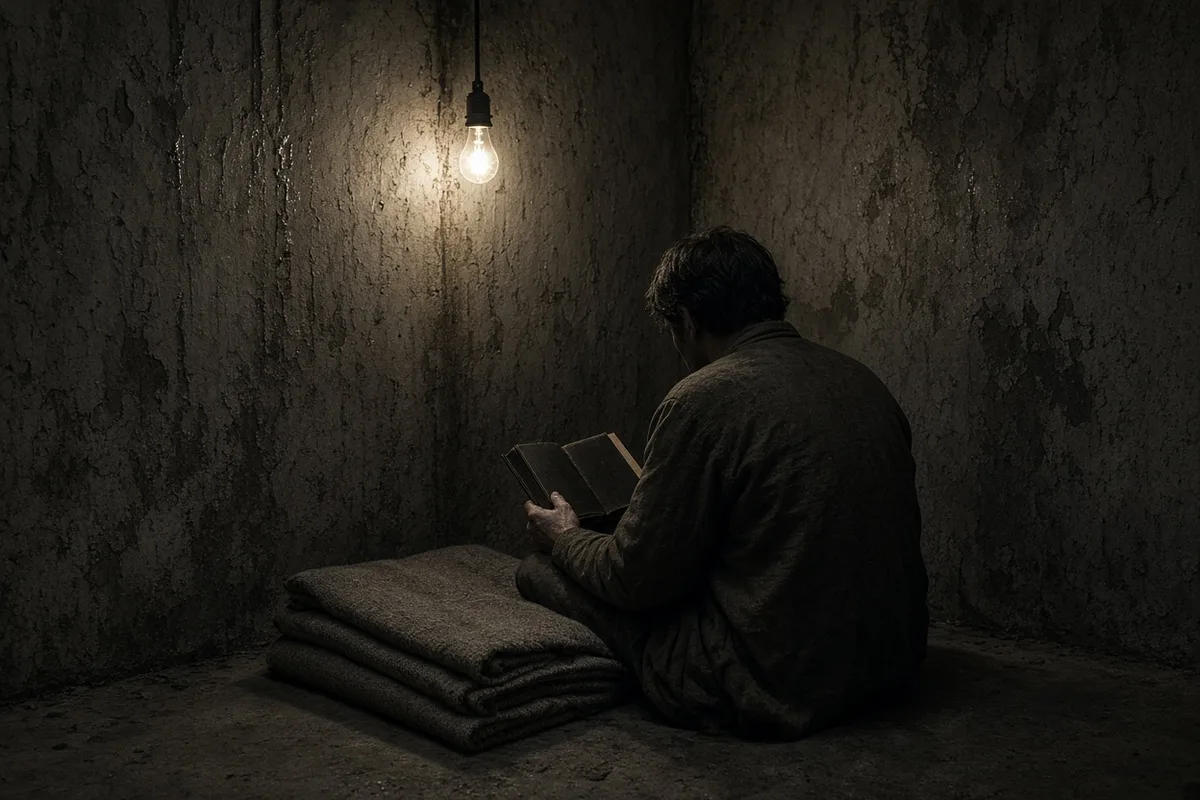
By the summer of 1956 the sentence had been annulled under the review commission sitting in Alma-Ata, and he was permitted to return to European Russia; he arrived in Rostov-on-Don on 6 June with a single suitcase containing the New Testament whose cover had been replaced by cardboard from a packing crate. Natalia Reshetovskaya, whom he had married in 1940 before the front, met him at the station and took him first to the apartment on Engels Street where their son Yermolai was waiting; within three weeks he had secured a teaching post at Secondary School No. 2 and begun typing the prison poem on a borrowed Underwood machine whose ribbon he changed every fourth night to avoid detection. The typescript that reached Novy Mir in December 1961 carried the title “Shch-854” and ran to 227 pages; Aleksandr Tvardovsky read it aloud to the editorial board on 12 January 1962 and noted in his diary that the line “the stars were still the same stars that had shone over the wire at Ekibastuz” had made two of the younger editors weep.
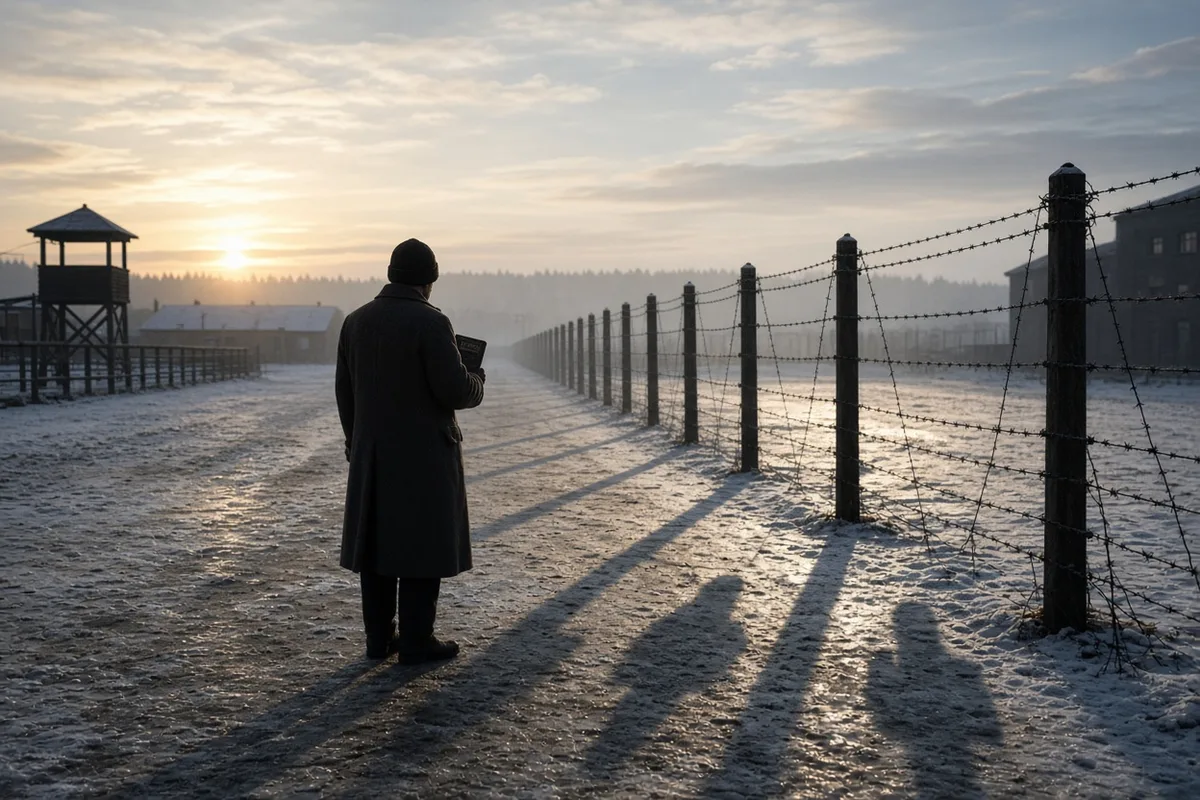
Publication in the November 1962 issue brought 96,900 copies into circulation within a month, yet the Central Committee restricted further printings after Khrushchev’s fall in 1964; by then he had already completed the first draft of “The Gulag Archipelago” on 1,618 pages of thin paper hidden in a friend’s dacha outside Moscow. The three volumes were smuggled to Paris in 1973 by the YMCA Press, and on 12 February 1974 the KGB arrested him at his apartment on Kozitsky Lane, held him for twelve hours in Lefortovo, then put him on a plane to Frankfurt with only the clothes he wore and a copy of the New Testament that had traveled with him since the camp. In the speech he delivered at Harvard on 8 June 1978 he quoted the verse he had copied onto his sleeve in 1952—“Blessed are those who are persecuted for righteousness’ sake”—and told the audience of 18,000 that the camp had taught him the difference between a man who keeps his word and a man who keeps only his skin.
After the expulsion he lived first in Zurich at 55 Kreuzstrasse, then moved in October 1976 to a seventeen-acre property in Cavendish, Vermont, where he constructed a writing cabin whose walls were lined with the same pine boards he had once nailed in the Ekibastuz foundry. The five volumes of “The Red Wheel” were finished there between 1983 and 1991; each morning he rose at 5:30, read the appointed Gospel passage for the day from the worn New Testament, and then worked until noon without interruption except for the occasional visit from his sons Ignat and Stepan, who by then were studying music and mathematics in Boston. On 27 May 1994 he flew back to Russia on Aeroflot flight 310, landing at Magadan before traveling by train across the same Siberian route that had taken him east in 1945; at each station platform he was met by clusters of former zeks who brought copies of the New Testament for him to sign on the flyleaf.
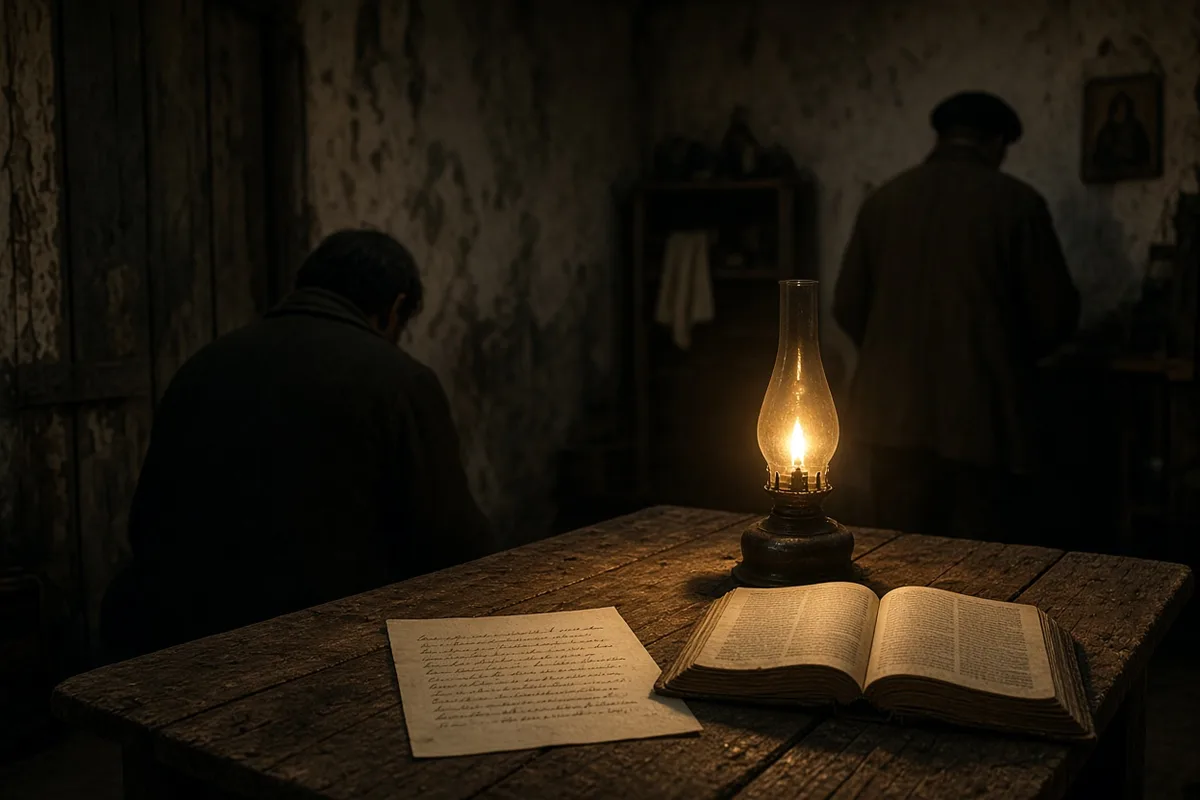
In Moscow he settled at 12 Troitse-Lykovo Street in a wooden dacha that had once belonged to an Orthodox priest; every Sunday he attended services at the Church of the Intercession in nearby Fili, where the priest Father Vladimir allowed him to read the epistle from the ambo on the feast of the Elevation of the Cross. On 3 August 2008, two days before his eighty-ninth birthday, he sat on the veranda with the same New Testament whose pages had been rebound twice since Ekibastuz, reading aloud the verses he had copied in 1952 to his granddaughter, who wrote the words down in a school notebook so that they could be placed inside his coffin. The funeral at the Donskoy Monastery on 6 August drew 2,400 people; the coffin was carried by six former camp inmates, one of whom still carried a fragment of the original oilcloth that had wrapped the book when it first arrived in the barracks.
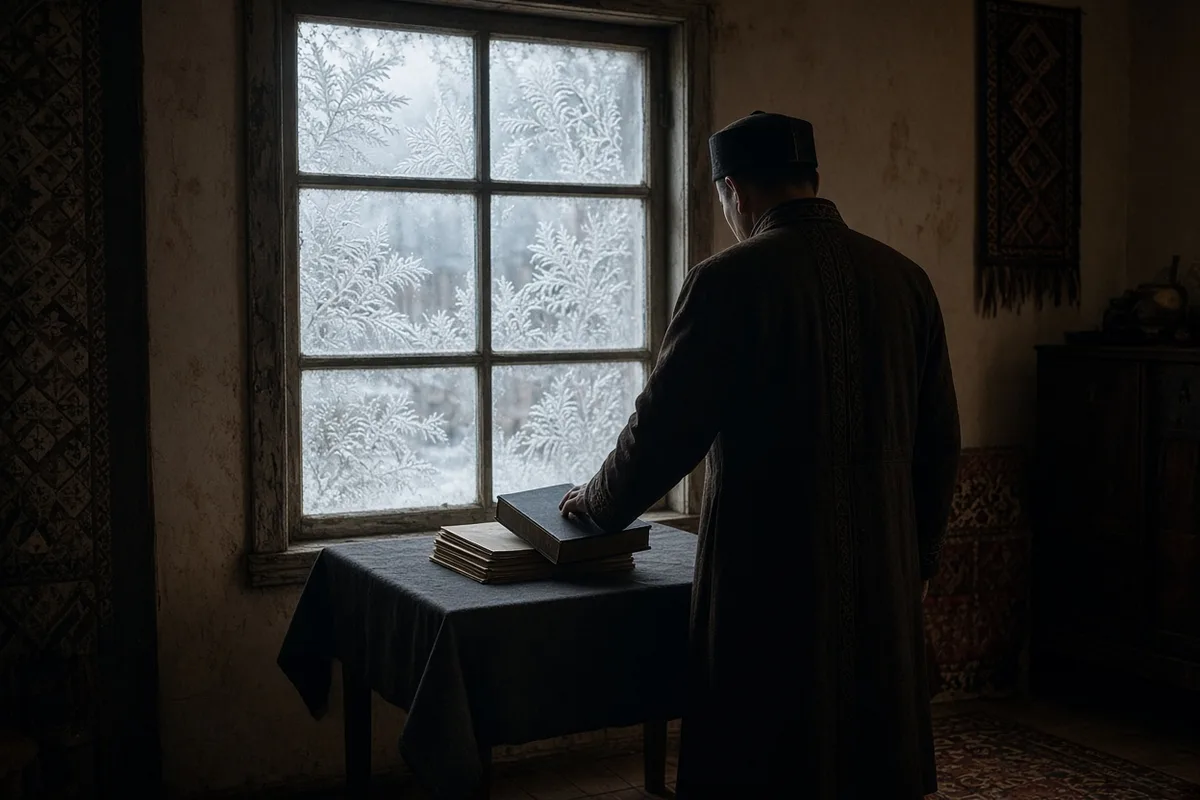
The burial took place the same afternoon inside the monastery walls, where the six pallbearers lowered the coffin into a plot three meters from the south transept; Natalia Dmitrievna Solzhenitsyna placed the rebound New Testament on the lid before the first shovelful of earth, and the fragment of oilcloth was slipped inside the jacket pocket of the man who had kept it since 1952. On 9 August the Moscow City Archive received the full set of exercise-book drafts from the Kok-Terek period, 142 pages in total, together with the Underwood typescript of “Shch-854” that Tvardovsky had returned in 1963; the accession number 1247/2008 records the marginal note in Solzhenitsyn’s hand dated 14 October 1952 quoting Luke 6:22 verbatim.
Natalia Dmitrievna established the Solzhenitsyn House of Russia Abroad at 57 Nizhnyaya Radishchevskaya Street in 2010, installing the original Ekibastuz New Testament in a climate-controlled case on the second floor; the volume is opened each year on 3 August to the page marked by the 1952 pencil line under Matthew 5:10. The Russian State Archive of Literature and Art catalogued the remaining 1,204 pages of “The Red Wheel” drafts in 2012, including the Vermont cabin notes dated 17 March 1987 that cite the same Trisagion the old man recited in the Ekibastuz barracks.
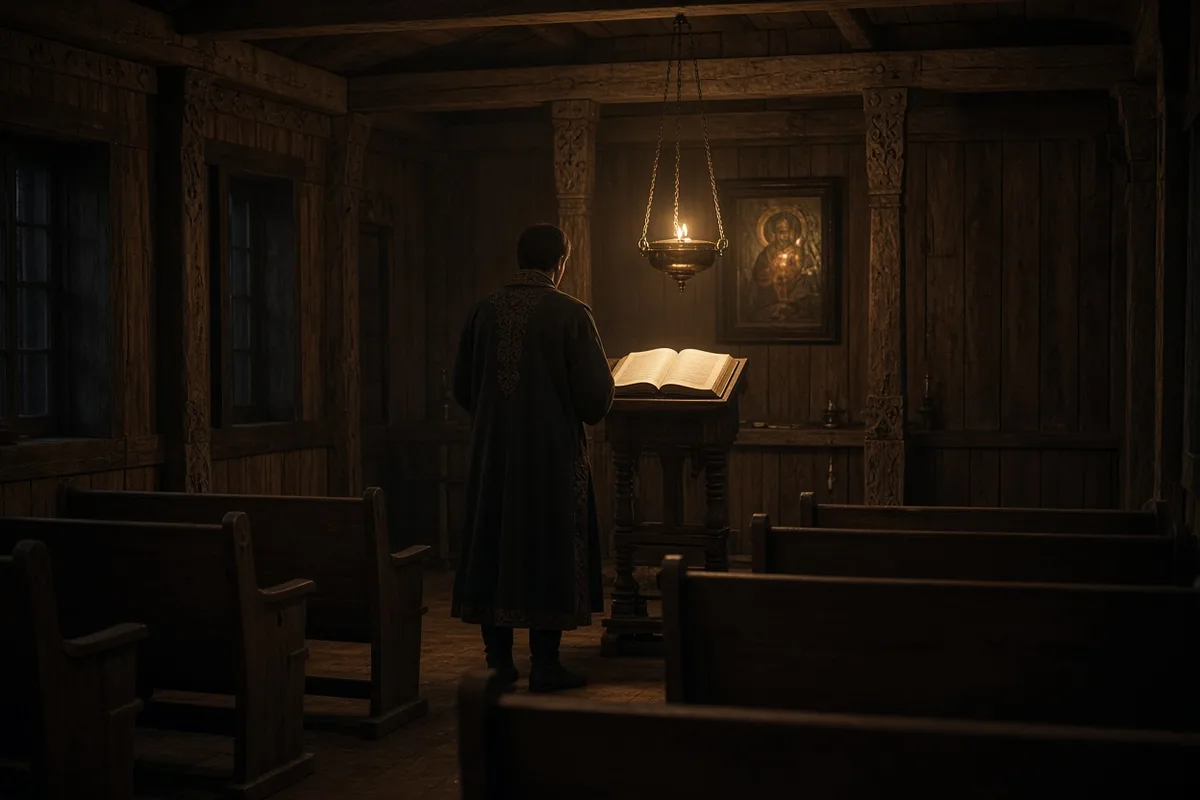
In Ekibastuz the former camp site at the coal-mine number 5 now holds a granite marker erected on 11 December 2013 listing the names of 1,872 prisoners who passed through the foundry section between 1950 and 1953; the marker was funded by the Solzhenitsyn family and unveiled by Yermolai Solzhenitsyn, who read the opening stanza of “Prussian Nights” before a gathering of forty-two surviving zeks and their descendants. The local school in Kok-Terek still stands at the end of the irrigation canal; its mathematics classroom preserves the desk Solzhenitsyn used, marked with the date 12 September 1954 carved into the wood by a later pupil.
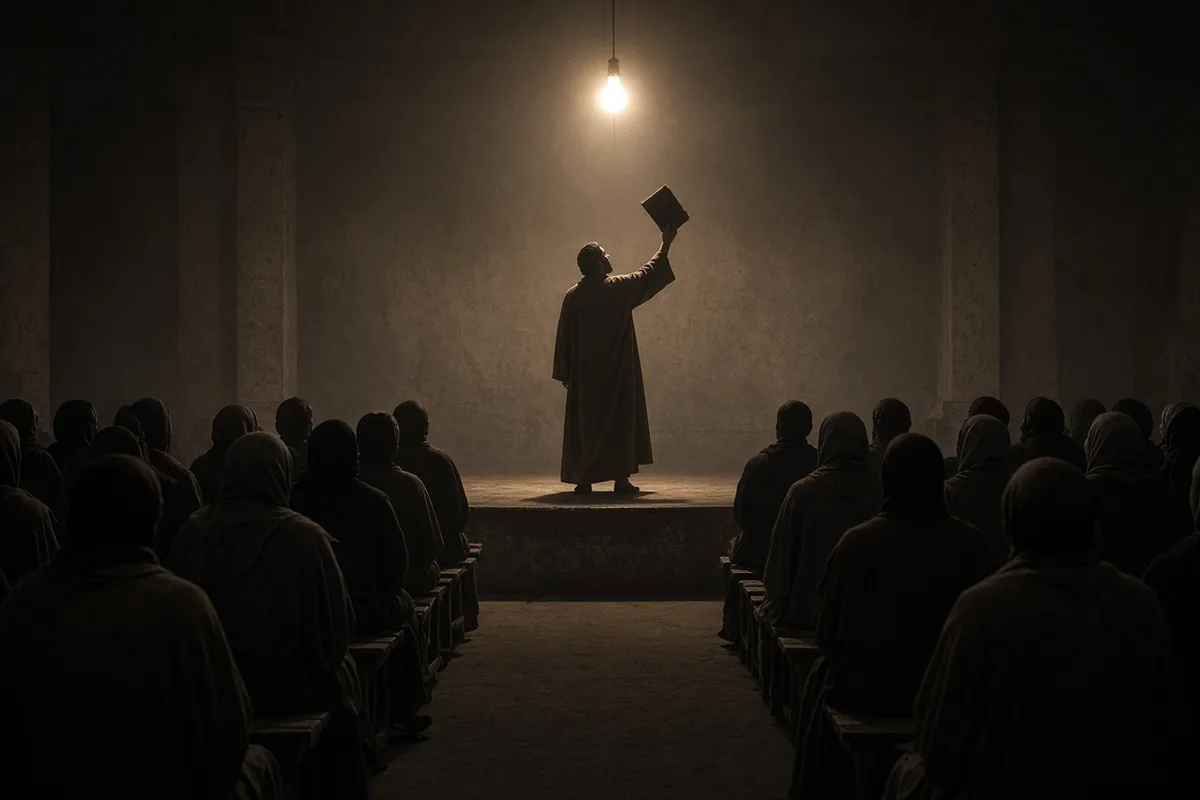
Ignat Solzhenitsyn conducted the Russian premiere of his father’s “Symphony in G minor” at the Moscow Conservatory on 5 August 2016, using the score copied in Cavendish in 1989; the program note reproduced the 1952 sleeve verse in full. Stepan Solzhenitsyn oversaw the digitization of the 18,000 pages of camp correspondence held at the Houghton Library, Harvard, completed in 2019, with the first public release containing the 7 March 1953 letter to Georgi Tenno that describes the arrival of the New Testament bundle.
The Donskoy Monastery crypt was opened for inspection on 3 August 2021 under the supervision of Father Vladimir, who confirmed that the school notebook containing the verses read to the granddaughter remained intact beside the coffin; the notebook bears the entry dated 1 August 2008 in the hand of the twelve-year-old child. On that same day Natalia Dmitrievna, then eighty-four, walked the length of the monastery garden with her great-grandson, who carried a fresh copy of the New Testament printed from the 1952 text and asked to be shown the place where the oilcloth fragment had been kept.