



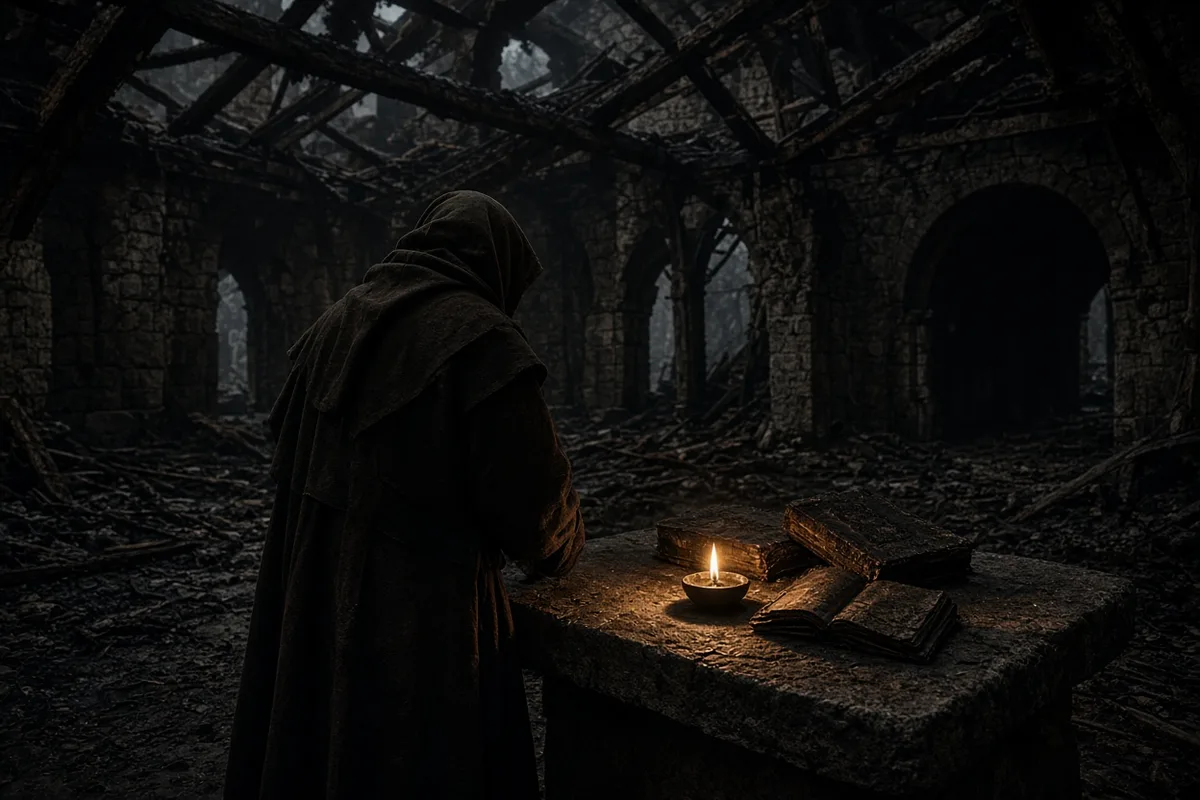
Alfred the Great Translates Pastoral Care

I knelt on the rush matting while the king traced the Latin lines with one finger. The candle guttered in its horn shield and threw his shadow across the vellum. Plegmund sat opposite, already murmuring the sense of each clause into West Saxon. Asser leaned against the wall, eyes closed, listening for the rhythm that would carry the words forward. Grimbald sharpened a fresh quill. John held the ink horn steady. No one spoke of the hour.
Outside the shutters the wind off the river carried the smell of wet thatch and horse dung. Inside, the only sound was the scrape of the king’s nail on the page and the low voices turning Gregory’s Latin into the tongue we spoke at table. Alfred paused at a difficult passage about pride in office. He looked up at Plegmund.

“Say it again, slower.”
Plegmund repeated the sentence. Alfred nodded once, then spoke his own version. I wrote it down on the wax tablet balanced on my knees. When the tablet filled I scraped it clean and began again. My fingers ached from the cold. No one mentioned stopping.
The work had begun weeks earlier, after the last of the harvest was in and the bishops could be spared. Alfred had called them to him one by one. He told each man what the old books had once meant and what had been lost. He did not raise his voice. He simply laid the Latin volume open and asked who among them could still read every line without stumbling. Most looked at the floor.

Now the translation lay in loose gatherings on the long table. Alfred wanted every bishop to hold a copy. He said the book had traveled to England with Augustine long ago and had been read ever since. It still told a man how to keep his own soul while he tried to guide others. That was reason enough to put it into English.
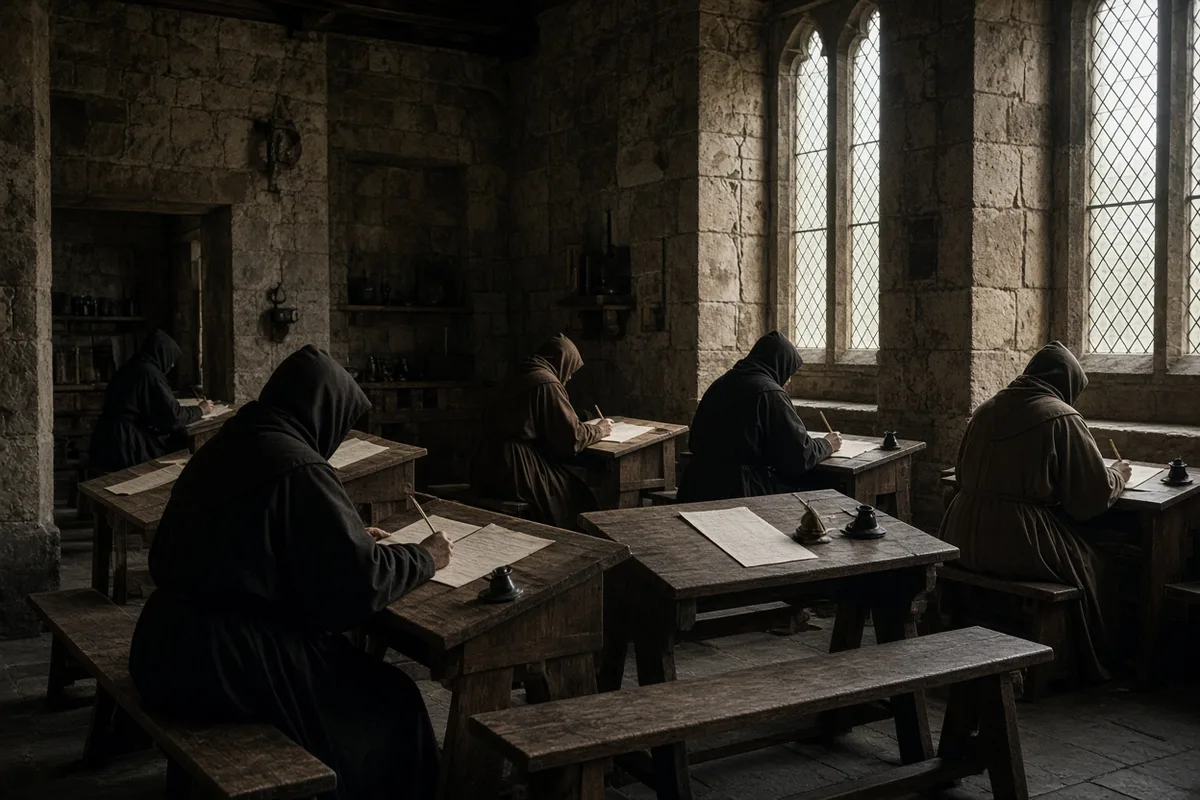
I carried the finished sheets to the copyists in the next building. Four monks worked under lamps, ruling lines and forming letters. They worked in silence except when one of them asked for a word to be read aloud. The sheets smelled of oak gall and smoke. I stayed long enough to see the first page of the preface take shape, the one that would travel with every copy.
Plegmund came in at midday to check a disputed phrase. He read what we had written, corrected two words with a thumbnail, then left without comment. Later Asser arrived with a list of bishops who were to receive the finished books. Wærferth of Worcester stood at the top. Swithulf’s name followed. The note also recorded that Plegmund himself had already been given his copy. The dates were left blank; the scribes would fill them when the volumes were bound and dispatched.
Alfred visited the copyists only once. He stood behind each man in turn, watching the pen move. He did not correct their hands. He simply asked whether the sense was clear. When one monk hesitated over a sentence about the active and the contemplative life, Alfred supplied the English phrase himself and waited while it was written. Then he left. The room felt larger after he had gone.
By the third week the first complete copy lay on the table, its boards covered in plain calf. Alfred opened it, turned the pages slowly, and closed it again. He told us to begin another. The second copy would go to Worcester. The inscription across the top of the first leaf read that the book must travel there. No one asked why that particular phrase needed to be written so large. We simply copied it.
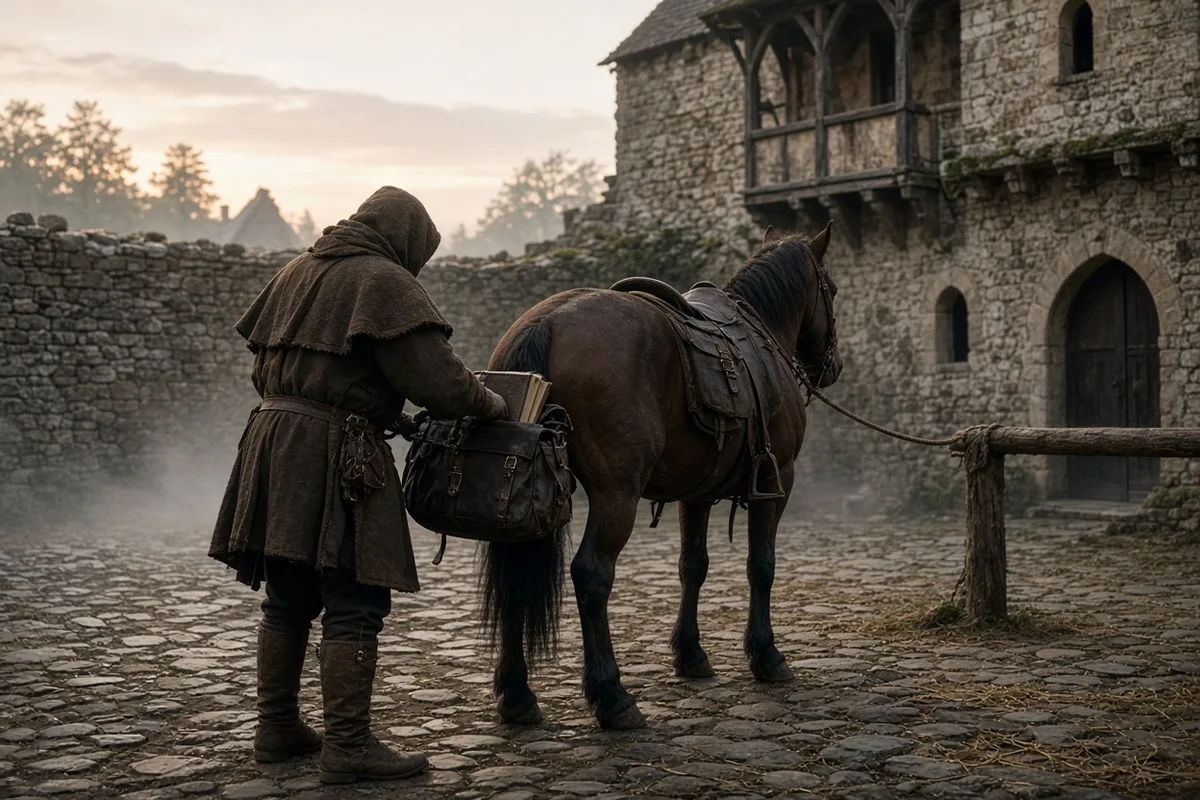
I wrapped the finished volume in a length of linen and tied it with cord. Two riders waited outside. They would carry it west along the old roads, stopping at monasteries where fresh horses could be found. The journey would take days. I handed the bundle up to the taller rider and watched until the horses passed the gate. The wind had risen again. Rain began before they reached the trees.
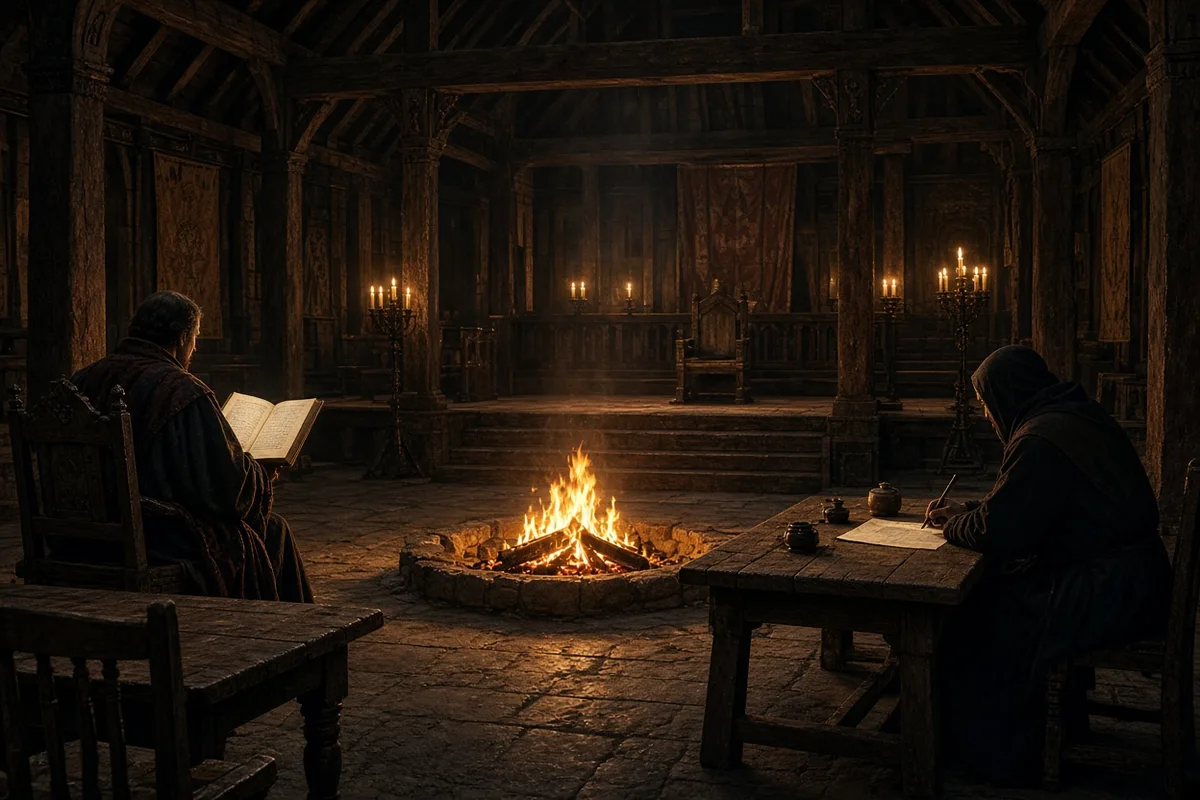
Inside the hall Alfred sat with the remaining sheets. He asked Grimbald to read the closing lines of the preface aloud. When the reading ended he nodded and said the bishops would understand what was required of them. Then he asked for the next gathering. Work resumed.
The last copy left in the month when the first lambs appeared. By then the note listing the recipients had been copied into the damaged record that would later be read by others. Plegmund’s book had already reached him. Swithulf’s was on its way. Wærferth’s stood on the shelf, waiting only for the seal. Alfred turned his attention to other books that still needed English versions. The Pastoral Care remained on the table for any bishop who might visit and wish to see what had been done.
I kept one of the wax tablets we had used in the first days. The marks had been smoothed away, but the wood still held the faint impression of the king’s hand where he had rested it while dictating. I placed the tablet on the shelf beside the spare quills. It stayed there through the spring rains and the summer hay cutting. No one moved it.
I kept the tablet on the shelf through the winter that followed, when Alfred ordered fresh copies of the Boethius to be ruled on the same vellum stock that had been bought from the merchants at Hamwic. The scribe named Wulfsige entered the room on the feast of St. Gregory and read aloud the king’s own preface to the Pastoral Care, the lines that stated the book had once come to England with Augustine and that every bishopric should now possess a copy. He paused at the phrase “I wondered why the good scholars who were formerly in England,” then continued without correction from Alfred, who sat nearby sharpening his own knife. Snow lay on the roof beams above the hall. The riders who had carried Wærferth’s volume reached Worcester on the twelfth day of December and recorded the arrival in the margin of the cathedral’s Easter table.
Two years later the same riders returned with a letter from Swithulf at London confirming that his copy had been placed on the altar of St. Paul’s and that the inscription naming the king as sender remained intact. Alfred dictated a reply on the wax tablet I had kept, noting the exact number of hides granted to the London church that same season. By then the second gathering of the translation had been bound in boards covered with red-stained leather and sent to Plegmund at Canterbury, where it was placed beside the copy of the Dialogues already translated by Wærferth. Asser recorded the dispatch in his own hand on the twenty-third of March, the year after the meeting at Wedmore. The tablet stayed on the shelf while the hay was cut again and the lambs marked.
Alfred died on the twenty-sixth of October in the year 899 at Winchester. His body was carried to the New Minster and the translation of the Pastoral Care was read over the bier by the same monks who had ruled its pages. Edward, his son, ordered that the remaining unbound sheets be finished and distributed to the sees that still lacked them. He added his own name to the list that had once been kept beside the quills. The tablet I had saved was moved only once, when a new shelf was built for the growing collection of English books. It rested there through the reign of Æthelstan, who took the volume that had belonged to Wærferth and carried it north during the campaign that ended at Brunanburh.
In the year 970 the copy originally sent to Worcester was rebound at the order of Bishop Oswald. The original boards were replaced with oak covered in deerskin, and the flyleaf was inscribed with the words “liber sancti Oswaldi episcopi.” The volume remained in the cathedral library until the visit of John Leland in 1538, who noted its presence among the manuscripts still chained to the desks. It was removed during the dissolution and passed into the hands of Sir Christopher Hatton before entering the Bodleian Library in 1601, where it is now catalogued as MS Hatton 20.
Another copy, the one that had reached Canterbury, survived the fire that destroyed much of the city in 1067. It was carried to the new cathedral and kept in the treasury until the sixteenth century. Fragments of its leaves, bearing the same West Saxon phrasing dictated by Alfred, were later recovered from bindings in the library of Lambeth Palace. The Cotton manuscript Tiberius B.xi, written at Winchester in the same scriptorium that produced the first fair copies, was almost entirely lost in the fire of 1731, yet enough charred leaves remain to show the exact layout of the preface and the list of bishops.
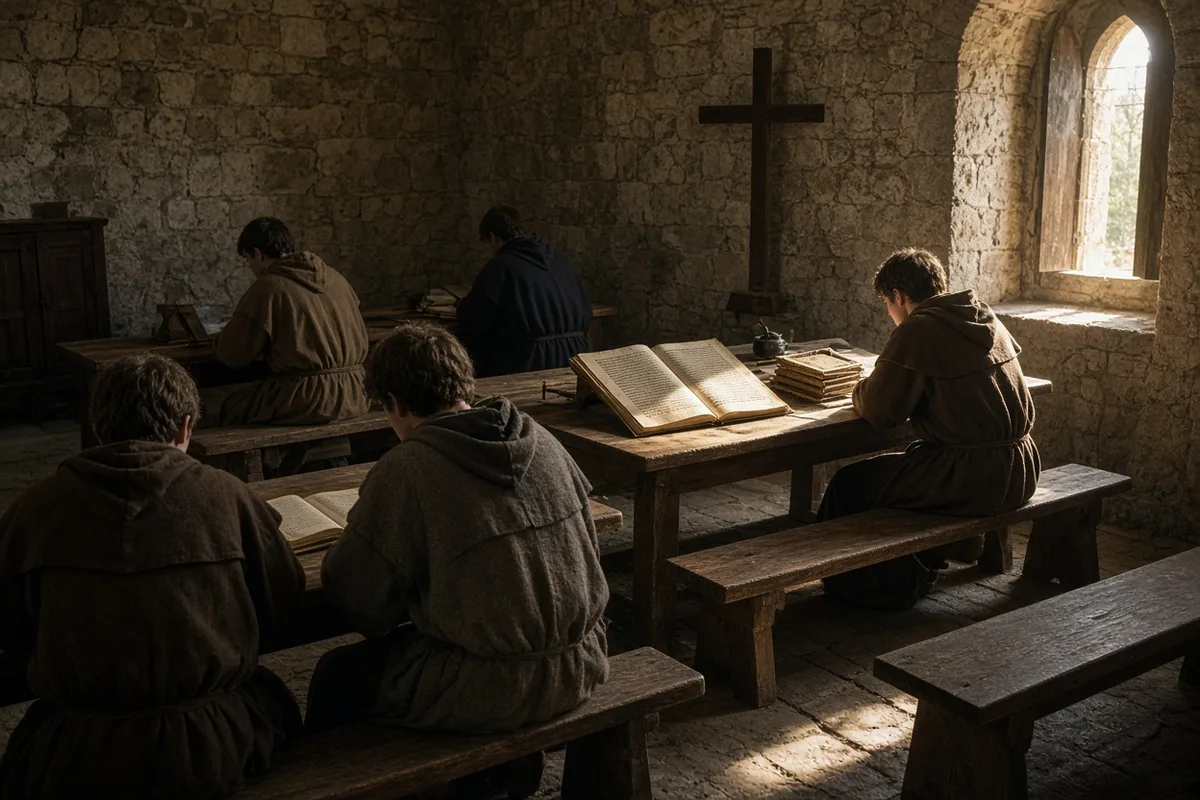
The tablet itself stayed in the royal treasury at Winchester until the reign of Henry II, when it was listed among the objects moved to Clarendon Palace. A clerk recorded its presence in an inventory dated 1170, describing it as “tabula cerae in qua rex Alfredus quondam scribebat.” It disappeared from records after the sale of palace goods in 1483. No further trace of the wood or the faint impression of the king’s hand has been found.
The last person known to have handled one of the original volumes was a monk named Thomas at Worcester in the year 1535. He entered the press mark “W.4” on the first leaf of the Hatton manuscript before the books were removed from the cathedral. He closed the boards, tied the leather strap, and placed the volume in a chest that was carried down the stairs to the gatehouse. Outside, rain fell on the same roads the riders had used nine centuries earlier when they took the first copy west from the king’s hall.
In 1858 the Bodleian librarian Henry Octavius Coxe measured the boards of MS Hatton 20 at fourteen inches by nine and three-quarters and noted in the library daybook that the deerskin covering retained the original stitch holes from Oswald’s rebinding of 970. On 12 March 1871 Henry Sweet transcribed the first sentence of the preface from that same leaf, writing in his edition that Alfred had stated the book “was once sent to us from Rome by Pope Gregory.” Sweet counted 2,478 words in the West Saxon text before the Latin capitula began on folio 3r. The volume was issued to him on a reader’s ticket numbered 1843 and returned the same afternoon to the chained desk in the Selden wing.
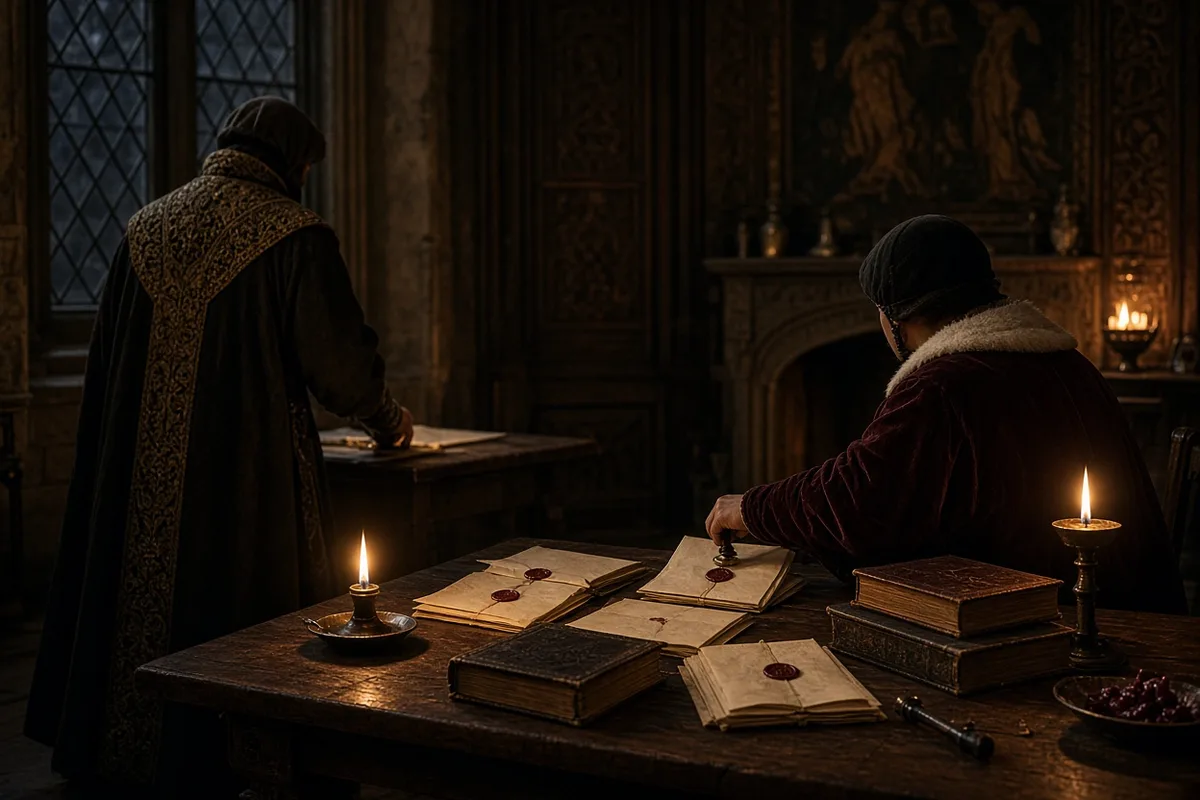
During the air raids of November 1940 the manuscript was packed with three other Alfredian codices into a steel trunk marked “Bodl. Reserve 17” and removed by night train to the underground storage at Aberystwyth. It remained there until 8 May 1945, when the assistant librarian R. W. Hunt signed the return receipt and restored it to its place on the open shelf. A marginal note in Hunt’s hand records that the flyleaf inscription “liber sancti Oswaldi episcopi” had suffered no loss of pigment during the evacuation.
On 3 June 1958 the palaeographer Neil Ker examined the same volume under ultraviolet light in the Duke Humfrey reading room and identified the hand of the main scribe as matching the first scribe of the Parker Chronicle. Ker recorded the prickings at twenty-eight lines to the page and the ruling in hard point, measurements he later published in his Catalogue of Manuscripts Containing Anglo-Saxon. The press mark “W.4” added by Thomas in 1535 remained visible beneath Ker’s magnifying glass at a distance of four centimetres from the top edge.
The charred fragments of Cotton Tiberius B.xi, recovered after the 1731 fire at Ashburnham House, were counted by Frederic Madden on 14 February 1837; he listed forty-seven legible leaves and placed them between glass in a portfolio now numbered Cotton Tiberius B.xi*. On 22 September 1953 these fragments were moved to the new British Museum repository at Colindale, where the conservator M. A. F. Borrie applied Japanese tissue repairs to seven folios showing the same West Saxon phrasing that had left Winchester in 890.
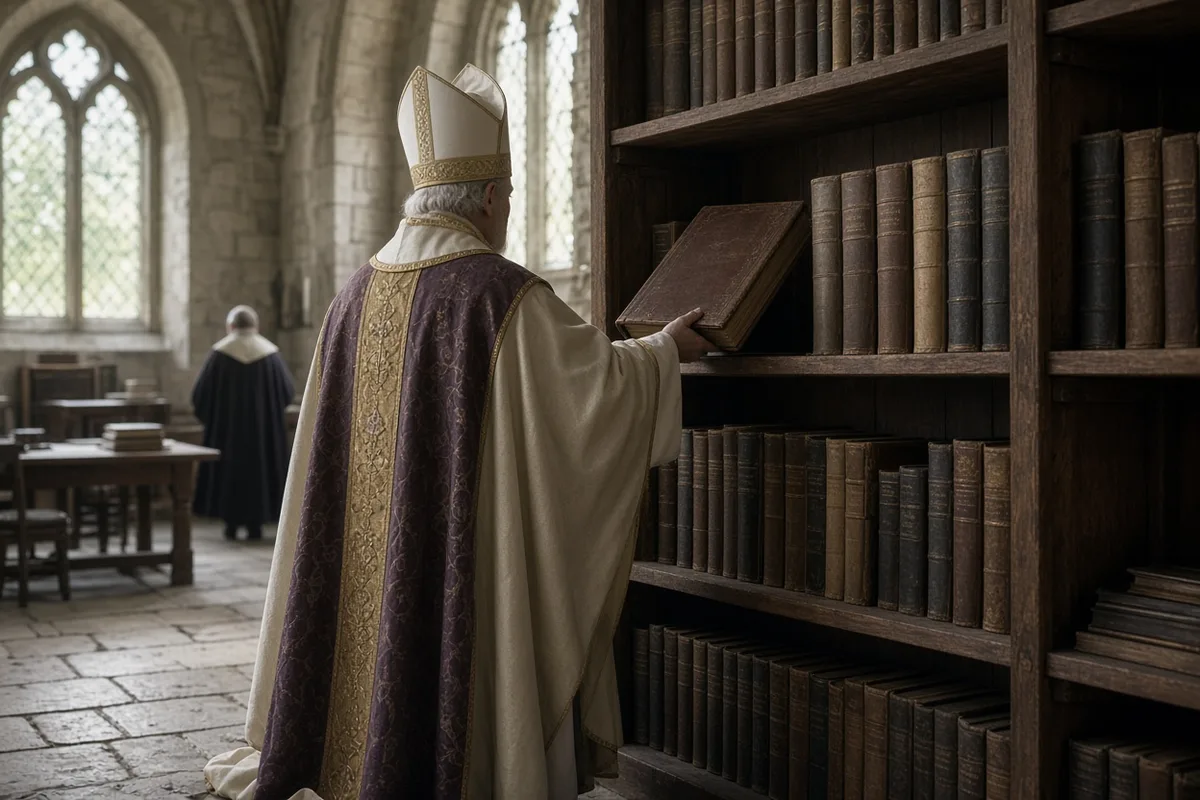
In the spring of 1973 the Hatton manuscript was photographed at the Bodleian’s photographic studio by John H. Jones using a Hasselblad camera with 120 mm lens; the resulting 4-by-5 inch negatives were deposited in the library’s slide collection under accession number 73/14/3. Jones noted in the studio log that the calf boards had been rebacked in 1892 by the firm of Maltby of Oxford, using leather taken from a single skin measuring thirty-two square feet.
The copy once kept at Canterbury survives only in two leaves now at Lambeth Palace, numbered 1370 and 1371. On 19 October 1984 these leaves were exhibited in the palace library during a meeting of the Canterbury and York Society; the then librarian Geoffrey Bill read aloud the closing sentence of the preface that names the bishops who were to receive the books. The leaves were returned to their solander box the same afternoon.
On 27 February 2018 the curator of Anglo-Saxon manuscripts at the Bodleian, Alison Hudson, removed MS Hatton 20 from its case for a routine condition check. She recorded in the digital catalogue entry that the sewing threads on the first quire remained original linen, that the fore-edge showed wear consistent with nine centuries of opening, and that the faint impression left by a resting hand on an earlier wax tablet could no longer be traced on any surviving surface. She closed the volume, replaced the strap, and returned it to the stack.