


All 33 Chilean Miners Come Up Alive
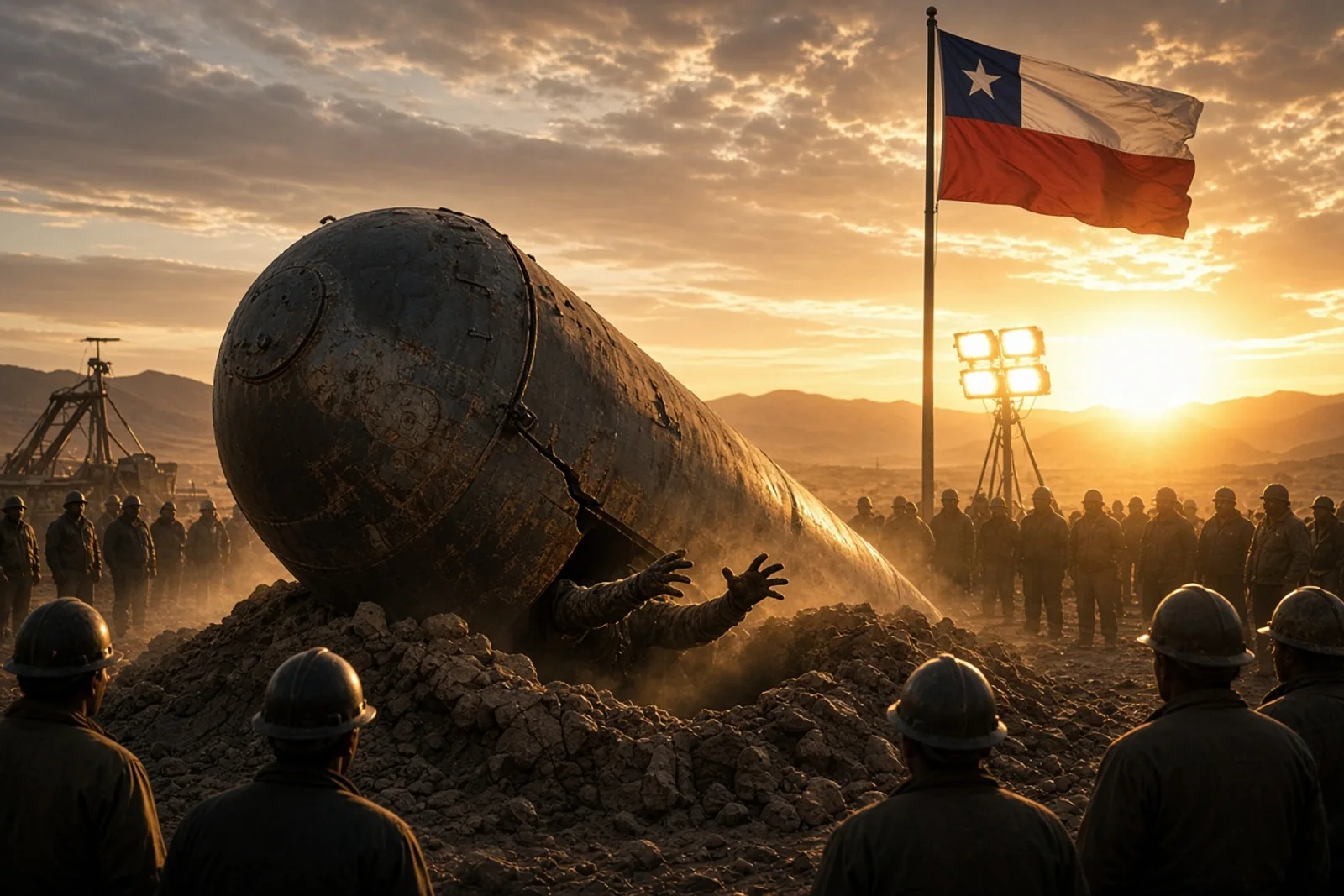
The capsule broke the surface at ten past midnight, and I remember thinking the sound came before the light — a low metal groan, then the floodlights catching the top of the cage like something being born out of rock. My gloves were already wet from sweat inside the cold. I had a stretcher gripped at both handles, waiting at the mouth of the shaft with three other medics, and none of us breathed right until the door of that capsule swung open and Florencio Ávalos stepped out blinking into the desert night.
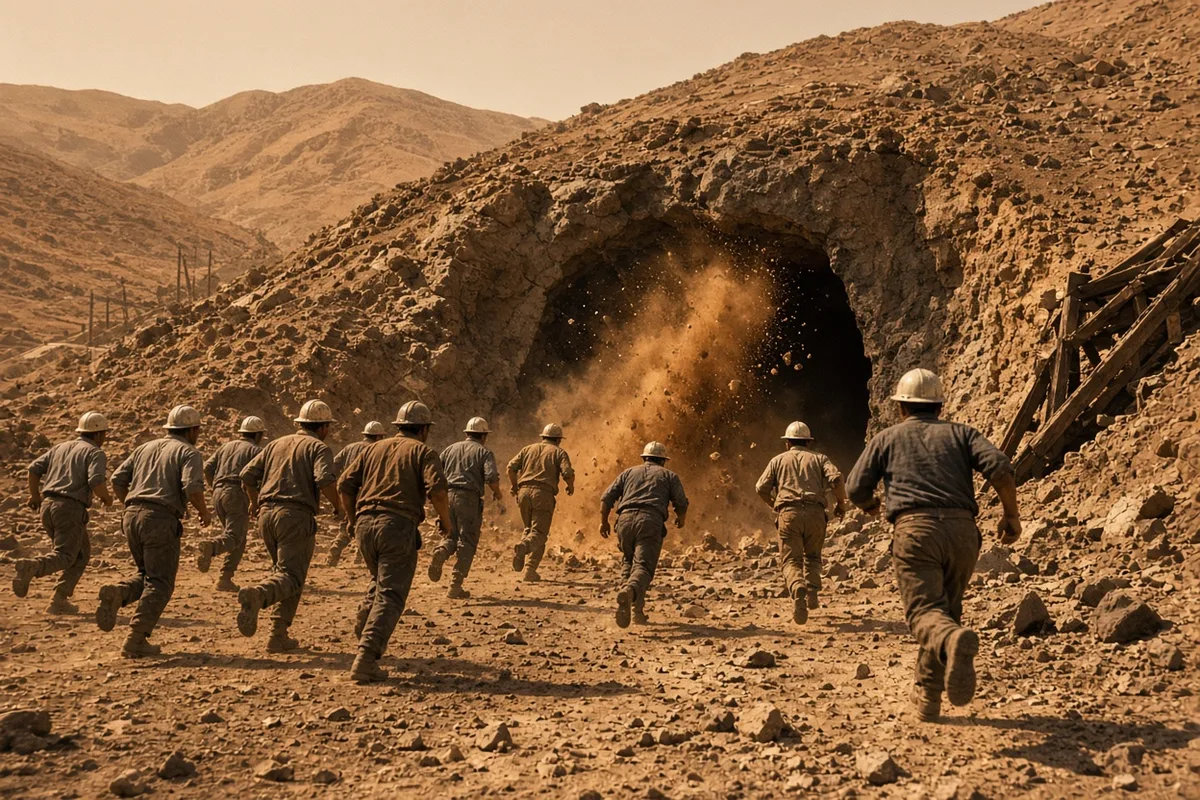
I had been on the mountain since the second week, one of the medical staff pulled into the operation after word went out that this was no ordinary mine accident. The San José mine sat in the Atacama Desert outside Copiapó, gold and copper ground, and on August 5th a section of it had come down — a collapse that sealed thirty-three men somewhere near seven hundred meters below the surface. I had heard the number repeated so many times by then that it had stopped sounding like a number and started sounding like a wall.

For seventeen days we did not know if there was anyone alive to save. Families set up along the road above the mine, blankets and folding chairs and small altars of candles, and every evening the wind off the desert came through cold enough to make your teeth ache, and every morning the sun came back hard enough to crack your lips. Drills went down again and again, searching, and came back with nothing. I remember watching a woman kneeling by a fence post with her rosary, not moving, for what felt like an entire afternoon.
Then on August 22nd, one of the narrow bore probes came back up carrying something taped to its tip — a note, folded small, the ink smudged from the trip. Someone unfolded it right there in the drill shed, and I was close enough to see the handwriting before anyone read it aloud. Estamos bien en el refugio los 33. All thirty-three of us are safe in the shelter. I have stood in emergency rooms and heard people scream and I have never heard anything like the sound that went up the hillside when those words traveled from person to person. The man who wrote it, I would learn later, was José Ojeda.
After that, everything on the surface changed shape. Narrow supply lines went down the boreholes — water, glucose, medicine, letters. One of the letters came from Mario Gómez, the oldest miner at sixty-three, and it said, plainly, that the company running that mine had to modernize. I read it, or heard it read, standing in the medical tent with my arms folded, and it struck me that a man buried alive under a mountain still had the presence of mind to demand better for the men who would come after him.

Word filtered up in pieces about how they were surviving down there. It was Luis Urzúa, the shift supervisor, who had rationed what tuna they had into portions that stretched seventeen days, who had organized the thirty-two others into shifts so the darkness wouldn't undo their minds, who pored over the mine's own diagrams to help the engineers above understand where they were. I never met him until the last hour of the whole operation, but by the time I did, I already felt as if I'd been working under his direction the entire time.
Three separate drilling efforts pushed downward through rock that kept shifting under the bits, weeks stacking on weeks while the camp above grew a kind of permanent skin — generators, portable toilets, a chapel of sorts, a schedule of press briefings that families stopped attending because they had heard every version of hope already. When one of the shafts finally broke through clean, the sound in the drill yard was almost embarrassing in its size, engineers hugging in hard hats, and I remember someone telling me the finished rescue shaft ran just over six hundred meters, six hundred and twenty-some, narrow enough that a grown man would have to keep his arms tucked the entire ride.
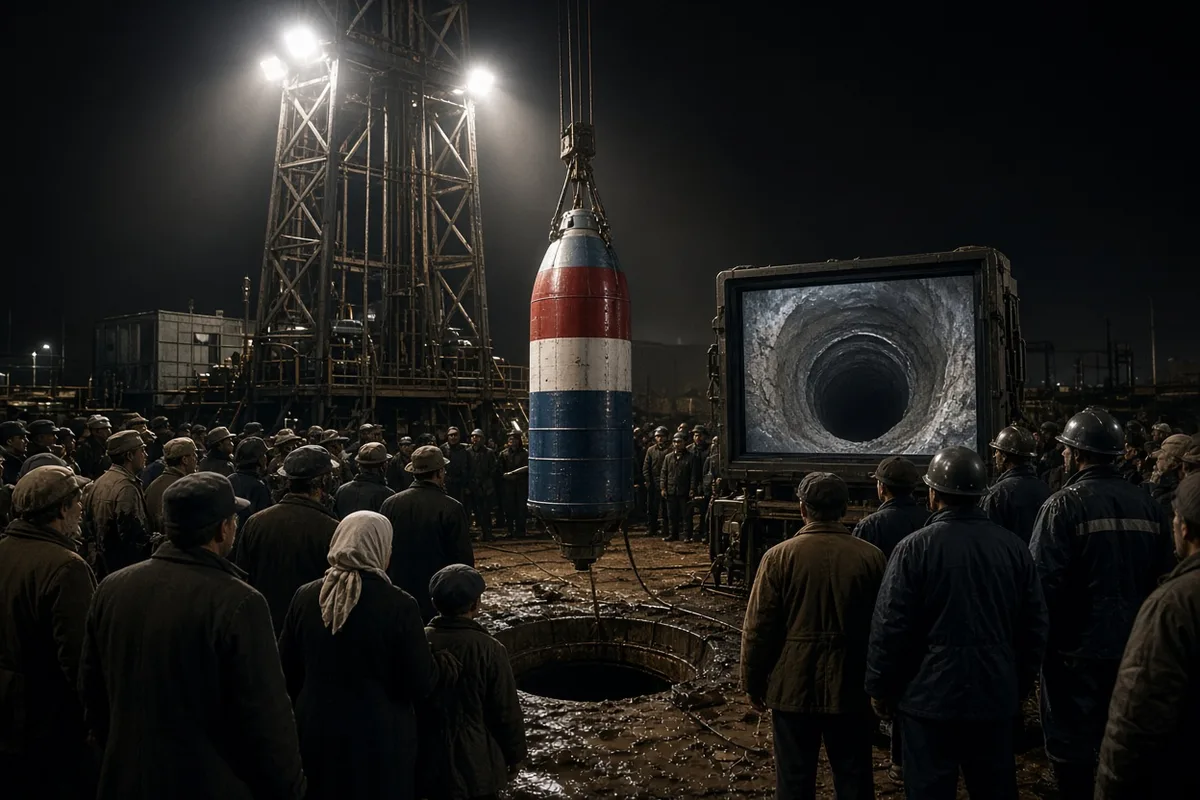
They called the capsule the Phoenix. Red, white, blue, barely wider than a man's shoulders, and I watched it lowered and tested more times than I could count in the final days, technicians running their hands along the seams like men checking a parachute they intended to jump with themselves.

On the night of October 12th, close to a quarter past eleven, they lowered Manuel González first — not a miner but a rescue specialist, sent down to check the shaft's integrity before anyone else committed to it. I stood at the winch housing with the cold coming up through my boots and watched the cable spool out and out, thinking about seven hundred meters of stone between us and the men waiting under it.
The plan had González coming back up to report before a paramedic went down. Instead, the video feed from the refuge below showed one of the miners climbing into the capsule — Florencio Ávalos, chosen because he was among the fittest, ready to be first. Nobody argued with the change. At ten past midnight on the 13th, the winch reversed, and the cable started climbing back toward us instead of away.
When he stepped out, his family was already moving toward him, and behind them stood President Sebastián Piñera and the first lady, Cecilia Morel, and the crowd beyond the fence line went from silence to noise so fast it felt like a pressure change in the air. People were chanting Chile, Chile, over and over, and I had to physically turn my attention back to my checklist — pulse, pupils, breath sounds — because it was far too easy to just stand there and watch a man hug his wife.

That became the rhythm of the day. A siren would sound, the capsule would surface, and I would move in with my kit while the crowd behind the barrier erupted again, over and over, sixty-nine days compressed into a single motion repeated thirty-three times. I checked mouths and found infection in almost every one of them, gums gone soft and inflamed from weeks with no proper care. I checked eyes and found several men squinting even under the dim lights we'd rigged, retinas unused to anything brighter than a headlamp. One man would later be found to have pneumonia, though the doctors said it wasn't severe. Every single one of them, somehow, was in far better shape than anybody on the surface had dared to expect.
Mario Gómez came up early in that procession, the oldest of them at sixty-three, moving slower than the younger men but steady on his feet. Jimmy Sánchez came up too, nineteen years old, only five months into working that mine before it buried him, and I had heard from the psychologists on the surface team that he had struggled the hardest down there with the fear of it. José Ojeda came up as well, the man whose handwriting had told the world they were alive, and I found myself watching his face longer than I meant to, trying to see what seventeen days of writing that note over and over in your head does to a person once daylight finally reaches them again.
Carlos Mamani surfaced partway through the day, the only miner among the thirty-three who wasn't Chilean, and his own head of state, Bolivia's Evo Morales, was there to receive him — a small detail that made the whole rescue feel, for a moment, larger than one country's mountain.

Mario Sepúlveda came up practically vibrating with energy, carrying a bag of stones from inside the mine, souvenirs he'd apparently decided to bring along for the ride, and the crowd's laughter at that was some of the first pure joy I heard all day that wasn't shaded with relief. Juan Illanes followed later, a former soldier who I was told had kept the others in line down there through sheer insistence on discipline, and Claudio Yáñez came up not long after, freshly engaged to the woman he'd been with for years, as if the mountain itself had decided to give him a reason to hurry back.
By the time Franklin Lobos rose — the twenty-eighth man, a former professional soccer player — the desert light had gone from white to gold to the deep blue of dusk, and his daughter Carolina was there at the rim of the shaft. He said something to her as she reached for him, caught by a microphone somewhere close, asking her not to make him cry, and she only held on tighter.
Night came back over the camp the same way it had every night for sixty-nine days, except this time everyone on that hillside knew the end of it was close. Six rescue workers were still below, the men who had ridden the Phoenix down to organize each ascent, and they would not come up until every miner they'd been sent for was standing on the surface ahead of them.
Just before ten at night, the last capsule rose carrying Luis Urzúa, the shift supervisor, fifty-four years old, and the crowd's noise at his emergence had a different pitch to it than all the cheers before — something closer to relief breaking all at once. He stepped into Piñera's arms and said that they had done what the whole world had been waiting for, that the seventy days they had fought were not wasted, that it was strength and spirit that carried them, fighting for their families above everything else.
Piñera told him he had done his duty, leaving last the way a ship's captain does, and told him that he was not the same man who had gone down there, that the country itself was not the same, and told him to go hug his wife and his daughter. Then the president turned to the crowd and led them in the national anthem, voices rough with cold and crying carrying across the desert dark.
Below ground, the six rescuers held up a hand-lettered banner for the cameras still running on the shaft feed — mission completed — before the winch began drawing them up one after another. Manuel González, the technician who had gone down first of all, came up last of everyone, close to half past eleven that night, stepping out into a camp that had gone from vigil to celebration in under twenty-four hours.
The health minister, Jaime Mañalich, stood before the cameras afterward and said plainly that every one of the thirty-three had come through in better condition than anyone above ground had allowed themselves to hope for — the dental infections, the eye trouble, the one case of pneumonia, all treatable, all survivable, all secondary to the fact that there were thirty-three living men standing on Chilean soil who had spent sixty-nine days believing they might not.
Piñera later put a figure to what it had cost to bring them up — somewhere between ten and twenty million dollars — and said every peso of it had been worth spending, and he did not soften his words about the mine itself, calling out its long record of violations, promising a new agreement between government and industry that would put a worker's life ahead of what came out of the ground. Word reached the camp that President Obama, watching from far outside Chile's borders, had called it a tremendously inspirational story, and standing there in the cold with my kit finally empty, I understood exactly what he meant without needing him to explain it.
I keep, still, the memory of that first note more than any of the noise that came after it — three dozen words scratched on a scrap of paper, sent up through six hundred meters of rock on the tip of a drill bit, the only proof for seventeen days that there was anyone left to rescue at all. Everything that followed, the shaft, the capsule, the thirty-three ascents, the singing in the dark — all of it grew out of that one small piece of paper, and the hand that wrote it steady enough, somehow, to be read.