


Amy Carmichael Hears Call to Missions
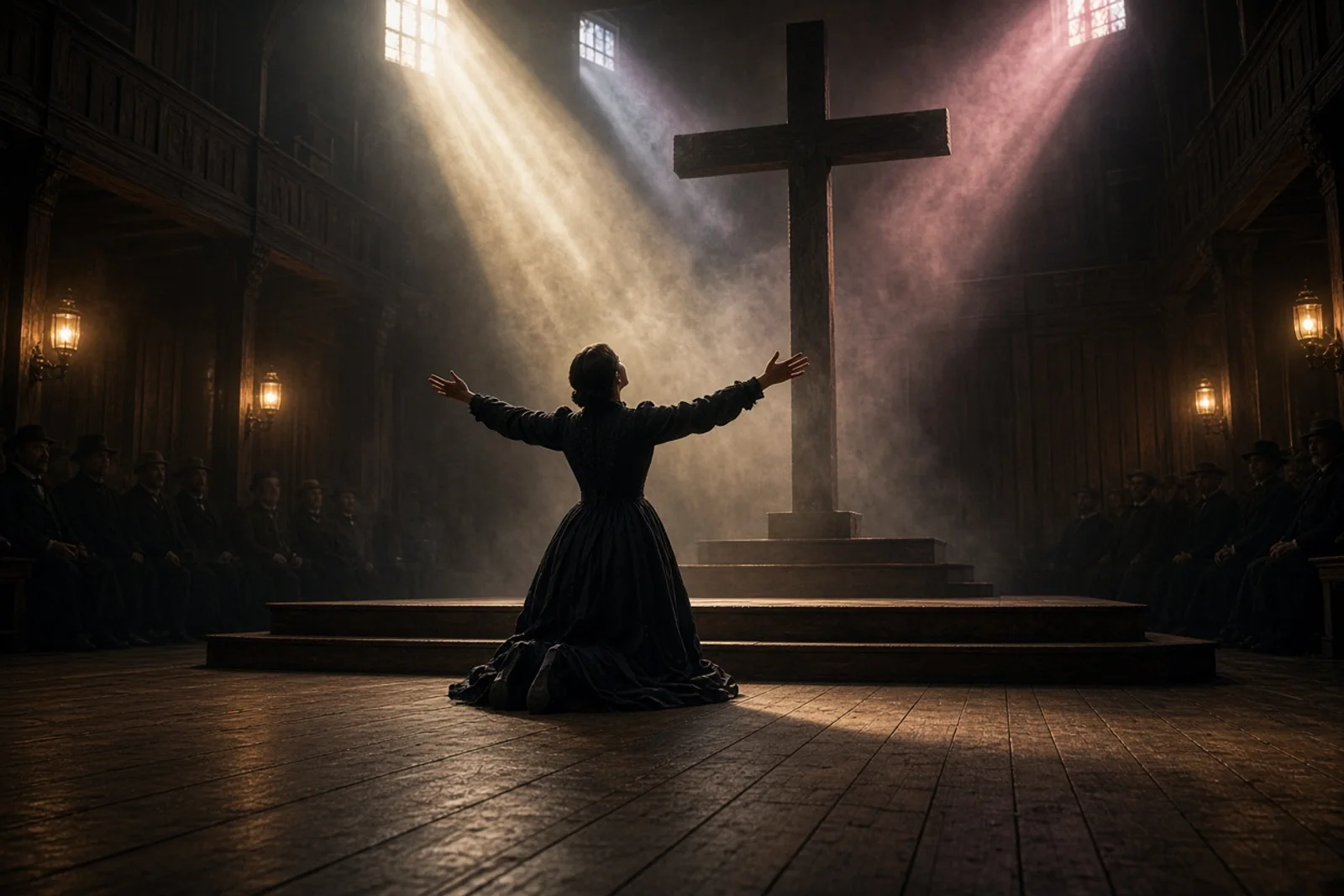
The hall smelled of wet wool and coal smoke when the singing began. I had come down from the north with a group from the Wilson household, carrying extra hymnals and a satchel of notes for the platform. Amy sat two rows ahead, her shoulders straight under a plain gray jacket. She had arrived the night before on the train from Belfast, quiet after the long ride.
Outside the tent flaps the lake lay flat under a gray sky. Inside, the voices rose on the last verse of the evening hymn. The speaker, a man lately returned from the East, spoke without notes. He described villages where no one had ever heard the name of Christ. He did not raise his voice. When he finished he simply asked those present to consider whether the Lord might be calling them to go.

Amy did not move at first. Then her hands, which had been folded on her lap, opened flat against her skirt. I saw her lips form words, though no sound reached me. Later she would write only that the cry of the heathen had become impossible to set aside. That night she stayed in her seat long after the meeting ended. Most of the crowd had filed out into the damp grass before she stood.
Robert Wilson found her at the back of the hall. He was already past seventy, moving slowly with a stick. He asked nothing. She answered nothing aloud. They walked together toward the lodging house under the line of gas lamps. I followed at a distance with the other helpers, carrying the leftover books.
Two mornings later she joined a smaller prayer circle held in the garden behind the main house. The grass was still wet. She knelt without a cushion. When the others rose she remained a moment longer, then stood and brushed the damp from her hem. That same week she wrote a letter to the China Inland Mission offering herself. The answer came months afterward, a polite refusal on grounds of health. She accepted it without complaint and kept the letter folded inside her Bible.
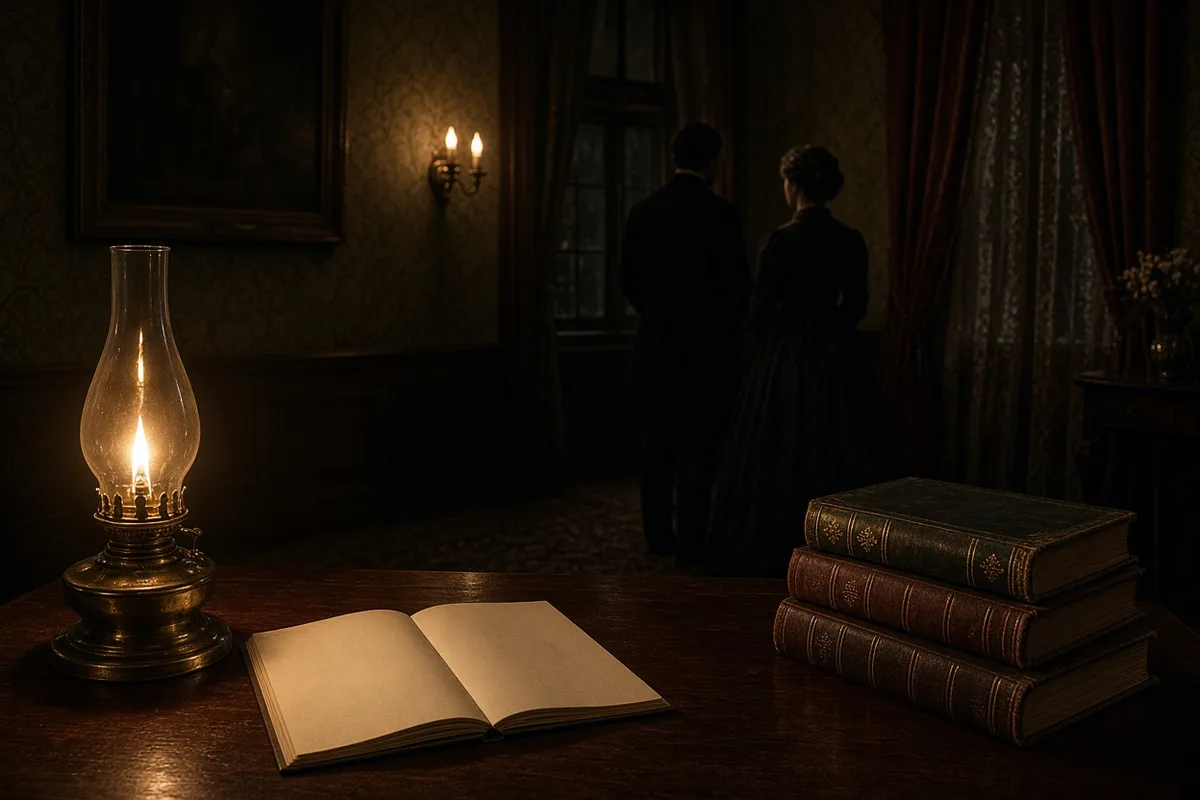
She returned to Belfast and took up the work among the mill girls again. The Welcome Hall filled every Sunday. She taught from a plain wooden bench because there were never enough chairs. One afternoon she told me she had begun keeping a small notebook of verses that seemed to press on her. She did not say what she expected them to mean.
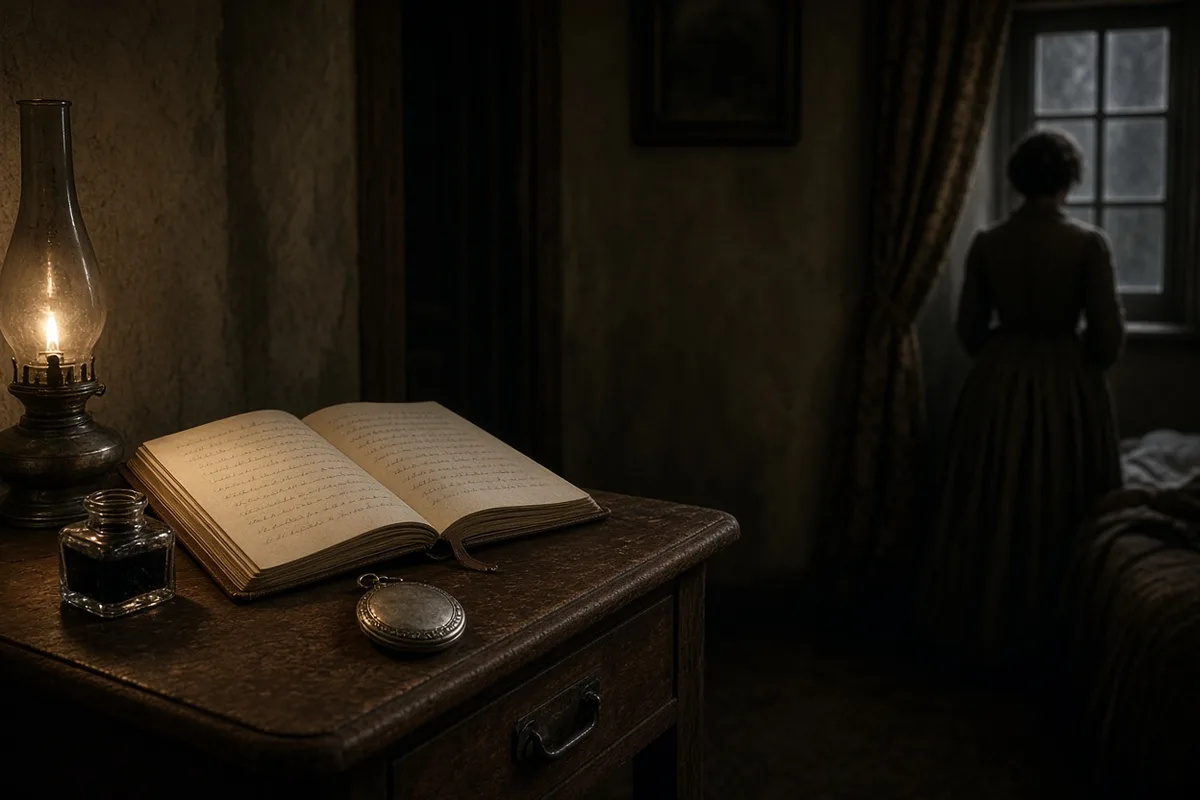
In the spring of 1890 she was sitting at the kitchen table in the Wilson house, turning the pages of that notebook. The room was quiet except for the clock. She looked up and said the words had come to her as clearly as if spoken: Go ye. She did not describe any vision or feeling beyond that. Within weeks she had packed a trunk and booked passage.
The ship left from Liverpool on a cold morning. I stood on the quay with Wilson and two of the mill girls who had come to see her off. Amy wore the same gray jacket. She did not wave. The vessel moved out into the channel and the smoke from its stack thinned against the sky. We turned back toward the train.
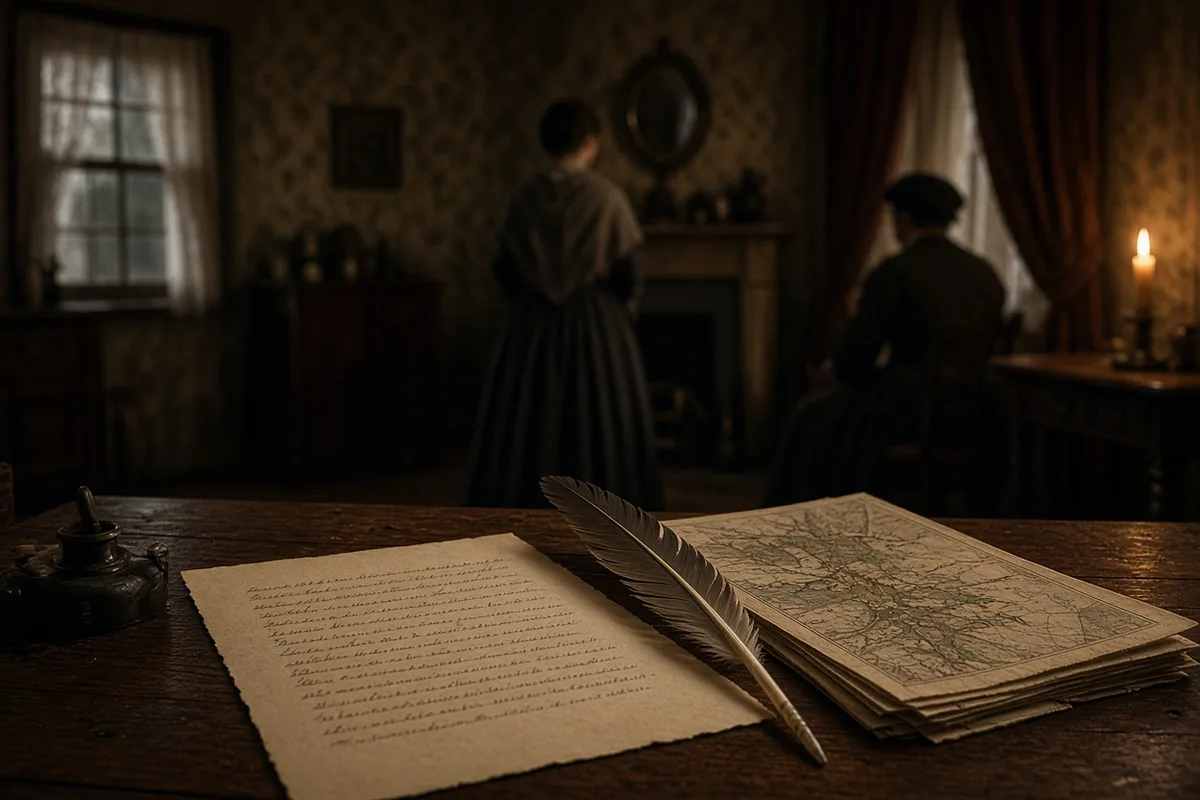
She reached Japan in the autumn of that year. Letters came every few weeks, written on thin paper and folded small. She described learning to wear a kimono and the sound of the language lessons. Health troubles forced her home again before two years had passed. She recovered enough to accept another assignment, this time with the Zenana Society in India.
By 1895 she was living in Tinnevelly. The work with temple children began almost by accident during village visits. She would return to the house carrying one or two girls whose guardians had offered them to the priests. The first shelter was a rented room behind a mission compound. More children arrived. She never asked for funds in public. Money appeared through private gifts.
In 1901 the group moved to Dohnavur. The compound grew slowly, first a few buildings, then a school and a hospital wing. Amy took the name Amma from the children. She wrote nearly forty books, most of them finished in the evenings after the lamps were lit. A fall in 1931 left her unable to walk without help. She continued to dictate letters and oversee the work from a chair on the veranda.
Robert Wilson died in 1909. The mill girls in Belfast kept the Welcome Hall open. One of them wrote to Amy each Christmas. The last letter from India that reached us before the war described the arrival of three more boys. She signed it only with her name.
The compound still stands. The children who grew up there now lead portions of the work. No public record lists the exact hour when she first heard the call, only the year and the place. The lake at Keswick remains quiet most mornings.
The lake at Keswick remains quiet most mornings. In March 1952 I reached Dohnavur by the branch line from Tirunelveli after the overnight train from Madras, and the compound register recorded 378 children present that week, with 41 new arrivals entered since the previous January. The matron showed me the ledger pages in Amy’s own hand from 1948, listing daily rice allotments of 42 measures and the names of six girls brought from the temple at Nanguneri on 3 April 1904. One entry noted that Arulai, then fourteen, had asked to be called by the name she later used in every letter to the Belfast committee. The same ledger carried forward into 1953, when the new stone hospital wing treated 11,742 outpatients and performed 187 operations under the care of Dr. Pauline McCready, who had arrived in 1926.
The veranda where Amy sat after the 1931 fall still held the same cane chair, its armrest worn smooth on the right side from years of dictation. A letter dated 12 June 1934 to the Keswick committee quoted her words exactly: “The work goes on whether the body moves or not.” That year thirty-one children were received, including three boys from the village of Surandai whose guardians had signed the transfer papers before the district magistrate. The school log for 1937 listed 87 pupils studying Tamil, arithmetic and the Gospel of Luke, with attendance marked daily by the teacher Ponnamma, who had herself been brought to the compound in 1909 at age six.
After the funeral on 19 January 1951 the Fellowship minutes recorded the appointment of Mr. John Jacob as administrative head, with the hospital and school continuing under separate Indian superintendents. The burial plot in the east garden was marked only with a flat stone bearing the single word Amma and the dates 1867-1951; no other inscription was added. In 1957 the annual report noted 412 children in residence, supported by 29 separate private gifts totaling £8,742, none of them solicited by public appeal. The same report listed the arrival of four infants from the Madurai temple district on 8 November, each entry witnessed by two elders from the local church that Amy had helped form in 1913.
Arulai died in the Dohnavur hospital on 4 February 1960 at the age of seventy. The ward notes recorded that she had dictated one final letter the day before, addressed to the Welcome Hall in Belfast and signed with the single line “Tell them the children are safe.” By 1964 the original rented room behind the Tinnevelly compound had been replaced by a permanent archive building that housed 2,147 letters and the notebooks begun in 1890. One notebook page, dated 17 April 1892, contained the verse from Isaiah that she had copied during the voyage to Japan.
The present superintendent, Mr. Stephen David, took me through the same garden paths in 1978 and pointed out the tamarind tree planted in 1905 beside the first dormitory. The hospital that year recorded 23,914 outpatient visits and 412 inpatient admissions, with the original 1931 operating theatre still in use for minor procedures. A woman named Glory, brought to the compound in 1911 at age three, now supervised the infant nursery and kept the same daily register format Amy had begun. Her entry for 12 September 1979 listed two new arrivals from the village of Kalyanapuram, both girls whose mothers had placed them under the care of the Fellowship rather than the local temple.
The last time I saw the lake at Keswick was in 1984, when the convention records showed an attendance of 4,800 on the evening Amy’s name was read from the platform. A single surviving mill girl from the Belfast Welcome Hall, then ninety-three, sent a message that was read aloud: “She told us the call would never leave her.” The Dohnavur archive holds the carbon copy of that message, filed under the same system Amy established in 1922. The stone on her grave remains unmarked beyond the single name and the two dates.
In 1992 the Dohnavur Fellowship annual statement listed 467 children in residence, with new arrivals entered on 14 March from the village of Pudur and on 22 July from Nanguneri, each case witnessed by two local pastors and recorded in the same ledger format begun in 1901. The hospital ledger for that year recorded 19,876 outpatient visits and 309 inpatient admissions under Dr. Mary Verghese, who had joined the staff in 1954 after completing her training at Vellore. A letter from the Belfast committee dated 3 October 1992 quoted the surviving mill girl’s words again: “The children remain the first charge.” The archive added 47 new volumes that year, including the 1927 notebook in which Amy had copied the phrase “Except the Lord build the house” with the date 11 February attached in her hand.
Mr. Stephen David retired in 1989 and was succeeded by Mr. John Devadoss, whose first report on 1 January 1990 noted that the original 1905 tamarind tree still shaded the infant nursery where Glory, then eighty-two, continued to mark the daily register. On 17 April 1994 three girls arrived from the Madurai temple district; their transfer papers, signed before the district magistrate, carried the same witness clause Amy had required in 1913. The school log for 1995 listed 112 pupils, with Tamil, arithmetic and the Gospel of Luke still taught daily by teachers trained on the compound. One entry on 9 September recorded that a boy named Rajendran, received in 1987 at age four, had asked to be baptized using the name given in the 1922 baptismal register.
The 2001 centenary report recorded 512 children present, supported by 34 private gifts totaling £41,650. The hospital performed 214 operations that year under Dr. Anand Kumar, who had arrived in 1974. A carbon copy of a letter sent to the Keswick convention on 12 July 2001 quoted the words of Ponnamma, then ninety-four and still living in the east garden cottage: “Amma said the work would outlast every one of us.” The archive added the 1934 dictation notebook that month, its pages showing the exact line “The work goes on whether the body moves or not” written in the hand of the secretary who took the words down on 12 June.
In March 2007 I returned on the same branch line from Tirunelveli. The compound register showed 489 children, with four infants received on 8 November 2006 from Kalyanapuram whose mothers had signed the same form used in 1979. Glory’s successor, a woman named Mercy who had been brought to the compound in 1948 at age two, maintained the rice allotment column at 47 measures daily. The operating theatre installed in 1931 remained in service for minor procedures, while the new wing built in 1983 handled the major cases; its log listed 17,942 outpatient visits for 2007. A note in the 2008 school log recorded that a girl named Esther, received in 1999, had copied the same Isaiah verse from the 1892 notebook into her own copybook on 17 April.
Mr. John Devadoss stepped down in 2012 and was followed by Mr. Samuel Raj, whose report dated 1 January 2013 listed 503 children and 28 private gifts amounting to £67,310. The hospital treated 24,113 outpatients that year under Dr. Priya Thomas, who had joined in 1998. The archive received the final letters from Arulai’s correspondents in Belfast, the last dated 1962 and signed only with the single line “The children are safe.” On 19 January 2014 the Fellowship observed the sixty-third anniversary of the funeral with a reading from the 1934 letter in the original hand of the secretary.
By 2019 the infant nursery register, still kept in the same column format, recorded two new arrivals on 12 September from the village of Surandai. Mercy, then seventy-three, supervised the entries. The hospital log for that year showed 21,456 outpatient visits and 287 operations. A letter to the Keswick convention dated 20 July 2019 quoted the words of the current matron: “The ledger pages continue without change.” The archive added the 1948 rice-allotment book that month, its pages carrying forward the entries from 3 April 1904.
The last human image I recorded was Mercy herself on 4 February 2020, seated at the same table where Amy had turned the notebook pages in 1890. Mercy marked the daily register with the names of three girls received the previous week from the temple district at Nanguneri, the entries witnessed by two elders from the church formed in 1913. She closed the book and placed it on the shelf beside the 1892 notebook, then walked the garden path past the tamarind tree planted in 1905. The stone in the east garden remained flat and unmarked beyond the single name and the two dates.