



Trump’s Supreme Court Nominee Barrett Declines to Say Whether POTUS Can Pardon Himself
The third day of Judge Amy Coney Barrett’s confirmation hearing featured more questions from members of the Senate Judiciary Committee and again, Democrats hoped to get specific answers from the Supreme Court nominee…
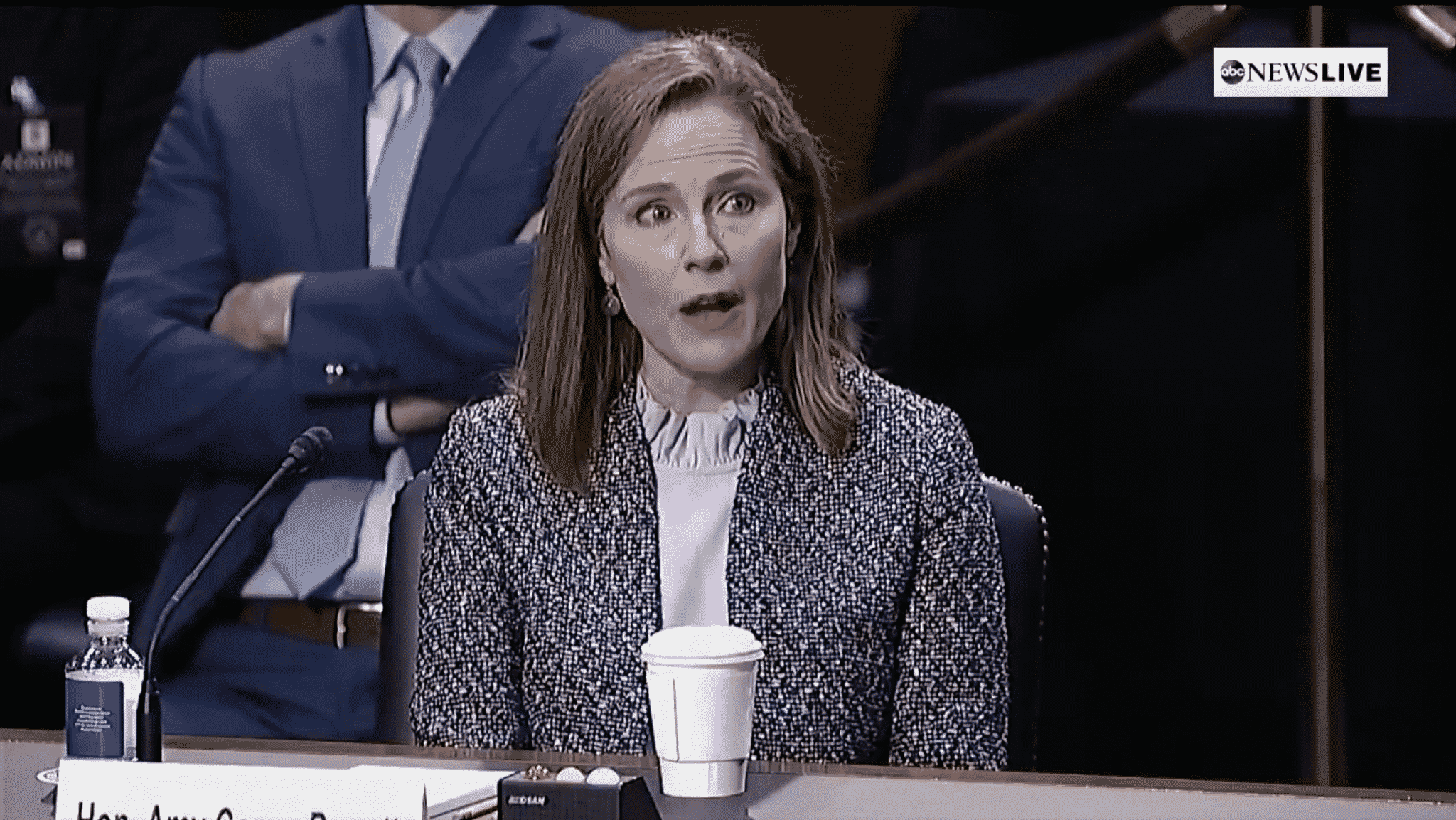
The third day of Judge Amy Coney Barrett’s confirmation hearing featured more questions from members of the Senate Judiciary Committee and again, Democrats hoped to get specific answers from the Supreme Court nominee.
Sen. Patrick Leahy (D-Vt.) used his time to explore Barrett’s opinions on the powers of the president, asking Barrett, “Is a president who refuses to comply with a court order a threat to our Constitutional system?”
Asked again, Barrett said, “The Supreme Court can’t control whether or not a president obeys … a court can pronounce the law and issue a judgment, but it lacks control over how the political branches respond to it.”
When pressed moments later, Barrett added, “No one is above the law.”
Watch the video below:
Additionally, Leahy got specific when asking Barrett, “Does a president have an absolute right to pardon himself for a crime?”
But Barrett declined to give an answer, saying, “So far as I know, that question has never been litigated, that question has never arisen, that question may or may not arise. But it’s one that calls for legal analysis of what the scope of the pardon power is. So, because it would be opining on an open question when I haven’t gone through the judicial process to decide it, it’s not one on which I can offer a view.”