



DAVID BLACKMON: Trump And Wright Move To Speed Nuclear Expansion
Energy Secretary Chris Wright announced an ambitious plan to have three small modular reactors (SMRs) built and producing power at the Idaho National Laboratory (INL) by July 4, 2026. This initiative was revealed during…
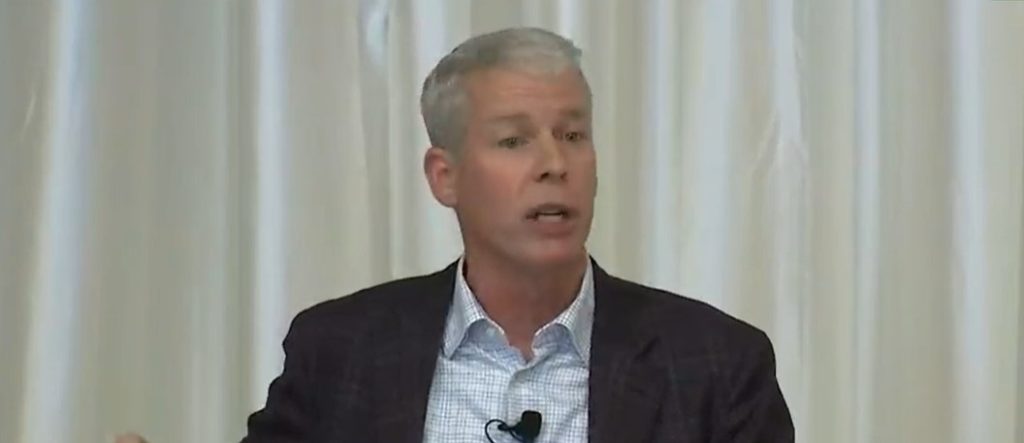

Energy Secretary Chris Wright announced an ambitious plan to have three small modular reactors (SMRs) built and producing power at the Idaho National Laboratory (INL) by July 4, 2026. This initiative was revealed during a Senate Energy and Natural Resources Committee hearing on June 18, aligning with President Donald Trump’s executive ordersto boost domestic nuclear energy development.
During an exchange with Senator John Barrasso (R-WY), Wright said, “we would like to get three new small modular reactors critical, meaning producing power by July 4 of next year at the Idaho National Lab in our containment facility.” Wright added that his objective was to “speed up ideas that are ready to go. Let’s get them on the ground and test them and prove them.”
The Secretary, who has become the most quotable cabinet spokesman for President Donald Trump’s “American Energy Dominance” agenda, accurately pointed to the Nuclear Regulatory Commission as the likely chief impediment to any rapid expansion of the U.S. nuclear power industry.
“Americans invented the nuclear power industry,” he told Barrasso, pointing out that the industry initially experienced rapid growth during the 1960s and early 1970s, when the Atomic Energy Commission served as the federal regulatory agency over it. “We came out and built 100 plus plants rapidly,” Wright added. “Then we created an NRC and stopped, and we haven’t done much for 30 or 40 years. You and I and many others really want to get that nuclear ball rolling again.
Wright’s remarks came just a few days after President Trump dismissed NRC commissioner Christopher Hanson, who was named to Chair the commission by former President Joe Biden in 2021. The proximity of that firing and Wright’s rolling out of his new initiative could be coincidental, but real coincidences such as this are fairly rare in the nation’s capital. Given that the U.S. currently has zero SMRs in operation and the NRC has only managed to approve two SMR-related projects, both for