



‘Bombshell’ Motion To Dismiss Filed In Derek Chauvin Case
Former Minneapolis police officer Derek Chauvin is making another attempt to overturn his state murder conviction in the death of George Floyd, this time arguing that Minnesota Gov. Tim Walz improperly assigned Attorney General Keith Ellison to prosecute the case. Chauvin’s attorneys filed a petition Tuesday with the Minnesota Court of Appeals seeking dismissal of […]
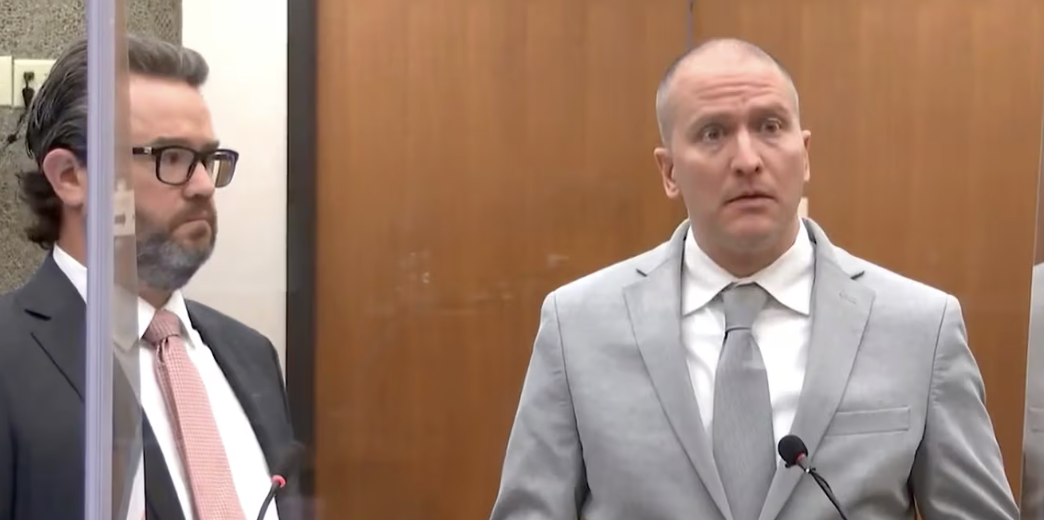
Former Minneapolis police officer Derek Chauvin is making another attempt to overturn his state murder conviction in the death of George Floyd, this time arguing that Minnesota Gov. Tim Walz improperly assigned Attorney General Keith Ellison to prosecute the case.
Chauvin’s attorneys filed a petition Tuesday with the Minnesota Court of Appeals seeking dismissal of the state charges. Their argument centers on the way the prosecution was handled rather than simply revisiting the evidence presented during Chauvin’s 2021 trial.
Chauvin, now 50, was convicted in April 2021 of second-degree unintentional murder, third-degree murder and second-degree manslaughter in connection with Floyd’s death on May 25, 2020. Widely circulated video from the arrest showed Chauvin kneeling on Floyd for more than nine minutes as Floyd was restrained on the ground.
Floyd’s autopsy also documented fentanyl and methamphetamine in his system, along with underlying health conditions. However, the official manner of death was ruled a homicide, and prosecutors successfully argued at trial that Chauvin’s restraint was a substantial causal factor in Floyd’s death.
Chauvin is serving a state prison sentence of more than 22 years. He also received a federal sentence after pleading guilty to violating Floyd’s civil rights.
The latest petition represents another effort by Chauvin’s legal team to challenge the state conviction. The Minnesota Court of Appeals has rejected previous attempts to overturn the case.
This time, attorney Greg Joseph argues that Walz did not have lawful authority to transfer responsibility for the prosecution to Ellison’s office in the manner that occurred.
Joseph wrote that Walz referred the case to Ellison after the original Hennepin County charges were filed, and Chauvin’s attorneys contend that the attorney general’s subsequent involvement violated Chauvin’s due process rights.
The filing also challenges the decision not to present the murder charges to a grand jury. Chauvin’s attorneys argue that prosecutors effectively made a charging decision that should have been placed before a grand jury for a determination of probable cause.