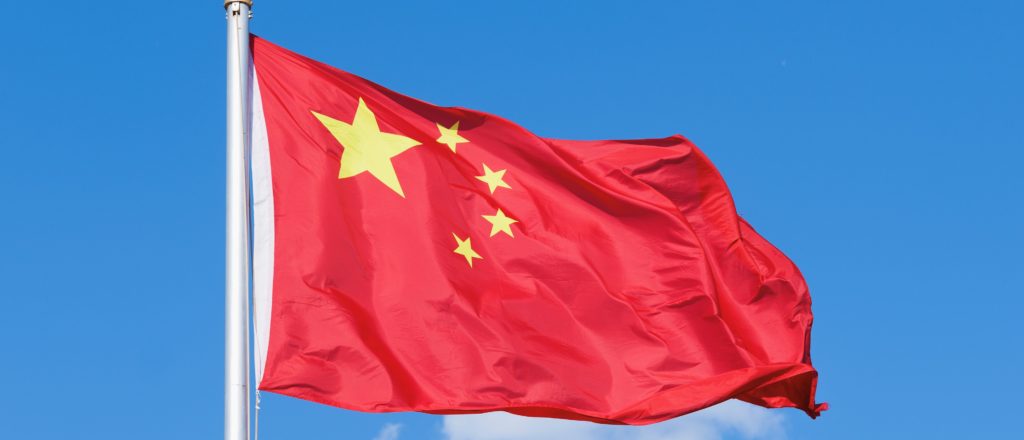
China Caught Copying American AI’s Homework, Hundreds Of Documents Show
America's top artificial intelligence models are training their Chinese competitors, whether the leading labs like it or not.
Dylan Kresak·Nov 17, 2026·3 min read
Sponsored
America’s top artificial intelligence models are training their Chinese competitors, whether the leading labs like it or not.
Chinese tech firms are using frontier AI labs’ model responses to train their own systems, according to a Reuters review of more than 300 Chinese academic papers, government files and other records. The practice of distillation is conducted worldwide to train AI models, but the process may allow China to compete in the AI race without accessing as many chips restricted through export controls.
One February research paper from Shanghai Jiao Tong University and Meituan researchers, “AgentConductor,” discussed its process for using OpenAI’s GPT-4o to train Alibaba’s small Qwen model to coordinate AI agent coding.
“The U.S. allegations are unfounded and politicize a normal technological and commercial practice,” a spokesperson for the Chinese Embassy in Washington, D.C., told the Daily Caller News Foundation when asked about model distillation. “The development of AI in China comes from greater self-reliance and strength in science and technology, and is fueled by open cooperation.”
Sponsored
Sponsored
“We hope the U.S. side will stop leveling false allegations to smear Chinese companies,” the spokesperson added.
Similarly, researchers from Alibaba Cloud published a paper called “DistilQwen2.5” in April 2025, which outlined the distillation of OpenAI’s GPT-4 and GPT-4o models to collect non-Chinese training data for Alibaba’s Qwen models.
OpenAI and Alibaba did not immediately respond to the DCNF’s requests for comment.
Another paper from Nov. 2024, “O1 Replication Journey – Part 2,” describes that researchers at Shanghai Jiao Tong University trained an Alibaba model on OpenAI’s o1 model outputs.
The Department of Commerce warned Chinese regulators during July meetings that some distillation of American models may be considered theft of intellectual property, three anonymous sources told Reuters.
The department referred the DCNF to its rulereleased Monday to combat attempts to remotely gain access to advanced AI chips. The rule, “Addressing Remote Access to Advanced Semiconductors,” requires companies to acquire a license from Commerce to supply restricted chips to data centers overseas.
Tight chip restrictions cannot ensure Chinese AI is weakened, Daniel Castro, president of the Information Technology and Innovation Foundation, told the DCNF Monday.
“The U.S. government should be careful not to assume that restricting China’s access to technology automatically strengthens America’s competitive position,” Castro said.
Alibaba released its most advanced AI model to date, Qwen4-Max, on Sunday. The reportedly closed-weight model ranked higher than Anthropic’s Claude Fable 5.1 on Arena.ai’s Code Arena leaderboard.
Jason Hsu, a senior fellow at the Hudson Institute, said American businesses that incorporate Chinese-based AI face several risks.
“American companies building on Chinese models could face intellectual property vulnerabilities, software supply-chain risks, and long-term technological dependence,” Hsu told the DCNF on Monday. “The larger national security concern is that widespread adoption of Chinese AI models could give Beijing greater influence over global digital infrastructure and technological standards.”
OpenAI and Anthropic both restrict the use of their respective models’ outputs to train outside AI.
All content created by the Daily Caller News Foundation, an independent and nonpartisan newswire service, is available without charge to any legitimate news publisher that can provide a large audience. All republished articles must include our logo, our reporter’s byline and their DCNF affiliation. For any questions about our guidelines or partnering with us, please contact [email protected].