


Chinese Energy Giant Locks In 20 More Years Of American Gas Despite Communist Nation’s Tariff
A Chinese energy company signed a 20-year deal Monday to buy American natural gas despite China’s preexisting tariff on the U.S.
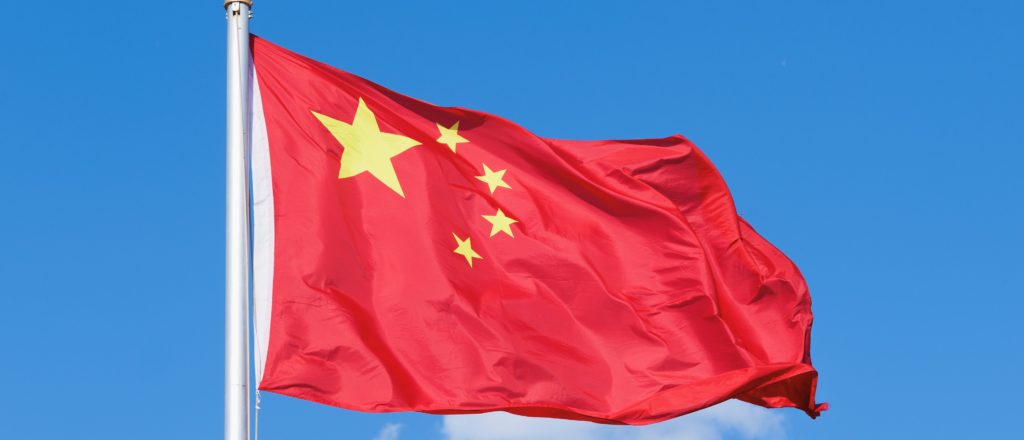

A Chinese Energy company signed a 20-year deal Monday to buy American natural gas despite China’s preexisting tariff on the U.S.
China Gas Holdings agreed to buy 500,000 metric tons of liquefied natural gas (LNG) each year from Venture Global beginning in 2030, the two companies announced Monday in a press release. The agreement comes ahead of Chinese President Xi Jinping’s expected state visit to Washington later in September, Reuters reported. China has kept a 15% tariff on U.S. LNG in place while suspending an additional 24% tariff on American goods for one year, the outlet reported.
The agreement raises China Gas’s long-term commitment with Venture Global to 2.5 million metric tons a year, the American exporter said in the release.
“It further strengthens our portfolio and reinforces our commitment to establishing an international Energy trading platform,” Liu Ming Hui, chairman and president of China Gas, said in the release.
Venture Global will supply the gas from its Louisiana projects, Chief Executive Officer Mike Sabel said in the release. Venture Global operates the Calcasieu Pass and Plaquemines export plants and is building CP2 in Louisiana, the company said.
Venture Global declined to comment on the record. China Gas did not immediately respond to the Daily Caller News Foundation’s request for comment.
Critics of LNG exports argue that selling American gas overseas raises prices for households at home. Growing exports would have a negligible effect on domestic gas prices, S&P Global Energyfound in a July 16 study supported by the U.S. Chamber of Commerce.
The study projected that expanded exports would support about 555,000 jobs a year and add $1.4 trillion to gross domestic product through 2040. It also projected that average household gas costs would rise 1.6% between 2026 and 2031.
Domestic prices have trended downward since 2010 even as demand for American gas grew 70%, Eric Eyberg, vice president for gas and LNG at S&P Global Energy, said in a statement accompanying the study. Eyberg said limits on pipeline capacity, rather than exports, drive higher regional prices and volatility.
“The ability to build pipelines is the main challenge,” he added.
The Biden administration’s Energy Department however reached a different conclusion in a December 2024 study. Then-Energy Secretary Jennifer Granholm said at the time that their analysis showed increasing exports would raise domestic natural gas prices and push up electricity prices for American consumers.
China Gas contracted for its first 2 million metric tons a year under two 20-year agreements signed in 2023, one covering Plaquemines and the other CP2, according to a Venture Global announcement at the time.
China halted imports of U.S. LNG in March 2025 after its tariffs on American Energy products took effect the previous month, Reuters reported. Chinese importers then began diverting U.S. cargoes to buyers elsewhere, the outlet reported. A cargo loaded at Plaquemines in June became the first U.S. shipment to sail directly to a Chinese port since February 2025, the outlet reported in July.
China bought as much as $6.2 billion of American LNG in 2021, Reuters reported. Its total LNG imports fell to a three-year low of 68.43 million metric tons in 2025 as it turned to pipeline gas and renewable power.
U.S. LNG supply will account for about 30% of the global market by 2030, Peter Clarke, senior vice president of LNG at ExxonMobil Upstream, told an Energy forum in Bangkok on Monday, according to the outlet.
North America produces enough gas to serve domestic customers as well as export demand, Clarke said.
All content created by the Daily Caller News Foundation, an independent and nonpartisan newswire service, is available without charge to any legitimate news publisher that can provide a large audience. All republished articles must include our logo, our reporter’s byline and their DCNF affiliation. For any questions about our guidelines or partnering with us, please contact [email protected].