



CHUCK DEVORE: Restoring Confidence In Our Elections Isn’t So Easy
Former President Donald Trump has called for “paper ballots, voter ID, and same-day voting” as steps on the path to improved election integrity. Rightly concerned about illegal election tactics, Republicans and…
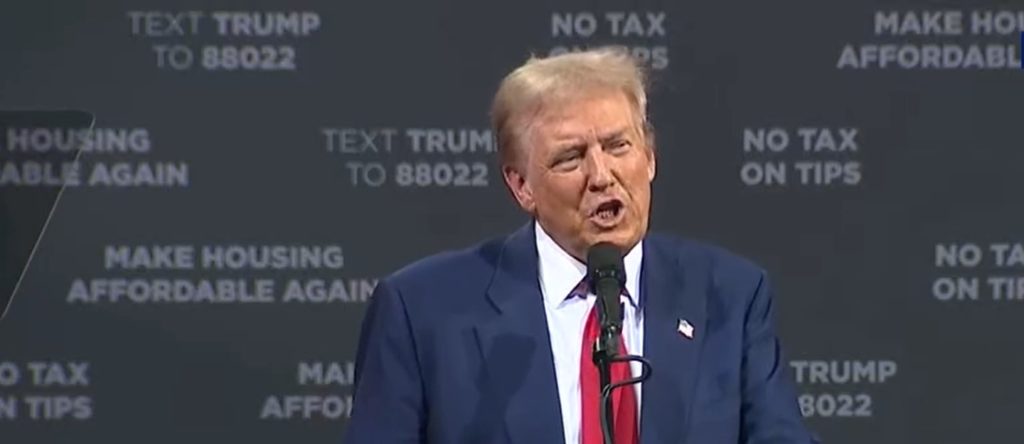

Former President Donald Trump has called for “paper ballots, voter ID, and same-day voting” as steps on the path to improved election integrity. Rightly concerned about illegal election tactics, Republicans and conservative activists have rallied behind these ideas. The concerns over election fraud are real, but the suggested fixes have a common weakness in implementation: people.
The challenge with paper, ID, and conducting all voting on Election Day is the massive increase in manpower needed to make it happen — especially in counting paper ballots and staffing precincts to handle the massive volume of voters voting in person. When it comes to mobilizing election workers and poll watchers, Republican volunteers and conservative activists are simply outgunned by legions of union members and paid operatives.
But in the desire for paper ballots, it is crucial to scrutinize the potential consequences of such a shift. Far from being a simple fix, history and logistics reveal serious challenges with paper ballots that all Americans should carefully consider.
The Labor Imbalance
One of the most overlooked issues with transitioning to paper-only ballots is the labor-intensive nature of manual counting. In large jurisdictions like Harris County, Texas, where ballots can feature more than 100 individual races and propositions, manually counting a million ballots would mean tabulating around 100 million separate votes. This would be an enormous logistical challenge. This process would not only be slow but would likely introduce more human errors compared to machine counting — after all, in many cases, people created machines precisely to liberate them from tedious, repetitious tasks.
Moreover, there is an unequal distribution of resources when it comes to election workers. Democrats, who often rely on organized labor, have the advantage of paid poll workers, while Republicans tend to rely on volunteers. A clear example of this imbalance has been revealed in the runup to the 2024 election in Detroit, where approved GOP poll watchers were outnumbered