



Chuck Schumer Hatches Plot To Tank Weaponization Fund
Senate Minority Leader Chuck Schumer added another hurdle to the Republican-led reconciliation bill Monday by calling on Democrats to derail the $1.8 billion anti-weaponization fund. The fund could pay people alleging…
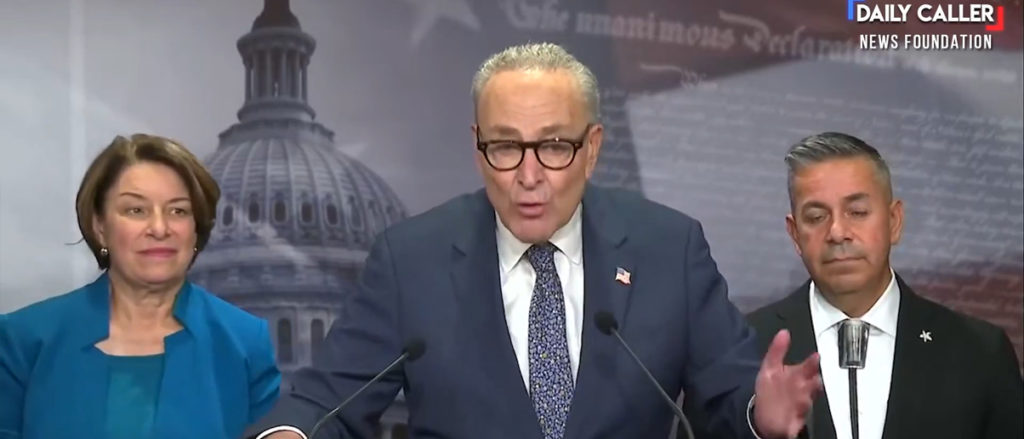
Senate Minority Leader Chuck Schumer added another hurdle to the Republican-led reconciliation bill Monday by calling on Democrats to derail the $1.8 billion anti-weaponization fund.
The fund could pay people alleging the legal system was “weaponized” against them, which raised concerns among lawmakers on both sides of the aisle. Schumer stated in a Dear Colleague letter that Democrats will lead a coordinated effort to “shut the fund down” and force Republicans to vote on it.
“This week, Senate Democrats will launch a coordinated effort to kill the slush fund before one cent goes out the door,” Schumer wrote. “And no matter what Republicans do, we will force them to vote. If Republicans return to reconciliation, we will be ready with amendments to shut the fund down. If they try to bury the issue, we will force them to the Senate floor. If they try to sneak behind appropriations, we will fight them there too. There will be no escape hatch. No fake guardrails or backroom promises to hide behind. No Justice Department announcement that makes this corruption acceptable.”
Schumer accused Trump of using the fund for his own “corrupt” purposes. He claimed the fund had no real oversight and could hand out taxpayer funds to “MAGA loyalists,” Capitol rioters and Trump’s political allies.
“Republicans are scrambling for a way out — not to end the corruption, but to manage it. That will not be enough. You do not fix a corrupt slush fund by promising to manage it better. You end it,” Schumer continued.
A handful of Senate Republicans expressed concern that payments would be handed to January 6, 2021, Capitol rioters who assaulted Capitol Police officers. Republicans opposed to the fund included Sens. Thom Tillis of North Carolina, Katie Britt of Alabama, Mitch McConnell of Kentucky and Bill Cassidy of Louisiana.
Senate Majority Leader John Thune appeared skeptical of the fund,