



Clinton-Appointed Judge Blocks Trump Admin Effort Requiring Proof Of Citizenship To Vote
A judge appointed by former President Bill Clinton blocked President Donald Trump’s efforts to require proof of citizenship to vote in U.S. elections. U.S. District Judge Colleen Kollar-Kotelly wrote in a 120-page…
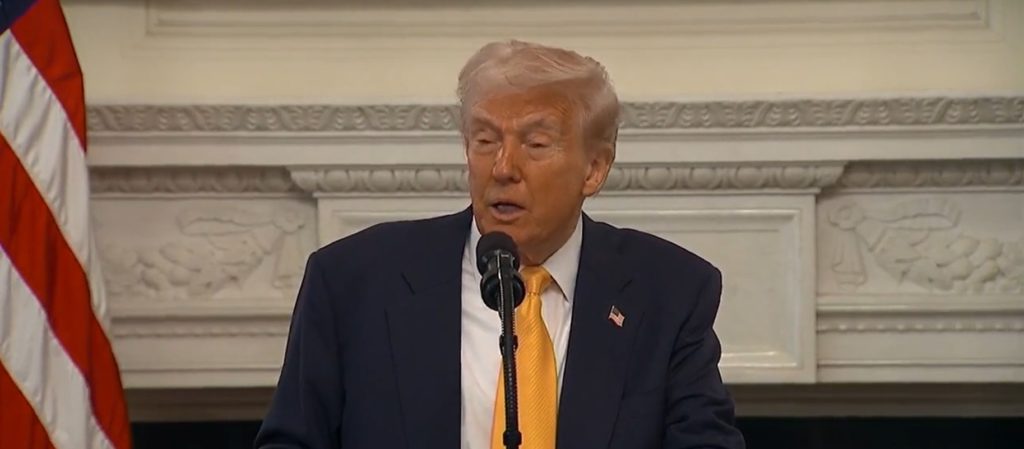

A judge appointed by former President Bill Clinton blocked President Donald Trump’s efforts to require proof of citizenship to vote in U.S. elections.
U.S. District Judge Colleen Kollar-Kotelly wrote in a 120-page decision that the administration’s efforts are an attempt to “short-circuit Congress’s deliberative process by executive order.” She said that Trump’s alleged effort to “regulate federal elections” exceeds his own authority.
“Our Constitution entrusts Congress and the States—not the President—with the authority to regulate federal elections,” she wrote. “No statutory delegation of authority to the Executive Branch permits the President to short-circuit Congress’s deliberative process by executive order.”
Kollar-Kotelly also ordered that election officials “assess” the citizenship of anyone who receives assistance before allowing them to register. The judge said Congress is the appropriate branch of government to make reforms to the federal election process.
Trump signed an executive order on March 26 that directed states to require proof of citizenship to vote in federal elections to “secure our elections” and condition federal funding on whether or not each state requires voter ID. Trump’s order requires voters to provide documentation to prove their citizenship statuses rather than simply verbally affirming their U.S. citizenship.
The Democratic National Committee, the League of United Latin American Citizens and National Association for the Advancement of Colored People all filed lawsuits in the D.C. circuit challenging the order.
The judge allowed two sections of the executive order to remain in place. One of the sections orders the Department of Homeland Security and the Department of State to make voting databases accessible to the Department of Government Efficiency to identify registered non-citizens, and the other directs the Department of Justice to take action against states that violate the order.