



CNN Presses Stacey Abrams About Past Claims She Won the 2018 Gubernatorial Election in Georgia
Failed Georgia gubernatorial candidate Stacey Abrams (D) is facing questions about whether she regrets claiming she won an election in 2018 that she actually lost. On Tuesday, CNN’s Kaitlan Collins asked, “I wonder if…
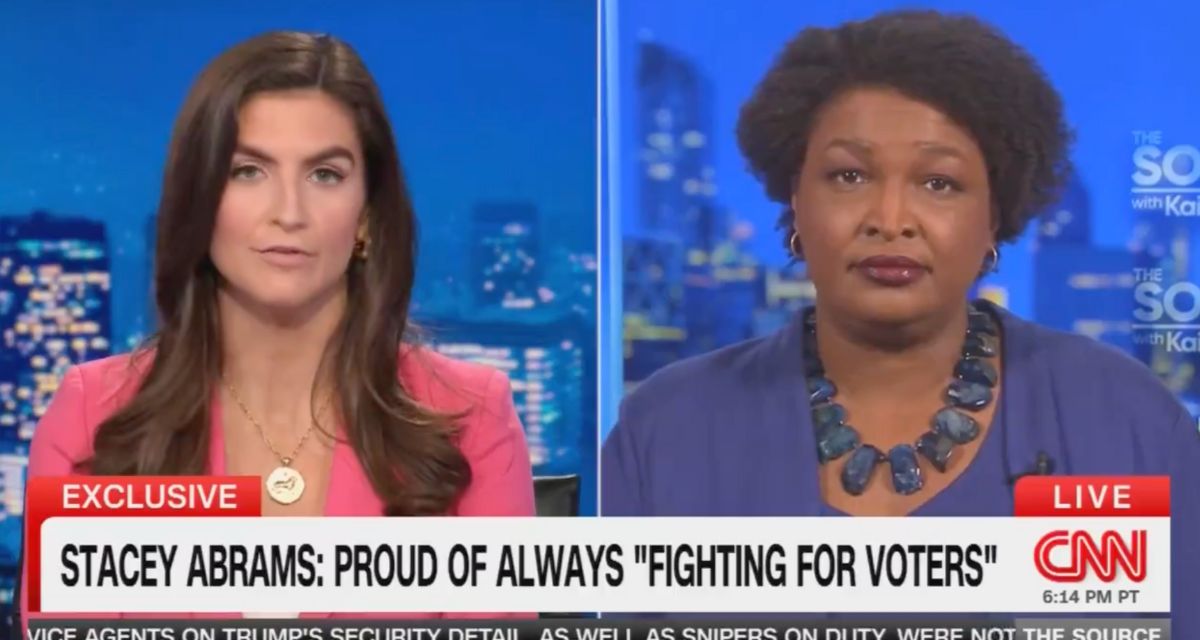
Failed Georgia gubernatorial candidate Stacey Abrams (D) is facing questions about whether she regrets claiming she won an election in 2018 that she actually lost.
On Tuesday, CNN’s Kaitlan Collins asked, “I wonder if you have regrets about the language that you use, casting doubt on the outcome of that election in light of what we now see and how Republicans use that to bolster their defense of Trump’s claims of a stolen election.”
” Well go back to elementary school again and use comprehension as the basis. I acknowledge that Brian Kemp won that election,” the failed candidate claimed. “What I called into question was the process that was used, and courts agreed with us again and again during the overtime after Election Day and again afterwards, so much so that he actually signed legislation to fix some of the problems that we were able to reveal. I never once said that he did not win. What I said is that the process was flawed, and that’s why we had the Voting Rights Act in the United States. That’s why we have the Help America Vote Act. We know that sometimes we don’t get it right, and it takes calling out the mistakes to improve.”
However, Collins said, “I do remember the time you told The New York Times ‘I won.’ You did describe it as a stolen election. The courts did side with the Secretary of State, Brad Raffensperger…”
“Kaitlin, that’s actually incorrect. And normally I wouldn’t cut you off, but you’re repeating disinformation. What the court said, if you read the entire opinion was that despite the flaws in the process, that we acknowledge, that the courts acknowledge, they were no longer permitted to complete and fix them,” Abrams interjected.
She went on:
“They could not correct the mistakes because the law had changed between 2018 and 2022 when the case was finally adjudicated. There was never a moment where they said what happened was right. What they said was there was no capacity to correct the mistakes. And so it’s important that we not only use the headlines, but we read the fine print because that’s where the mistakes are made. That’s where the challenges are.”