



Deadly Sea Snail Toxin Holds Promise For Diabetes Drugs: Study
Dr. Ho Yan Yeung, PhD, first author of the study (left) and Dr. Thomas Koch also an author of the study (right) examined a freshly collected batch of cone snails. SAFAVI LAB VIA SWNS “> Deadly sea snail poison could be…
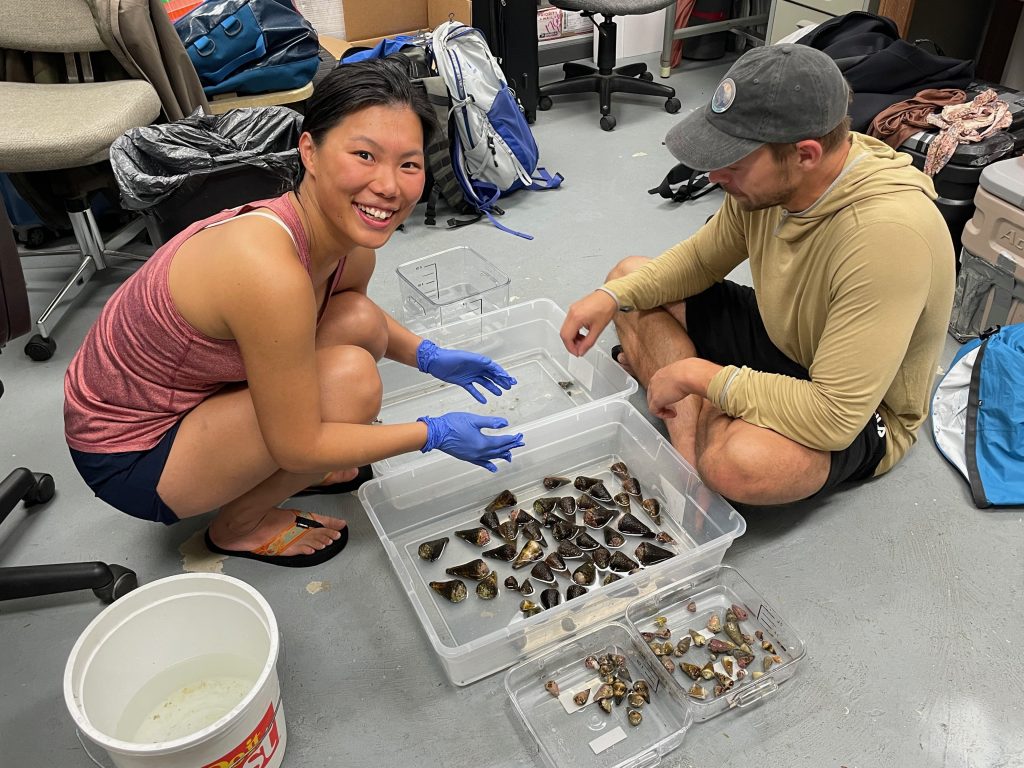

Dr. Ho Yan Yeung, PhD, first author of the study (left) and Dr. Thomas Koch also an author of the study (right) examined a freshly collected batch of cone snails. SAFAVI LAB VIA SWNS
“>
Deadly sea snail poison could be key to making better drugs to treat diabetes, according to a new study. The toxin from one of the most venomous creatures on the planet may lead to new medicines for the condition and hormone disorders, say scientists.
They have identified a component within the venom of a deadly marine snail, called the geography cone, that mimics a human hormone called somatostatin, which regulates the levels of blood sugar and several hormones in the human body.
The researchers say the hormone-like toxin’s specific, long-lasting effects, which help the snail hunt its prey, could also help scientists design better drugs for people with diabetes and potentially deadly hormone disorders.
The team, led by scientists from the University of Utah in the United States, believe the somatostatin-like toxin could hold the key to improving medications.
They explained that somatostatin acts like a brake pedal for many processes in the human body, preventing the levels of blood sugar, several hormones, and many other important molecules from rising dangerously high.
The researchers found that the cone snail toxin, called consomatin, works similarly. However, consomatin is more stable and specific than the human hormone, which makes it a “promising” blueprint for drug design, according to the results published in the journal Nature Communications.
By measuring how consomatin interacts with somatostatin’s targets in human cells in a dish, the research team discovered that consomatin interacts with one of the same proteins that somatostatin does.
However, while somatostatin directly interacts with several proteins, consomatin only interacts with one. The researchers explained that the fine-tuned targeting means that the cone snail toxin affects hormone levels and blood sugar levels, but not the levels of several other molecules.
