




DHS Drops Voter Registration Findings
During a prime-time address on election integrity Thursday night, President Donald Trump announced that the Department of Homeland Security had identified approximately 278,000 non-U.S. citizens who were allegedly registered to vote in federal elections. Trump organized the speech around what he described as five major threats to election security. His central concern involved possible Chinese […]
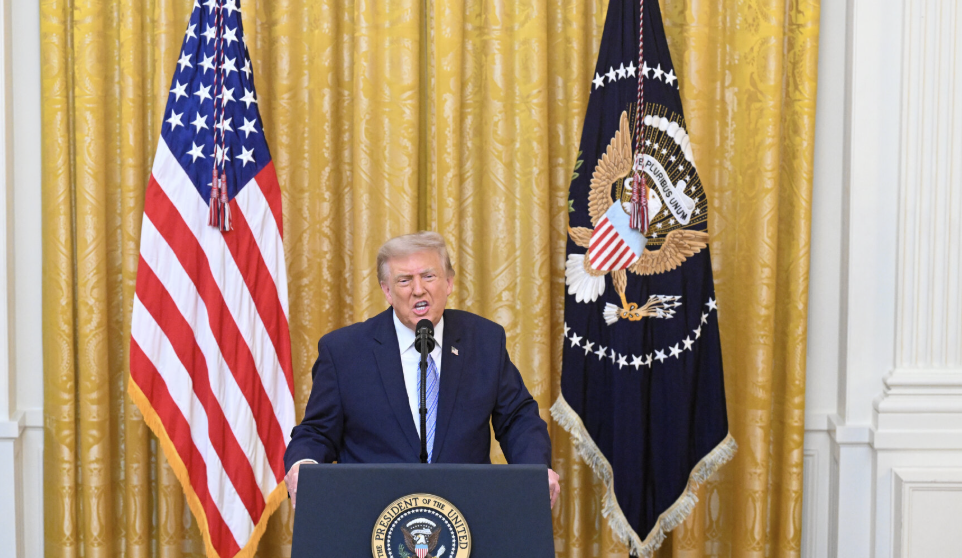
During a prime-time address on election integrity Thursday night, President Donald Trump announced that the Department of Homeland Security had identified approximately 278,000 non-U.S. citizens who were allegedly registered to vote in federal elections.
Trump organized the speech around what he described as five major threats to election security. His central concern involved possible Chinese access to or collection of American election data. But one of the most striking claims of the night involved the large number of non-citizens allegedly found on voter rolls.
“We are releasing the results of a stunning investigation by the Department of Homeland Security,” Trump said.
According to the president, DHS compared state voter rolls with public records and identified about 278,000 people who were not U.S. citizens but were still registered to participate in federal elections.
“According to the DHS review, state voter rolls and public records, they identified approximately 278,000 non-citizens who are registered to vote in federal elections,” Trump said.
He argued that the true number could be even higher because some Democratic-led states declined to provide their voter files to federal investigators.
“Since Democrat states refused to share their voter files, the real number is actually much higher than that,” Trump added.
Trump’s remarks did not make clear how many of the identified individuals had actually cast ballots. Registration and voting are separate issues, and the speech focused primarily on names appearing on voter rolls rather than confirmed cases of illegal votes being counted.
Federal law prohibits non-citizens from voting in federal elections. A limited number of local jurisdictions in three states, along with the District of Columbia, allow some non-citizens to participate in certain municipal elections. Those local rules do not permit them to vote for president, Congress, or other federal offices.
Many Republican-led states have gone further by adopting laws or constitutional amendments that prohibit non-citizen voting at every level, including local elections.